

Why Tamper Proof Containers Matter for Cannabis Storage
Tamper-evident packaging is defined as any container system that provides visible, irreversible proof of access or interference before a product reaches the consumer. For cannabis storage, this distinction is not a technicality. It is the difference between a product consumers trust and one they return or reject. The FDA regulates tamper-evident requirements under 21 CFR 211.132 for over-the-counter drugs and cosmetics, and cannabis packaging increasingly follows the same performance-based logic. Understanding why tamper proof containers matter starts with knowing exactly how they work and what they protect.
Why tamper proof containers matter for secure cannabis storage
Tamper-evident containers protect three things at once: the product inside, the person who buys it, and the brand that sells it. For cannabis specifically, a broken or missing seal signals contamination risk, potency loss, or unauthorized access. None of those outcomes are acceptable to a serious consumer.
The term “tamper-proof” is technically misleading. No packaging is truly impenetrable; the industry deliberately avoids the phrase because it sets an impossible standard. What packaging can do is make interference obvious and irreversible. That is the actual goal, and it is why “tamper-evident” is the correct and preferred term across regulatory bodies and packaging professionals alike.
FDA compliance is performance-based, meaning manufacturers must demonstrate that their packaging visibly shows evidence of tampering with appropriate labeling. There is no certification stamp. The burden is on the producer to prove the seal works. Cannabis brands operating in regulated markets face the same expectation from state agencies and consumers.
How do tamper proof containers work?
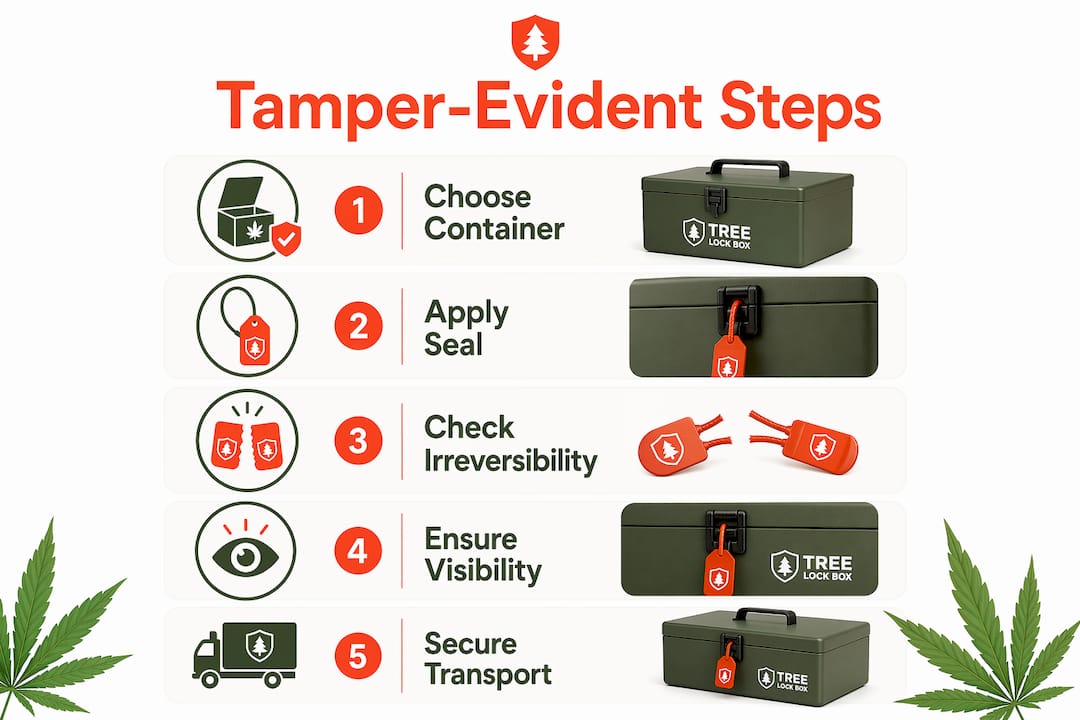
The core mechanism behind tamper-evident packaging is irreversibility. Once the seal breaks, it cannot be restored to its original state without obvious evidence. That single property separates effective tamper evidence from packaging that merely looks secure.
Common tamper-evident mechanisms include:
- Breakable seals: A thin membrane or foil that tears when the lid is first opened, leaving a visible gap or residue.
- Tear strips: A perforated band around the container neck or lid that must be removed before opening, signaling first access.
- VOID labels: Adhesive labels that leave a “VOID” imprint on the container surface when peeled, making resealing impossible without detection.
- Shrink bands: Heat-applied plastic bands that wrap the cap and container body, tearing apart on first open.
- Induction seals: A foil liner bonded to the container mouth using electromagnetic induction, creating an airtight, hermetic barrier that is both tamper-evident and freshness-preserving.
The choice of mechanism depends on what is inside. Induction sealing works best for liquids because it forms a complete airtight barrier without heat exposure to the product. Pressure-sensitive seals activate mechanically when the lid is pressed down, making them ideal for dry goods like cannabis flower, powders, and herbs. They require no heat, which protects product quality during sealing.
Internal mechanisms integrated into the closure itself offer an additional layer of protection. These are shielded from shipping damage and tend to project a more finished, premium appearance. For cannabis brands, that premium signal matters as much as the functional protection.
Pro Tip: When evaluating a seal for cannabis flower, press the lid firmly and check that the seal activates fully before shipment. A partial seal is as good as no seal at all.
Is “tamper-proof” the right term, or is “tamper-evident” more accurate?
The packaging industry settled this debate years ago. “Tamper-proof” implies that access is impossible. That claim is false for every container on the market. A determined person with the right tools can open anything. The real question is whether the attempt leaves undeniable evidence.
“Tamper-evident” focuses on the consumer experience at the point of purchase. When a shopper picks up a product, they need to confirm integrity in seconds. Consumers make purchase decisions in under 3 seconds, which means a subtle seal requiring close inspection fails in practice. The seal must be tamper-obvious, not just tamper-evident.
The distinction matters for cannabis buyers specifically. A consumer picking up a pre-filled jar or a sealed stash container at a dispensary is making a fast visual judgment. If the seal is intact, they proceed. If it is broken or missing, they put the product back. That decision loop takes less time than reading a label.
“Tamper-obvious packaging outperforms subtle tamper-evident formats by boosting sales and preventing loss. Consumers prefer packaging that loudly, visually, and irreversibly signals tampering from a distance as they make fast shopping decisions.”
The effectiveness of any tamper-evident seal depends entirely on irreversibility. A seal that can be reapplied after breaking fails the core requirement. Resealable broken seals reduce consumer trust and technically fall outside tamper-evident criteria. This is a common and costly mistake in budget packaging decisions.
What are the advantages of tamper-evident containers for cannabis?
The benefits of secure packaging for cannabis go well beyond basic safety. They touch every part of the consumer relationship, from first purchase to repeat loyalty.
- Contamination prevention. A sealed container blocks airborne contaminants, moisture, and physical adulterants from reaching the product. For cannabis flower, this directly protects potency and aroma profile.
- Freshness preservation. Airtight tamper-evident seals, particularly induction seals, slow oxidation and moisture loss. Cannabis stored in a properly sealed container retains its terpene profile significantly longer than product stored in unsealed or loosely closed containers.
- Regulatory compliance. Cannabis packaging regulations in most U.S. states require child-resistant and tamper-evident features. Meeting these requirements protects the brand from fines, recalls, and license risk. Reviewing a secure storage features checklist helps confirm compliance across all required criteria.
- Theft and counterfeiting reduction. A visible seal makes product diversion harder to conceal. Counterfeit products cannot replicate a proprietary seal without obvious signs of tampering, which protects both the brand and the consumer.
- Consumer confidence and repeat purchase. Clear visual seals build consumer trust and brand reputation. A consumer who opens a sealed product for the first time has a fundamentally different experience than one who wonders whether the product has been handled before.
The importance of tamper proof containers also extends to odor control. Many tamper-evident seals double as airtight closures, which means they contain smell as effectively as they signal interference. For cannabis consumers who value discretion, this overlap between odor-proof storage and tamper evidence is a genuine practical benefit.
Tamper-evident features can be added for as little as $0.01 per unit. That cost is negligible against the brand damage to a single contamination incident or a consumer complaint about a broken seal on arrival.
How to choose the right tamper-evident container for cannabis
Choosing the right container starts with the product type. Dry cannabis flower and concentrates have different sealing needs than cannabis-infused liquids or tinctures.
Matching seal type to product
Induction seals work best for liquids and tinctures. They bond directly to the container mouth and create a hermetic barrier that survives shipping and temperature changes. Pressure-sensitive seals are the better choice for flower and dry goods. They activate without heat, which protects delicate terpenes and cannabinoids from thermal stress during packaging.
Shrink bands and tear strips add a secondary layer of tamper evidence on top of a primary seal. Using both together is common for premium cannabis products where brand integrity is a selling point.
Key criteria for evaluating containers
| Criteria | What to look for |
|---|---|
| Irreversibility | Seal cannot be reapplied after breaking |
| Visibility | Breach is obvious from arm’s length |
| Durability | Seal survives standard shipping and handling |
| Compliance | Meets applicable state cannabis packaging rules |
| Ease of use | Consumer can open without tools or excessive force |
Labeling requirements matter as well. Regulations in most states require that tamper-evident packaging carry a statement indicating the feature is present. Reviewing cannabis labeling best practices alongside seal selection prevents compliance gaps that are easy to miss.
Durability in dispensary products is a separate but related consideration. A seal that fails during transit provides no protection at the point of sale. Test containers under realistic shipping conditions before committing to a packaging run.
Pro Tip: Ask your packaging supplier for a “first-open” demonstration before ordering at scale. If the seal does not break cleanly and visibly on the first attempt, it will not perform reliably in a retail environment.
Key Takeaways
Tamper-evident packaging protects cannabis products, consumers, and brands by providing visible, irreversible proof of access that no amount of resealing can undo.
| Point | Details |
|---|---|
| Tamper-evident beats tamper-proof | No container is truly impenetrable; the goal is visible, irreversible breach evidence. |
| Seal type must match product | Use induction seals for liquids and pressure-sensitive seals for dry cannabis flower. |
| Speed of consumer decision | Shoppers judge packaging integrity in under 3 seconds, so seals must be tamper-obvious. |
| Regulatory compliance is performance-based | Manufacturers must demonstrate visible tamper evidence; no certification exists. |
| Cost is not a barrier | Effective tamper-evident features add as little as $0.01 per unit to packaging cost. |
The packaging detail most cannabis brands underestimate
After working closely with cannabis storage products, one pattern stands out clearly. Brands spend significant money on label design, container aesthetics, and product photography. Then they choose the cheapest possible seal and wonder why returns and consumer complaints follow.
A subtle foil liner that requires a fingernail and good lighting to notice is not tamper-evident in any meaningful sense. It is a liability dressed up as compliance. The seal is the first physical interaction a consumer has with the product. If it does not communicate integrity instantly, the entire brand experience starts on the wrong foot.
The brands that get this right treat tamper-evident packaging as a brand asset, not a regulatory checkbox. A clean, loud, irreversible seal tells the consumer: this product has not been touched. That message is worth more than any tagline on the label. Treelockbox designs storage solutions with this principle at the center, because a container that does not clearly signal security is not doing its job.
Cutting corners on seal quality to save fractions of a cent per unit is the wrong trade-off. The cost of one viral complaint about a compromised product far exceeds years of savings on cheaper seals. Invest in tamper-obvious design from the start.
— Tree Lock Box
Secure cannabis storage from Treelockbox
Treelockbox builds lockable cannabis storage with security and discretion as the foundation, not afterthoughts. The product range includes lockable stash boxes, portable storage units, and prep tools designed for consumers who take product integrity seriously. Every storage solution prioritizes airtight closure, odor containment, and durable construction that holds up through daily use. American craftsmanship and custom engraving options make Treelockbox products a practical and personal choice for anyone who wants their cannabis stored safely and stored right. Browse the full selection to find the container that fits your storage needs.
FAQ
What is the difference between tamper-proof and tamper-evident?
Tamper-proof implies a container cannot be opened without tools, which is not achievable in practice. Tamper-evident means the container shows clear, irreversible signs of access, which is the standard the packaging industry and regulators actually use.
How do tamper-evident seals protect cannabis freshness?
Airtight tamper-evident seals, particularly induction seals, block oxygen and moisture from reaching cannabis flower or concentrates. This slows oxidation and preserves terpene profile and potency over time.
Does cannabis packaging need to be tamper-evident by law?
Most U.S. states with legal cannabis markets require tamper-evident and child-resistant packaging for cannabis products. Requirements vary by state, so checking local regulations alongside childproof storage guidance is the safest approach.
What seal type works best for cannabis flower?
Pressure-sensitive seals are the best choice for dry cannabis flower. They activate mechanically without heat, which protects terpenes and cannabinoids from thermal damage during the sealing process.
How much do tamper-evident features add to packaging cost?
Tamper-evident features can add as little as $0.01 per unit to packaging cost. That figure makes seal quality one of the highest-return investments available in cannabis product packaging.