

Secure Storage Features Checklist for Cannabis in 2026
A secure storage features checklist defines the exact criteria you must evaluate to protect your cannabis from theft, environmental damage, and unauthorized access. The best storage security features combine physical tamper resistance, climate control, and smart access technology. This guide covers every item on a thorough storage security checklist, from biometric locks and fireproof construction to humidity management and discreet organization, so you can evaluate any unit with confidence before you buy.
1. Tamper-resistant construction and steel build quality
Physical security starts with the material your storage unit is made from. Steel construction with reinforced doors and anti-pry frames is the baseline for any serious cannabis safe or lockbox. Units with thin sheet metal or plastic panels can be compromised with basic tools in under a minute.
Look for units with solid steel bodies, reinforced hinges, and anti-drill plates around the lock cylinder. Tamper-resistant steel doors combined with layered perimeter defenses like motion sensors create a defense that discourages both opportunistic and deliberate theft. For home users, a unit that can be bolted to a floor or wall adds another layer of protection.
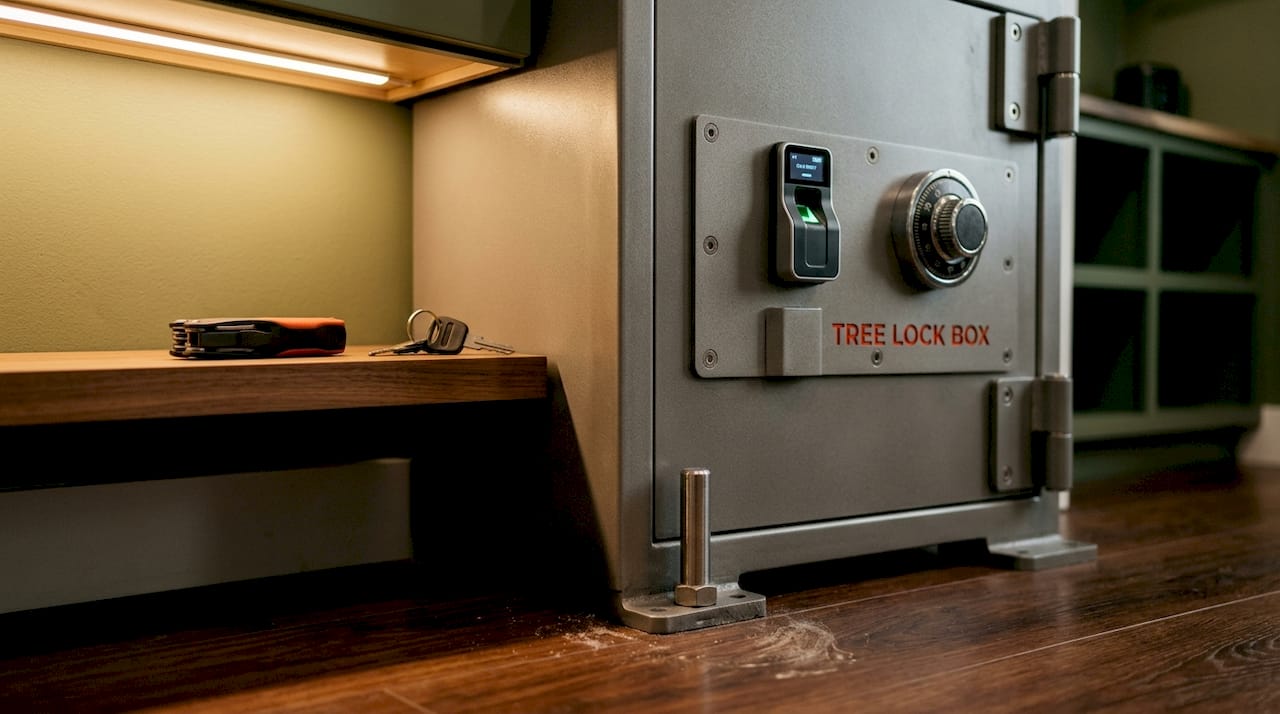
Pro Tip: Anchor your safe to a wall stud or concrete floor. Heavy doors on empty safes create a tipping hazard, and an unanchored unit can be carried out entirely.
2. High-quality lock mechanisms
The lock is the single point of failure for most storage units. Disc padlocks and reinforced closed-shackle padlocks resist bolt cutters far better than standard open-shackle designs. For built-in locks, look for deadbolt mechanisms with at least a 1-inch throw.
Mechanical locks have no batteries to die and no firmware to exploit. Electronic locks offer convenience and audit trails. The best storage security features combine both: an electronic primary lock with a mechanical override key stored separately from the unit itself.
3. Biometric access control
Biometric scanners add a layer of access control that keys and codes cannot match. A fingerprint cannot be copied from a distance or guessed by a curious roommate. Modern biometric keypads support up to 30 unique fingerprints and access codes ranging from 3 to 12 digits, which means you can grant access to trusted individuals without sharing a physical key.
For cannabis users in shared living spaces, biometric access is one of the most practical important storage security measures available. Response time matters too. A scanner that takes three seconds to read your print is frustrating at 2 a.m. Look for units rated under one second for fingerprint recognition.
- Fingerprint capacity of at least 20 to 30 prints
- Code length options from 3 to 12 digits for flexible security levels
- Silent entry mode to avoid alerting others in shared spaces
- Programmable backlit keypad options for low-light use
4. Battery management and power backup
Electronic locks are only as reliable as their power source. Electronic safes require battery replacement every 6 to 12 months, and a dead battery at the wrong moment locks you out completely. Units with external USB-C power ports let you connect a power bank to open the lock even when internal batteries are dead.
Always store your override key outside the safe, in a separate secure location. This sounds obvious, but a surprising number of users lock their override key inside the unit during setup. Check whether your unit supports low-battery alerts via an app or audible warning before the power drops entirely.
5. Fireproof and waterproof ratings
Most standard lockboxes stop burglars but offer zero protection against heat or water. Only fire-rated safes provide adequate protection against extreme heat, and many users assume their safe is fireproof when it is not. Look for UL or ETL certification marks. Fireproof safes certified by UL or ETL can withstand temperatures up to 1,800°F for 90 minutes, which covers most residential fire scenarios.
For cannabis specifically, heat is a double threat. A fire destroys your product, but even the residual heat inside a non-rated safe during a fire can degrade terpenes and cannabinoids before the flames ever reach the contents. A waterproof rating protects against sprinkler systems and flooding.
6. Climate control and temperature management
Cannabis quality degrades significantly if exposed to heat above 70°F, even briefly. Terpenes, the compounds responsible for aroma and effect, begin breaking down at temperatures above that threshold. A storage unit with insulated walls and a temperature sensor gives you real-time visibility into the internal environment.
For serious collectors or anyone storing larger quantities, a dedicated climate-controlled cabinet with an active cooling element is worth the investment. For everyday users, placing your lockbox in a cool, dark location away from windows and heat vents accomplishes most of the same goal without added cost.
Pro Tip: Place a small digital thermometer inside your storage unit for the first week after setup. You will quickly see whether the ambient temperature in your chosen location stays consistently below 70°F throughout the day.
7. Humidity control between 58% and 62%
Humidity is the most overlooked item on any storage safety features list. Too much moisture causes mold. Too little causes cannabis to dry out, become brittle, and lose potency. The target range is 58% to 62% relative humidity. Moisture-control packs and airtight seals preserve cannabis integrity far better than unsealed containers, even inside a locked safe.
Boveda and Integra Boost are two widely used humidity pack brands that maintain a specific relative humidity level passively. Replace them every two to four months depending on how often you open the container. Pair humidity packs with an airtight glass or smell-proof container inside your main lockbox for a dual-layer preservation strategy.
8. Smell-proof and discreet exterior design
Discretion is a genuine security feature, not just a lifestyle preference. A storage unit that broadcasts its contents through odor or obvious branding invites unwanted attention. Discreet exteriors and modular internal organization reduce the chance that anyone in your home or a shared space identifies what you are storing.
Smell-proof containers use activated carbon lining or airtight silicone seals to contain odor at the source. The most effective approach is a dual-layer strategy: store smell-proof containers inside a bolted-down safe. The outer safe blocks physical access while the inner container handles odor control. This is especially relevant for users in apartments or homes with children.
Explore childproof cannabis storage options if you share your space with minors. The combination of a biometric lock and an odor-sealed inner container covers both security and discretion simultaneously.
9. Modular shelving and organizational layout
A disorganized storage unit is a slow security risk. When you cannot find what you need quickly, you leave the unit open longer, increasing exposure. Modular safes with customizable shelving and silent entry options let you configure the interior around your specific kit, whether that includes flower, concentrates, accessories, or all three.
Look for units that offer removable dividers, dedicated trays for tools like grinders and rolling papers, and drawer inserts for smaller items. Multi-compartment stash solutions designed specifically for cannabis users keep everything in one place and reduce the time the unit stays open during access.
- Removable and adjustable shelving for flexible layouts
- Dedicated accessory trays for grinders, papers, and tools
- Drawer inserts for small items like lighters and tips
- Fast-access slide-lock designs for single-handed operation
10. CCTV and remote monitoring integration
Physical locks stop most threats, but surveillance deters the rest. CCTV with high-definition resolution, night vision, and remote monitoring is standard for storage facilities and increasingly practical for home setups. A small indoor camera pointed at your storage unit costs under $50 and provides a timestamped record of every access event.
For home cannabis storage, this is less about catching thieves and more about accountability in shared spaces. Knowing a camera is present changes behavior. Pair camera coverage with motion-activated lighting to increase deterrence further.
11. Comparing storage options: which unit fits your situation?
| Storage type | Security level | Climate control | Best for |
|---|---|---|---|
| Biometric safe | High | Limited (passive only) | Home, long-term storage |
| Fireproof cabinet | Medium to high | None (external needed) | High-value collections |
| Lockable stash box | Medium | Paired with humidity packs | Daily use, travel |
| Climate-controlled cabinet | High | Active cooling and humidity | Large quantities, collectors |
Electronic locks offer convenience and user management. Mechanical locks offer reliability without power dependency. The right choice depends on your use pattern. Daily users benefit from biometric speed. Occasional users may prefer the simplicity of a mechanical lock with a disc padlock. Review secure home cannabis storage types for a deeper breakdown of each category.
Key takeaways
A complete secure storage features checklist requires physical security, environmental control, and smart access technology working together. No single feature is sufficient on its own.
| Point | Details |
|---|---|
| Physical construction matters first | Steel bodies, anti-pry frames, and floor anchoring stop most theft attempts before the lock is tested. |
| Climate control is non-negotiable | Keep temperature below 70°F and humidity between 58% and 62% to prevent degradation and mold. |
| Biometric access beats keys alone | Fingerprint scanners supporting 30 prints add fast, keyless security that codes and keys cannot replicate. |
| Dual-layer storage wins on discretion | Smell-proof containers inside a locked safe handle both odor control and physical security simultaneously. |
| Battery maintenance prevents lockouts | Replace electronic lock batteries every 6 to 12 months and store override keys outside the unit. |
What I have learned after years of watching people get storage wrong
Most cannabis users I talk to spend 90% of their budget on the lock and zero percent on the environment inside the unit. They buy a solid biometric safe, feel secure, and then store their product at 75°F in a closet next to a water heater. The lock is perfect. The cannabis is ruined within weeks.
The uncomfortable truth about secure cannabis storage is that the environmental threat is more likely to damage your product than a burglar is. Mold, terpene loss, and dryness are silent and constant. A thief is a low-probability event. Heat and humidity are a daily reality.
My advice: treat your storage evaluation as two separate checklists. One for physical security. One for environmental control. Score each independently, then find a unit that passes both. The durable storage options that hold up over years are always the ones built around both priorities, not just one.
The other mistake I see constantly is skipping the organizational layer entirely. A unit with no internal structure gets opened and closed repeatedly as people dig for what they need. Every extra second that door stays open is a humidity exchange with the outside air. Organization is not a luxury feature. It is a preservation tool.
— Tree Lock Box
Ready to check every box? Explore Treelockbox storage solutions
Treelockbox builds lockable cannabis storage around the exact features this checklist covers: steel construction, biometric-ready designs, smell-proof interiors, and modular organization. The Tree Lock Box storage kit combines a lockable box with an accessory kit designed for cannabis users who want security and organization in one unit. For a broader look at what fits your setup, browse the full cannabis storage shop or work through the complete cannabis storage guide to match features to your specific needs. Every product ships fast with guaranteed quality and secure checkout.
FAQ
What should a cannabis secure storage checklist include?
A cannabis secure storage features checklist covers tamper-resistant steel construction, a high-quality lock (biometric or mechanical), climate control below 70°F, humidity between 58% and 62%, smell-proof inner containers, and modular organization. Physical security and environmental control are both required.
How do I keep humidity stable inside a cannabis storage unit?
Use passive humidity packs from brands like Boveda or Integra Boost, which maintain a target relative humidity level without electricity. Pair them with an airtight glass or smell-proof container inside your main lockbox and replace the packs every two to four months.
Are all safes fireproof?
No. Most standard safes stop physical theft but provide no fire protection. Only safes with UL or ETL fire ratings protect contents from extreme heat, with certified units rated to withstand up to 1,800°F for 90 minutes.
What happens if my electronic lock battery dies?
Electronic safes with dead batteries can be opened using an override key or an external USB-C power connection if the unit supports it. Store your override key in a separate secure location outside the safe to avoid being locked out.
Is a biometric lock worth it for home cannabis storage?
Yes, for most home users. Biometric scanners that support up to 30 fingerprints provide fast, keyless access while preventing unauthorized entry from roommates or visitors. The convenience advantage over keys or codes is significant for daily-use storage.