
Labeling in Cannabis Storage: Safety and Best Practices
Proper labeling is the foundation of safe, organized, and legally compliant cannabis storage. Without accurate labels on every container, you lose track of strain identity, purchase dates, potency levels, and the storage conditions needed to keep your product fresh. The role of labeling in cannabis storage extends far beyond a simple name tag. It is the system that connects what you bought to how you store it, how long it stays viable, and whether it meets the safety standards required by regulators. This article covers what labels must include, how labeling protects quality, and the practical steps you can take at home to label your cannabis storage correctly.
What is the role of labeling in cannabis storage?
Labeling in cannabis storage is defined as the practice of attaching clear, accurate, and complete information to every container holding cannabis products. The industry term for this practice within regulated markets is “product traceability labeling,” and it covers everything from strain identification to storage condition guidance.
Properly labeled flower can maintain peak freshness for 6 to 12 months when stored according to the conditions printed on the label. That is not a minor benefit. It means the difference between a product that delivers its intended potency and one that has degraded into something far weaker and potentially unsafe. Labels communicate the exact temperature, humidity, and light conditions a product needs, removing any guesswork from storage decisions.
The importance of labeling cannabis goes beyond freshness. Labels carry health warnings, regulatory icons, and contact information for manufacturers or distributors. When a product recall occurs, the batch number on a label is the only reliable way to identify affected stock. Without it, consumers and retailers have no way to act on a recall notice. Labeling is the single most direct line between a product and the safety information attached to it.
What key information should cannabis storage labels include?
Every cannabis storage label must carry a specific set of data points to serve both the consumer and any regulatory body that may inspect the product. The core elements are:
- Strain name and product type (flower, concentrate, edible) for immediate identification
- Batch or lot number for traceability and recall readiness
- Harvest or purchase date to track freshness and enable stock rotation
- Recommended storage conditions, including target temperature, relative humidity, and light exposure
- THC and CBD potency percentages where applicable and required by local regulation
- Health warnings and regulatory icons as mandated by state or federal guidelines
- Manufacturer or distributor name and contact information
- Expiration or best-by date when required
Regulatory requirements vary significantly across U.S. states and Canadian provinces. California, Colorado, and Canada each mandate different warning language, font sizes, and icon placements. What stays consistent across all markets is the need for accurate label content that covers traceability, safety, and storage guidance.
Physical label space is a real constraint. A small container does not offer room for every required element in a large font. Effective labeling must balance compliance requirements with readability, which means prioritizing the most safety-critical information when space is tight.
Pro Tip: Use waterproof label stock or a permanent marker rated for glass and plastic surfaces. Standard paper labels peel off in humid storage environments, taking critical information with them.
How does labeling impact cannabis storage quality and safety?
Labeling directly guides the storage decisions that determine whether cannabis retains its potency, flavor, and safety over time. The science behind this is straightforward. Temperatures above 77°F accelerate THC breakdown and cause terpene evaporation, which strips the product of both its effects and its aroma. A label that specifies a storage range of 59°F to 70°F gives you the exact target to hit.
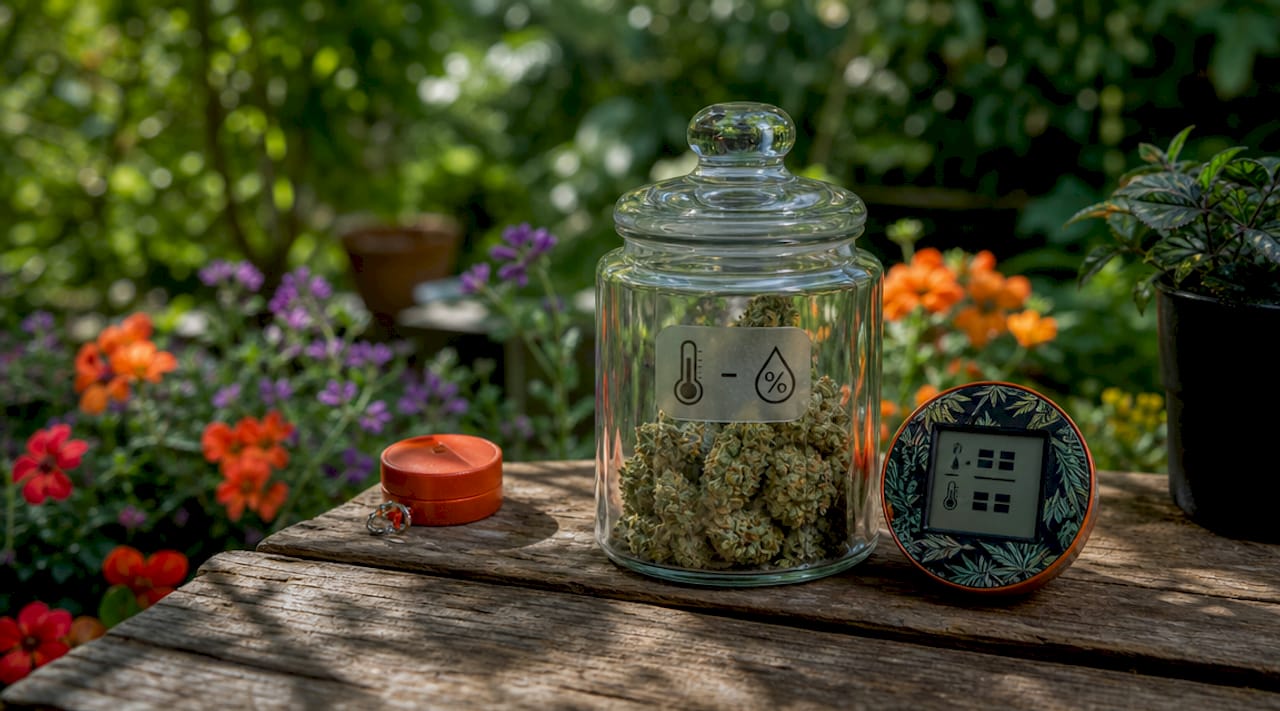
Humidity control is equally critical. Relative humidity between 58% and 62% preserves trichome structure and terpene profiles. Drop below that range and the flower dries out, becoming harsh and losing potency. Exceed it and you create conditions for mold growth, which renders the product unsafe to consume. Labels that specify humidity targets make the case for using two-way humidity control packs, which should be replaced every 2 to 4 months to maintain equilibrium.
| Storage Factor | Recommended Range | Risk if Ignored |
|---|---|---|
| Temperature | 59°F to 70°F | THC degradation, terpene loss |
| Relative humidity | 58% to 62% | Mold growth or excessive drying |
| Light exposure | Dark or UV-protected | Cannabinoid breakdown |
| Container type | Glass, airtight | Trichome loss, oxidation |
Container choice matters more than most consumers realize. Plastic containers generate static that pulls trichomes directly off the flower, reducing potency before you even open the jar. Glass is inert, does not create static, and can be UV-protective when tinted. Labels that specify container suitability guide consumers toward glass and away from plastic bags or clear containers left in direct light.
Minimizing container headspace reduces oxygen exposure, which slows oxidation and the degradation that comes with it. Smaller jars sized to their contents outperform partially filled larger containers. This is a factor most consumers overlook, even when the label recommends airtight storage.
Pro Tip: When you transfer cannabis to a new container, write the original label information on the new container immediately. Never store cannabis in an unlabeled jar, even temporarily.
What are best practices for labeling cannabis storage at home?
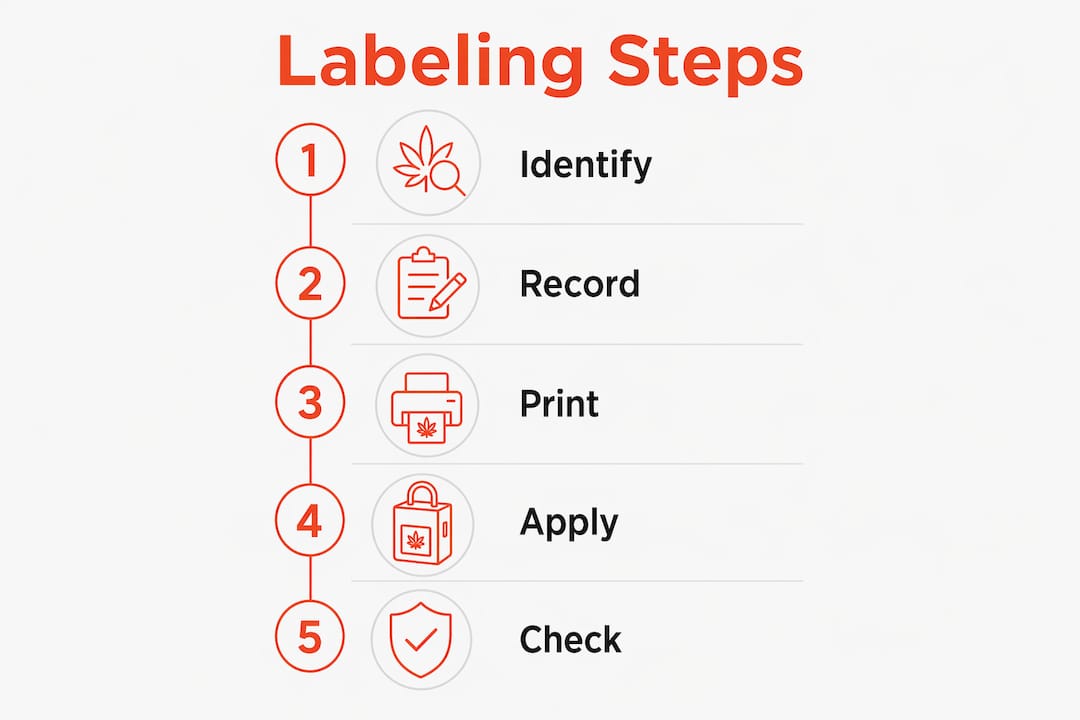
Home labeling does not require professional printing equipment. It requires consistency, accuracy, and a system you will actually follow. Here is a practical approach:
- Label every container at the point of transfer. The moment you move cannabis from its original packaging into a storage jar, write the strain name, purchase date, and batch number on the new container. Do not rely on memory.
- Include storage condition notes. Add the recommended temperature and humidity range directly on the label. This is especially useful if you store multiple strains with different requirements.
- Never mix strains in one container. Combining strains eliminates traceability and makes it impossible to apply the correct storage conditions for either product.
- Use durable labeling materials. Waterproof labels, freezer tape with a permanent marker, or label makers with laminated tape all hold up in cool, humid storage environments where standard paper labels fail.
- Apply a first-in, first-out rotation system. Purchase dates on labels enable you to use older stock before newer purchases, which reduces spoilage and keeps potency consistent. Place newer containers behind older ones in your storage area.
- Update labels when you replace humidity packs. Note the replacement date on the container so you know when the next change is due.
- Store containers label-side out. This sounds obvious, but a jar turned backward in a box defeats the entire purpose of labeling. Visibility is part of the system.
One common mistake is treating the original retail label as permanent. Retail packaging is designed for point-of-sale compliance, not long-term home storage. Once you open and transfer product, the responsibility for accurate labeling shifts to you. The organized storage guide from Treelockbox covers how to build a labeling and rotation system that works across multiple strains and container types.
Pro Tip: Date labels with both the purchase date and the “use by” estimate based on your storage conditions. For properly stored flower, that window is typically 6 to 12 months from purchase.
How do labeling and storage practices support compliance and recall readiness?
Labeling is the most frequent compliance failure point in cannabis packaging across regulated markets. Inaccurate or missing labels render products non-compliant and, in a recall scenario, untraceable. For consumers and patients, this is not an abstract regulatory concern. It is a direct safety issue.
The key compliance functions that labeling serves include:
- Batch traceability. A batch or lot number on every container allows regulators, retailers, and consumers to identify and pull specific products during a recall without affecting unrelated inventory.
- Warning message accuracy. State regulators in California, Colorado, Oregon, and Washington each require specific warning language. Labels that omit or misstate these warnings expose both retailers and consumers to legal risk.
- Inspection readiness. Consistent, accurate labels reduce the chance of failing a compliance inspection. Inspectors check label content against product records, and discrepancies trigger further scrutiny.
- Consumer protection. Clear labels with strain, harvest date, and batch give consumers the information they need to make safe decisions, particularly for medical patients managing specific dosing requirements.
The risk of removing cannabis from its original packaging and placing it in an unlabeled container is not theoretical. It voids every piece of safety data attached to that product. For medical patients especially, losing track of potency information or storage requirements can have direct health consequences. The secure storage checklist from Treelockbox outlines how to maintain compliance-ready labeling even in home storage setups.
Key takeaways
Accurate labeling is the single most important practice connecting cannabis storage conditions to product safety, potency, and legal compliance.
| Point | Details |
|---|---|
| Label every container | Include strain, batch number, purchase date, and storage conditions on every jar. |
| Follow storage condition guidance | Keep cannabis at 59°F to 70°F and 58% to 62% relative humidity as labeled. |
| Use glass over plastic | Glass prevents static trichome loss and maintains potency better than plastic containers. |
| Rotate stock by date | First-in, first-out rotation using purchase date labels reduces spoilage and potency loss. |
| Labeling is a compliance tool | Batch numbers and warning labels protect consumers and support recall readiness in regulated markets. |
Why labeling deserves more respect than it gets
Most cannabis consumers treat labeling as a retail formality. They read the label at the dispensary, maybe check the THC percentage, and then toss the original packaging once they transfer the product to a storage jar. That is where the real problem starts.
At Treelockbox, we see this pattern constantly. Customers invest in quality lockable storage, humidity packs, and UV-protective glass jars, and then store their product in an unlabeled container. All of that effort to protect the product from environmental damage is undermined the moment you lose track of what is inside, when you bought it, and what conditions it needs.
The uncomfortable truth about cannabis storage is that the container is only half the system. The label is the other half. A perfectly sealed glass jar with no label is just a mystery box. You cannot rotate stock you cannot date. You cannot apply the right humidity target to a strain you cannot identify. You cannot act on a recall notice for a batch number you never recorded.
What I have found works in practice is treating every cannabis container like a small inventory item. Write the strain, the date, the batch number, and the storage target on the label before you put the lid on. It takes thirty seconds. The payoff is months of fresher product, zero guesswork, and the confidence that comes from knowing exactly what you have and how to store it properly. Combine that habit with a cannabis potency guide and you have a system that actually protects your investment.
— Tree Lock Box
Upgrade your cannabis storage setup with Treelockbox
Labeling works best when your storage system supports it. Treelockbox designs lockable stash boxes, airtight storage units, and prep tools built specifically for consumers who take freshness and organization seriously. Every product in the Treelockbox lineup is built to hold labeled containers securely, control odor, and protect your cannabis from the light, heat, and humidity that degrade it fastest. If you are ready to build a storage setup that pairs quality hardware with smart labeling practices, browse the full storage and accessories collection at Treelockbox. For answers to common questions about storage methods, container types, and labeling accessories, the cannabis storage FAQ is a practical starting point.
FAQ
What information must a cannabis storage label include?
A cannabis storage label must include the strain name, batch or lot number, purchase or harvest date, recommended storage conditions, and applicable health warnings. Potency information and manufacturer contact details are also required in most regulated markets.
How long does properly labeled and stored cannabis stay fresh?
Properly labeled flower stored at the recommended conditions of 59°F to 70°F and 58% to 62% relative humidity can maintain peak freshness for 6 to 12 months. Labels that specify these conditions make it possible to follow them consistently.
Why should I avoid storing cannabis in plastic containers?
Plastic containers generate static electricity that pulls trichomes off the flower, directly reducing potency and flavor. Glass containers are inert, prevent static damage, and are the preferred option for any cannabis storage setup.
What happens if I remove cannabis from its original packaging?
Removing cannabis from its original packaging and placing it in an unlabeled container voids all safety and traceability data attached to that product. Always transfer the label information to the new container immediately to maintain compliance and safety records.
How does labeling help with cannabis recalls?
Batch numbers and harvest dates on labels allow consumers and retailers to identify and pull specific affected products during a recall without discarding unrelated inventory. Unlabeled containers make it impossible to act on recall notices accurately.