

Why Use Odor Proof Containers for Cannabis Storage
Odor proof containers are specialized storage solutions that prevent smell escape by combining airtight seals with active odor adsorption materials like activated carbon. For cannabis users, this combination solves three problems at once: privacy, legal compliance, and product freshness. Standard plastic bins or basic zip bags simply cannot match the performance of purpose-built odor-resistant containers because plastic lacks the barrier properties needed to stop volatile organic compounds from escaping. Whether you store at home, travel, or share living spaces, understanding why use odor proof containers is the first step toward choosing the right solution.
Why use odor proof containers: the science behind the seal
The most common misconception about odor control is that airtight equals odor proof. It does not. Airtight seals reduce odor dispersion but cannot completely stop odor transfer because certain volatile organic compounds (VOCs) permeate through materials even without a physical air gap. Cannabis produces a dense profile of terpenes and VOCs. These molecules are small, chemically active, and capable of migrating through standard plastics and rubber seals over time.
True odor proof performance requires a second layer of defense: adsorption. Activated carbon is the industry standard for this job. Carbon adsorption physically traps VOC molecules inside a dense network of micropores, removing them from the air inside the container before they can escape. This is not a chemical reaction. The molecules are physically captured and held, which is why activated carbon linings remain effective even when a seal is slightly compromised.
The distinction matters in practice. A glass jar with a rubber gasket will contain most odor under normal conditions. But open it in a warm room, or carry it in a bag that gets compressed, and the pressure change forces VOC-laden air past the seal. A container with both a rated seal and an activated carbon lining handles that scenario without releasing detectable odor.
Key mechanisms that define a genuinely odor proof container:
- Airtight seal with a measurable PSI or kPa rating. Higher seal pressure ratings translate directly to tighter odor containment.
- Activated carbon lining or insert. Carbon quality and contact time determine effectiveness more than lining thickness.
- Multi-layer material construction. Metallized foil or Mylar layers block gas permeation that single-layer plastics cannot stop.
- Gasket material. Silicone outperforms standard rubber for long-term seal integrity and resistance to compression deformation.
Pro Tip: When evaluating any container, press the lid firmly and release it. A quality silicone gasket will create a slight resistance and a soft “pop” when opened. No resistance means no meaningful seal.
Smell-proof bags vs. airtight jars vs. plastic containers
Choosing the right storage format depends on your use case. Each option has a specific performance profile, and the differences are significant enough to affect your daily experience.
| Storage type | Odor control | Portability | Durability | Best use case |
|---|---|---|---|---|
| Smell-proof bags | Excellent (active adsorption) | High | Moderate | Travel, on-the-go, short-term |
| Airtight glass jars | Good (seal dependent) | Low | High | Home storage, long-term freshness |
| Airtight metal tins | Good to excellent | Moderate | High | Home or desk storage |
| Standard plastic containers | Poor | High | Moderate | Not recommended for cannabis |
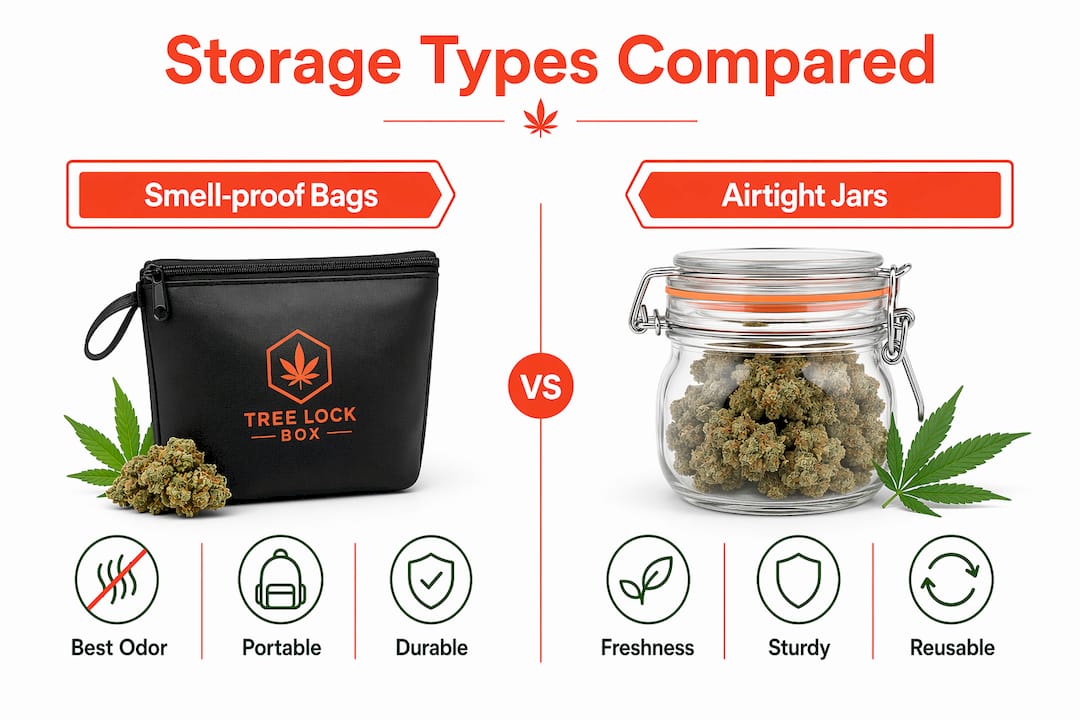
Smell-proof bags outperform airtight containers in odor control because they combine physical containment with active odor reduction through activated carbon layers. This means even minor leakage does not result in detectable odor escaping into the environment. The advantages of smell-proof bags become especially clear during travel, where pressure changes and movement would challenge a rigid container’s seal.
Airtight glass jars, like those from Mason jar brands or purpose-built cannabis storage lines, provide excellent freshness preservation because glass is non-porous and does not absorb or emit odors of its own. Their limitation is portability. A glass jar in a backpack is a liability, and the rigid structure offers no flexibility under compression.
Plastic containers without specialized layers absorb and emit odor over time, making them the weakest option for cannabis storage. Standard polyethylene and polypropylene are permeable to terpenes and will carry residual smell even after cleaning. This is a critical point for anyone storing cannabis in shared spaces or near children.
Pro Tip: For maximum odor control, place your airtight glass jar inside a smell-proof bag. This double-layer approach gives you the freshness benefits of glass with the active adsorption of carbon-lined fabric. It is the most effective combination for home storage with occasional transport.
What materials make containers truly odor-resistant?
Material selection is where most budget containers fail. The benefits of odor-proof storage depend entirely on what the container is made from, not just how it is sealed.
Metallized foil and Mylar are the gold standard for blocking gas permeation. Multi-layer films with aluminum foil block gases and odors far more effectively than single-layer polyethylene. Mylar bags used in food storage and cannabis packaging use this principle. The metallic layer creates a near-impermeable barrier to oxygen and VOCs.
High-density polyethylene (HDPE) is a step above standard plastic but still falls short without additional layers. HDPE is used in pharmaceutical packaging for a reason. It resists chemical permeation better than low-density alternatives, but it is not sufficient on its own for strong-smelling botanicals like cannabis.
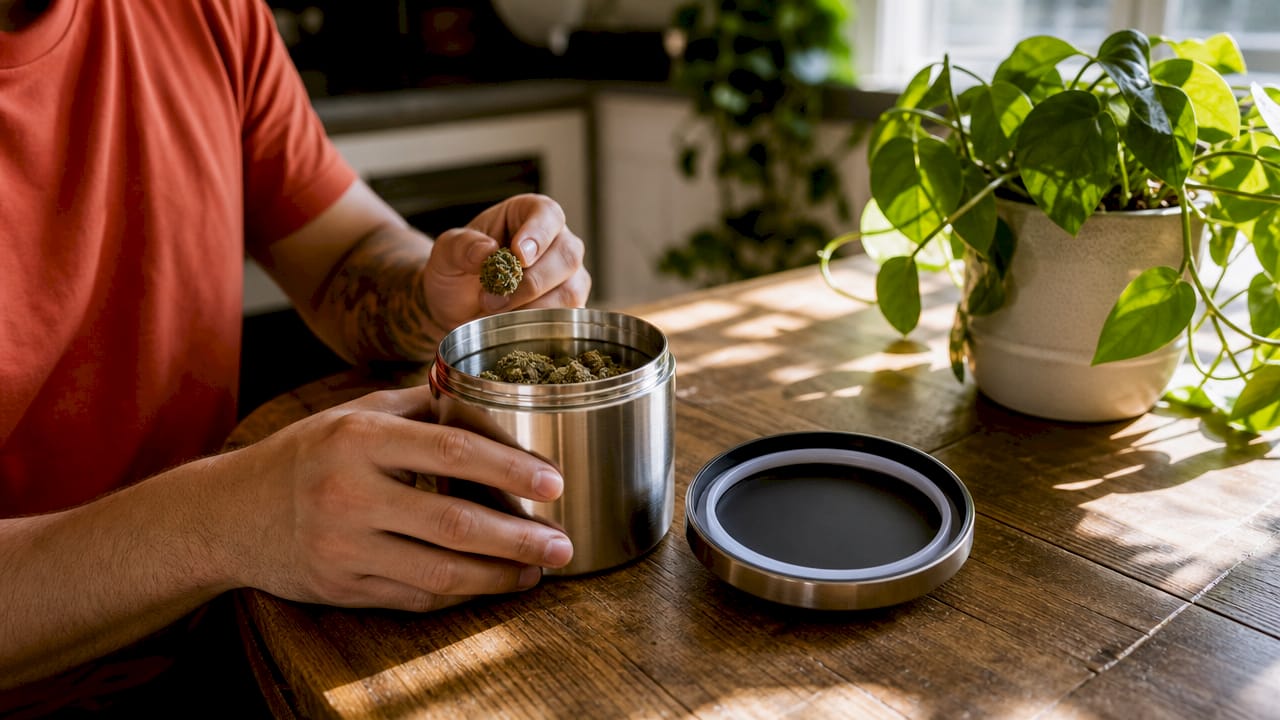
Stainless steel offers zero odor absorption and zero permeation. A stainless steel container with a silicone gasket is one of the most reliable long-term storage options available. It does not degrade, does not absorb terpenes, and cleans completely without retaining residual smell.
Activated carbon linings deserve special attention. Carbon effectiveness depends on carbon quality and contact time, not just the presence of a carbon layer. Cheap bags use a thin carbon weave that saturates quickly. Quality products use dense, microporous carbon that maintains adsorption capacity over hundreds of uses.
Silicone and neoprene gaskets seal the gap between lid and body. Silicone is preferred because it resists compression set, meaning it returns to its original shape after being pressed. Neoprene is acceptable but degrades faster under UV exposure and temperature cycling. For secure cannabis storage, silicone gaskets are the clear choice.
How to choose odor-proof bins and containers for your needs
Selecting the right container is a matching exercise. Your lifestyle, storage duration, and discretion requirements each point toward a different solution. Follow this process to narrow your options:
- Define your primary use case. Home storage favors rigid containers with strong seals and no portability requirement. Daily carry favors smell-proof bags or compact metal tins. Shared living spaces require the highest odor control rating available.
- Assess the seal quality before buying. Look for containers that publish a seal pressure rating in PSI or kPa. Containers without published ratings are relying on marketing language, not engineering.
- Match material to duration. Short-term storage (under one week) tolerates a wider range of materials. Long-term storage (weeks to months) requires glass, stainless steel, or metallized foil to preserve terpene profiles and prevent odor migration.
- Check the carbon quality in smell-proof bags. Bags that list activated carbon as a feature should specify carbon density or layer count. A single thin carbon layer saturates within weeks of regular use.
- Consider a lockable design for security. Odor control and physical security are separate features. A lockable stash box with an odor-resistant lining addresses both concerns simultaneously, which matters in households with children or roommates.
- Plan for maintenance. Every container requires periodic seal inspection and cleaning. Factor this into your decision. A container with a replaceable gasket will outlast one with a molded-in seal.
Avoid overfilling any container. Compressing cannabis against the lid prevents the gasket from seating properly and creates a direct odor escape path. Fill to 80% capacity as a consistent rule.
Practical tips for maximizing odor control and freshness
Getting the most from your odor-resistant containers requires consistent habits, not just good equipment. Proper cleaning and seal maintenance directly extend the effective life of any container and preserve the quality of what is stored inside.
Follow these practices to maintain peak performance:
- Clean containers between refills. Residual terpene buildup on interior walls reduces the effective volume available for fresh product and contaminates new batches with degraded odor compounds. Use isopropyl alcohol and allow full drying before reuse.
- Inspect gaskets monthly. A gasket that shows cracking, flattening, or discoloration needs replacement. Most quality containers sell replacement gaskets separately.
- Store in a cool, dark location. Heat accelerates terpene volatilization, which increases the odor load inside the container and speeds up seal degradation. A drawer or cabinet away from windows is sufficient.
- Replace smell-proof bags on a schedule. Activated carbon saturates over time. Smell-proof bags maintain performance best when replaced every three to six months depending on use frequency.
- Use double-layer storage for high-discretion situations. Place your primary container inside a secondary smell-proof bag when traveling or storing in locations where odor detection is a serious concern.
Pro Tip: Label your containers with the date of last seal inspection using a small piece of masking tape on the bottom. This simple habit prevents the most common cause of odor failure: a forgotten degraded gasket.
Key takeaways
Odor proof containers work because they combine airtight sealing with activated carbon adsorption, and neither mechanism alone is sufficient for reliable cannabis odor control.
| Point | Details |
|---|---|
| Airtight is not odor proof | VOCs permeate materials without a carbon adsorption layer to capture them. |
| Activated carbon quality matters | Carbon density and contact time determine effectiveness more than lining thickness. |
| Material selection is critical | Metallized foil, stainless steel, and glass outperform standard plastic for odor containment. |
| Double-layer storage works best | Combining a rigid airtight container with a smell-proof bag delivers the strongest odor control. |
| Maintenance extends performance | Monthly gasket checks and scheduled bag replacement prevent the most common odor failures. |
What we have learned from years of cannabis storage at Treelockbox
The most consistent mistake we see is treating odor control as a one-time purchase decision rather than an ongoing practice. Someone buys a quality container, uses it for eight months without inspecting the gasket, and then wonders why their storage solution stopped working. The container did not fail. The maintenance did.
We have also found that most users underestimate how much the storage environment matters. A technically excellent container stored on a sunny windowsill will underperform a mid-range container kept in a cool drawer. Temperature cycling degrades gaskets faster than almost any other factor.
The other insight worth sharing: the cannabis storage case you choose should match your actual life, not an idealized version of it. If you travel frequently, a rigid glass jar is the wrong answer regardless of its seal rating. If you store at home long-term, a smell-proof bag alone is not enough. The best solution is always the one you will use correctly and maintain consistently.
We lean toward stainless steel containers with silicone gaskets for home storage and carbon-lined bags for transport. That combination has proven reliable across a wide range of conditions and user habits. Quality materials and a consistent maintenance routine will outperform any single premium product used carelessly.
— Tree Lock Box
Secure storage solutions from Treelockbox
Treelockbox designs lockable stash boxes and storage accessories built specifically for cannabis users who prioritize discretion, security, and freshness. Every product in the Treelockbox shop is selected for seal quality, material durability, and real-world odor control performance. The lineup includes lockable boxes with odor-resistant linings, portable storage units for travel, and preparation tools like grinders and cone fillers that keep your workflow clean and organized. If you want storage that handles both odor control and physical security without compromise, the Treelockbox catalog is built around exactly that need. Browse the full selection and find the configuration that fits your storage habits.
FAQ
What is the difference between airtight and odor proof?
Airtight containers block air passage but may still allow odor molecules to permeate through materials over time. Odor proof containers add active adsorption, typically activated carbon, to capture VOCs before they escape.
How long do smell-proof bags stay effective?
Activated carbon in smell-proof bags saturates with use. Most bags maintain reliable odor control for three to six months of regular use before the carbon layer needs replacement.
Can plastic containers work for cannabis odor control?
Standard plastic containers are not effective for odor control because polyethylene and polypropylene are permeable to terpenes and absorb residual smell over time. Multi-layer containers with metallized foil or activated carbon linings are required for reliable performance.
What is the best material for long-term cannabis storage?
Glass and stainless steel are the top choices for long-term storage because neither material absorbs or emits odors. Both require a quality silicone gasket to maintain an effective seal over months of use.
Does overfilling affect odor containment?
Overfilling prevents the gasket from seating fully against the lid, creating a direct escape path for odor. Fill containers to 80% capacity to maintain seal integrity and consistent odor control.