

Odorless Storage for Medical Patients: 2026 Guide
If you’re a medical cannabis patient, odorless storage isn’t a luxury. It’s a necessity. Whether you live with family, travel frequently, or simply want to keep your medication private, the smell of cannabis can create real problems. This guide on odorless storage for medical patients covers everything you need: what materials actually work, how to layer your storage for maximum discretion, and how to maintain effectiveness over time. No fluff, no obvious advice. Just the specific, practical approach that protects your privacy and your product.
Table of Contents
- Key Takeaways
- Odorless storage for medical patients: what you actually need
- Preparing your cannabis for odorless storage
- Executing odor-free storage at home and while traveling
- Maintaining odorless storage over the long term
- My honest take on what odorless storage really means
- Storage solutions built for medical patients
- FAQ
Key Takeaways
| Point | Details |
|---|---|
| Activated carbon is your best friend | Carbon-lined bags neutralize odors at the molecular level, not just mask them. |
| Layer your storage solutions | Combining smell-proof bags with a locked box delivers far stronger odor control and security than either alone. |
| Avoid bathroom storage | Humidity and heat degrade cannabis faster and compromise odor containment. Use a climate-stable location instead. |
| Check your storage regularly | Inspect containers every few months for odor leaks, degradation signs, and material wear. |
| Security and scent control work together | A combination lock adds a critical layer of patient safety that smell-proof materials alone cannot provide. |
Odorless storage for medical patients: what you actually need
Most guides on this topic list “smell-proof bags” and call it done. That’s not enough. Effective odorless storage for medical patients requires understanding why certain materials work, which combinations are worth your money, and what security features matter beyond just blocking scent.
Materials that block odor effectively
Activated carbon lining in storage bags works through a porous structure that traps odor molecules before they escape. This is the same technology used in industrial air filtration. It’s not a perfume masking the smell. It physically captures it. Mylar bags offer a secondary option because the metalite barrier film is nearly impermeable to air and scent. Hard airtight plastics with rubber gasket seals are another solid choice for home use.
Here’s a breakdown of your core material options:
- Activated carbon bags: Best for daily-use pouches and travel. Look for double-sealed zippers and thick carbon layers.
- Mylar bags: Ideal for longer-term storage of larger quantities. Heat-seal for maximum containment.
- Airtight hard containers: Best for home storage where portability is not a priority. Look for silicone gasket seals.
- Combination lockboxes: Not odor-proof on their own, but critical for security and privacy when layered with the above.
| Storage tool | Odor control | Security | Best use case |
|---|---|---|---|
| Activated carbon bag | High | Low (zipper only) | Travel, daily carry |
| Mylar bag (heat sealed) | Very high | None | Long-term home storage |
| Airtight hard container | Medium | Low | Desk, shelf storage |
| Combination lockbox | Low alone | Very high | Combined with bags |
| Lockbox + carbon bag | Very high | Very high | Best overall solution |
Pro Tip: Never buy a “smell-proof” bag that uses only a single zipper without a double seal. Pressure changes during travel force odors through single-layer closures. Double-zip bags with carbon lining are worth the extra cost every time.
Preparing your cannabis for odorless storage
How you handle your cannabis before sealing it matters as much as the container you use. The preparation stage is where most patients lose odor control without realizing it.
-
Inspect the product first. Check for signs of mold, unusual smell beyond normal cannabis aroma, or texture changes. Storing degraded product creates bigger odor problems over time and can compromise your health.
-
Keep original labeled packaging where possible. Medical compliance in many states requires products to stay in their dispensary-labeled containers. These containers are usually airtight by design. Slip that original container directly into your odor-proof bag or lockbox rather than transferring product loose.
-
Add a humidity pack. Products like 62% humidity packs help maintain freshness and actually reduce the rate at which cannabis releases strong odor. Over-dried cannabis tends to produce more airborne terpenes. Maintaining the right moisture level keeps smell contained.
-
Vacuum seal when storing larger quantities at home. A basic hand-pump vacuum sealer works with standard sealable bags. Removing air from around the product dramatically slows oxidation and odor release. For long-term storage, this is a step most patients skip to their detriment.
-
Layer your containment. Place your sealed or original container inside a carbon-lined bag, then place that bag inside a lockbox. This three-layer approach means that even if one layer fails, the others hold. Smell-proof bags with combination locks are ideal for the middle layer because they handle both odor and access control in one product.
-
Never store cannabis with strong-smelling items. Storing near food, coffee, or cleaning products causes cross-contamination of scents and can affect product flavor. Keep your storage space dedicated.
Pro Tip: If you notice your cannabis smells stronger than usual after storage, it’s almost always a humidity issue. The product may have rehydrated slightly and is releasing terpenes more actively. Swap in a fresh humidity pack and reseal immediately.
Executing odor-free storage at home and while traveling
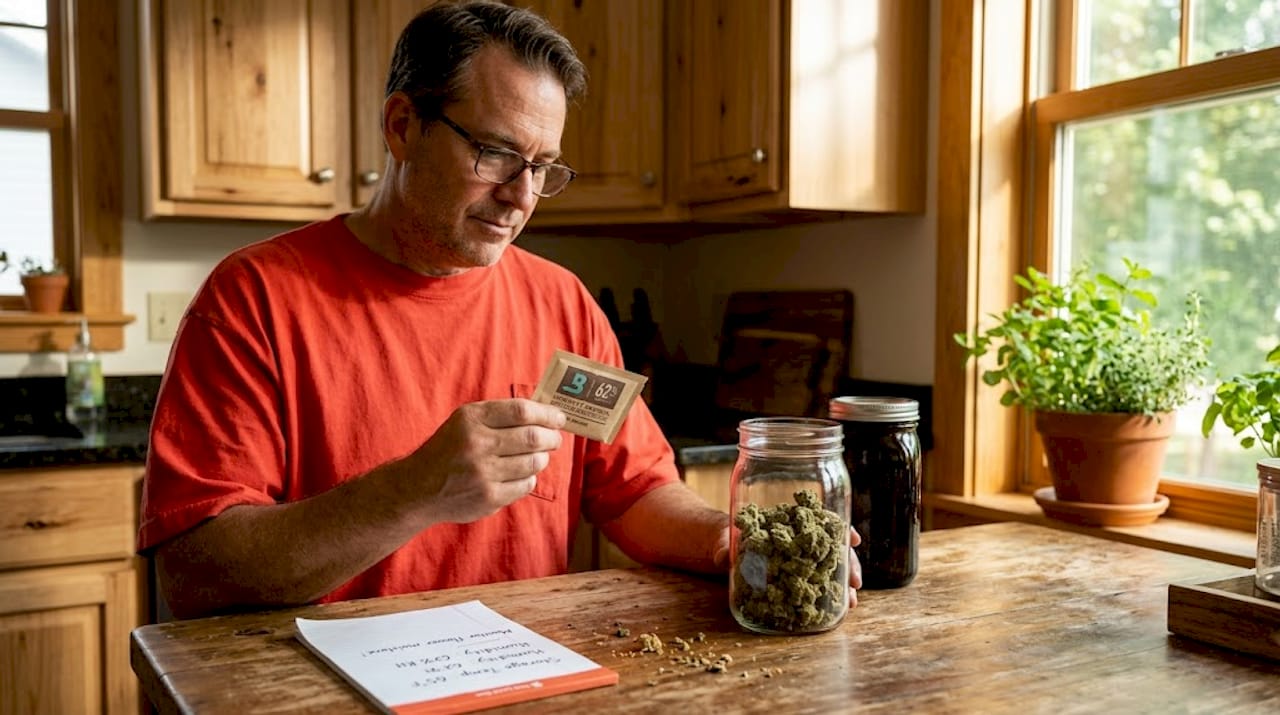
Getting the setup right is one thing. Executing it consistently across different environments is where patients typically run into trouble.
Choosing the right location at home
Bathroom medicine cabinets are among the worst possible spots for cannabis storage. Steam from showers creates humidity spikes. Temperature swings from running hot water degrade potency. The irony is that medicine cabinets feel like the logical place, but they’re genuinely problematic for any medication with environmental sensitivity.
Better locations include bedroom closets, the top shelf of a hallway closet, or a dedicated drawer in a climate-stable room. Aim for somewhere that stays between 60°F and 70°F with consistent humidity. If you want to learn more about safe home storage options, the principles overlap significantly with broader medication management practices.
Common mistakes that break odor control
- Leaving the container open while you access product, even briefly
- Using worn-out bags where the zipper seal has stretched or cracked
- Storing in a hot car or near windows where temperature spikes occur
- Skipping the lockbox layer because it feels redundant
- Reusing Mylar bags after opening without re-sealing
Odor-proof storage fails gradually, not all at once. By the time you notice a smell, the barrier has been compromised for days.
Traveling with medical cannabis
Travel requires tighter layering. Use a carbon-lined bag with a combination lock as your primary container. Keep the bag inside a hard-sided case if possible, since soft bags can be compressed and force air through seals. Always carry your medical documentation alongside your product. Odor control protects your privacy, but documentation protects your legal status.
Comparison: storage approaches for travel vs. home
| Approach | Travel rating | Home rating | Notes |
|---|---|---|---|
| Carbon bag only | Good | Fair | Sufficient for short trips |
| Carbon bag + lockbox | Excellent | Excellent | Best all-around option |
| Vacuum sealed Mylar | Poor (bulk) | Excellent | Not practical for daily carry |
| Hard airtight container | Fair | Good | Adds bulk but durable |
Maintaining odorless storage over the long term
Getting the setup right is the easy part. Keeping it effective over months and years is where most patients fall short.
-
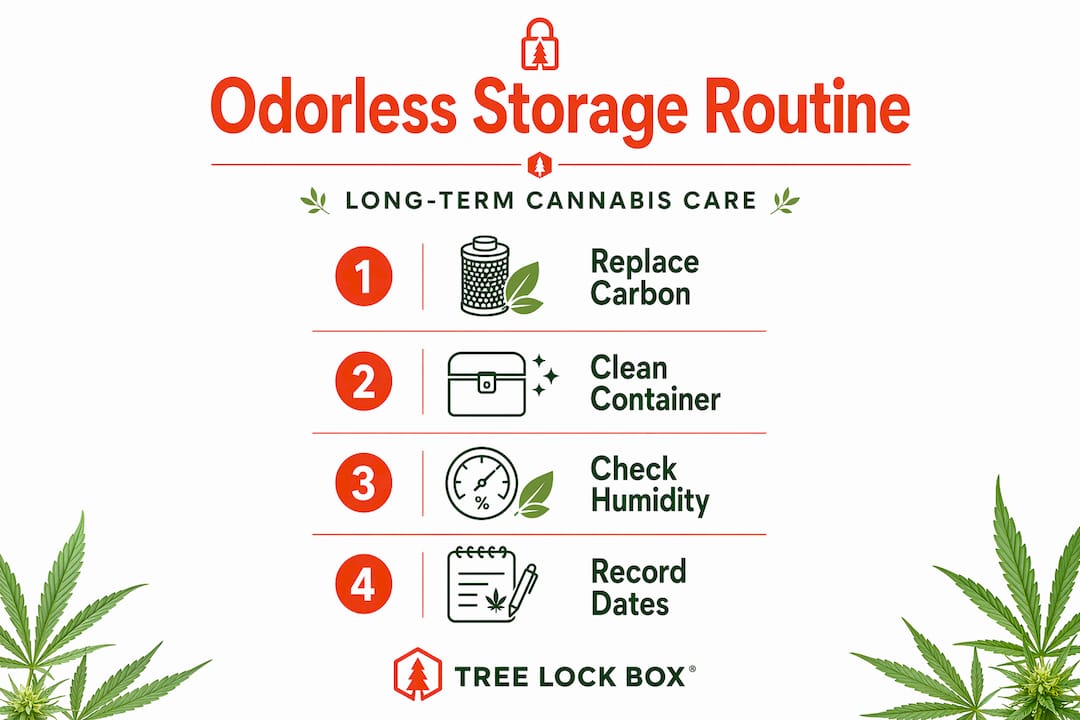
Conduct routine odor checks every 4 to 8 weeks. Hold your closed bag or container near your face and breathe in. Even a faint smell means the barrier is weakening. Check the container seams, zipper, and any areas where materials flex repeatedly.
-
Replace carbon bags every 3 to 6 months. Activated carbon becomes saturated over time. Once the pores are full, the material stops absorbing and odors pass straight through. High-use bags wear out faster. If you use your bag daily, lean toward the 3-month replacement cycle.
-
Clean hard containers regularly. Wipe lockboxes and hard containers with an unscented cleaning wipe monthly. Residue from cannabis builds up inside containers and becomes a persistent odor source even when the product is removed. Do not use scented cleaners since they complicate odor assessment.
-
Dispose of expired or unused product safely. Check for degradation signs like color changes, unusual smell, or texture shifts. Expired cannabis should be disposed of using your dispensary’s take-back program or by following local regulations. Do not leave degraded product in storage. It produces stronger odors and creates compliance risks.
-
Reassess your full setup twice a year. Think of this like a medicine cabinet review. Patients should do storage clean-outs at least once or twice per year to check all materials, replace worn components, and confirm the setup still fits their needs.
Pro Tip: Keep a small notebook or phone note with the date you last replaced your carbon bag and when you last cleaned your lockbox. It sounds obsessive until the day your bag fails and you realize you had no idea when you bought it.
My honest take on what odorless storage really means
I’ve seen a lot of patients focus entirely on scent when they approach discreet storage. They buy the best carbon bag, seal everything tightly, and consider the problem solved. What they miss is that odorless storage for medical patients is actually a medication safety practice. The scent is just the most visible part of a larger problem.
The patients I’ve seen handle this best treat their cannabis the same way they treat any controlled medication. They combine odor control with temperature management, combine discretion with accessibility for themselves, and combine a locked container with proper documentation. The ones who struggle treat it as a single-layer problem when it’s actually a multi-layer one.
The other thing I want to say plainly: medication safety includes keeping things secure from children and others in the household. A smell-proof bag with no lock does nothing to prevent access. A lockbox with no odor control blows your cover the moment someone gets close. You need both. That combination isn’t paranoia. It’s responsible patient behavior.
— Tree Lock Box
Storage solutions built for medical patients
At Treelockbox, everything we build is designed around the two things medical cannabis patients need most: genuine odor control and real security. Our lockable cannabis storage box combines an airtight seal with a combination lock in a single durable unit, so you’re not duct-taping solutions together. It’s built specifically for patients who need their medication accessible to them and completely off-limits to everyone else.
Beyond the flagship lockbox, our full store for cannabis accessories includes smell-proof travel pouches, preparation tools, and everything you need to keep your medical supply storage solutions organized and discreet at home or on the road. American-made craftsmanship, fast shipping, and products built to last longer than the average carbon bag replacement cycle.
FAQ
What makes a bag truly smell-proof?
A genuinely smell-proof bag uses activated carbon lining with a double-sealed zipper to trap and neutralize odor molecules. Single-layer zippers and thin carbon layers are not sufficient for medical cannabis storage.
Is a carbon bag enough on its own?
For short trips or quick outings it can work, but carbon bags offer no security against unauthorized access. Pairing a carbon-lined bag with a lockbox provides both odor control and security, which is the standard medical patients should aim for.
How often should I replace smell-proof bags?
Replace activated carbon bags every 3 to 6 months depending on use frequency. Daily-use bags should be replaced closer to the 3-month mark since the carbon saturates faster with repeated opening and closing.
Where is the worst place to store medical cannabis at home?
The bathroom is the worst location due to humidity and temperature swings from showers and steam. Store cannabis in a climate-stable area like a bedroom closet, away from heat sources and direct light.
Can I travel with odor-proof storage legally?
Smell-proof storage helps maintain your privacy during travel, but it does not replace legal documentation. Always carry your medical cannabis card and dispensary-labeled packaging, and follow the transport laws of every state you pass through.