

Why Discreet Storage for Patients Really Matters
Most patients assume a child-resistant cap or a high bathroom shelf is enough to keep medication safe. It isn’t. Understanding why discreet storage for patients goes beyond convenience reveals a more serious picture: privacy violations, medication degradation, accidental ingestion, and even identity theft. The way you store your medication affects its potency, your personal health data, and the safety of everyone in your home. This guide breaks down the real risks of careless storage and gives you a clear path to solutions that actually protect you.
Table of Contents
- Key takeaways
- Why discreet storage for patients is a real safety issue
- What makes a storage solution actually effective
- Balancing security with accessibility
- How to set up discreet storage at home
- My take on why most patients get this wrong
- Protect your medication with the right storage
- FAQ
Key takeaways
| Point | Details |
|---|---|
| Hidden spots aren’t secure | Common hiding places expose medication to misuse, humidity, and accidental access by children. |
| Privacy is a physical risk | Prescription labels carry personal health data that can be stolen if not handled carefully. |
| Lockboxes outperform alternatives | Households using lockboxes show a 92% improvement in safe storage practices over caps or hiding. |
| Accessibility matters too | Secure storage must stay usable for patients with mobility or cognitive challenges. |
| Disposal is part of storage | Destroying labels before discarding bottles is a critical step most patients skip entirely. |
Why discreet storage for patients is a real safety issue
Most people think about medication storage in terms of convenience. Where is it easy to grab? Where will I remember it? That thinking leads directly to the two most dangerous spots in any home: the bathroom cabinet and the kitchen counter.
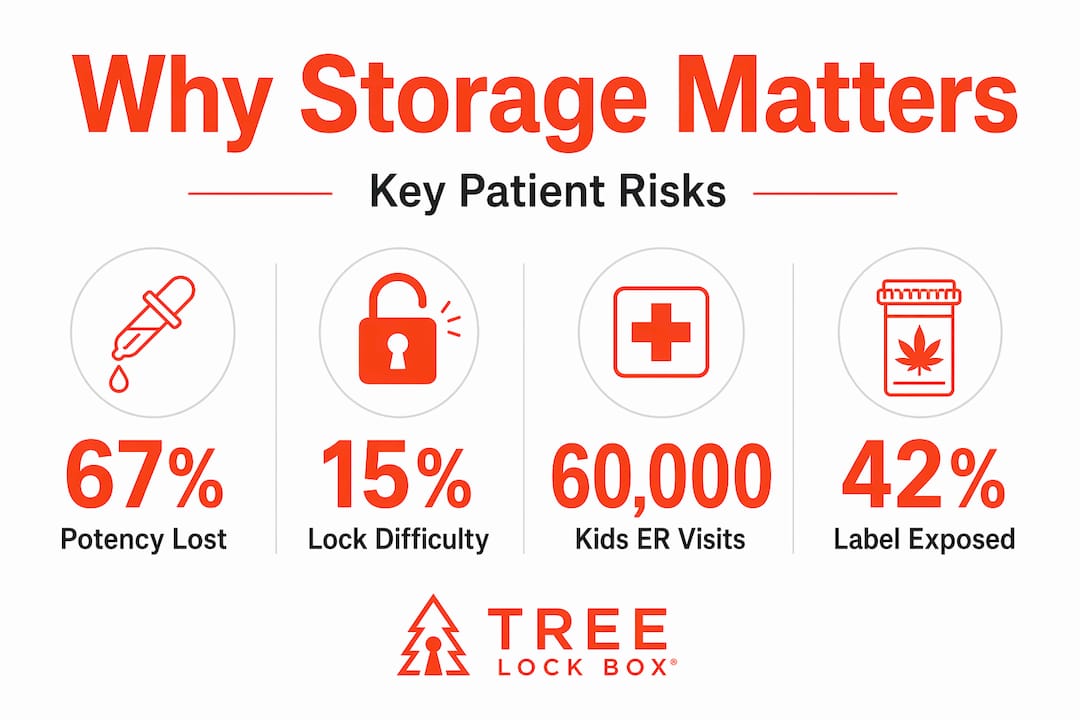
Bathroom humidity degrades common medications by up to 67% within just 30 days. Heat from showers and steam from daily routines break down the chemical structure of pills, capsules, and liquids. You may be taking medication that has lost most of its effectiveness without knowing it.
The child access problem is even more urgent. Nearly 60,000 children visit emergency rooms every year in the U.S. due to accidental medication ingestion at home. Kids can reach shelves up to 48 inches high, which covers most standard cabinets. A high shelf is not a locked shelf.
There is also a privacy dimension that most patients never consider:
- Prescription labels contain your full name, prescribing doctor, pharmacy, diagnosis codes, and dosage. That is a complete snapshot of your personal health data.
- 42% of prescription bottles discarded in household trash still have fully readable labels, creating a direct path to identity theft.
- Visitors, housekeepers, and even family members can read labels left in open storage, compromising your confidentiality without any malicious intent.
- Medication misuse and diversion are real risks when bottles are accessible to guests or teenagers in the home.
The combination of physical safety, medication efficacy, and personal privacy is what makes discreet medical storage a patient need, not a preference.
What makes a storage solution actually effective
Not all lockboxes or storage containers are created equal. The features that matter most depend on your specific medication type, living situation, and patient needs. Here is how the most important factors break down:
| Feature | Why it matters | Best for |
|---|---|---|
| Physical lock (key or combo) | Prevents unauthorized access by children and visitors | Most households |
| Biometric access | Faster entry; 78% more effective than traditional locks | Seniors, patients with dexterity issues |
| Humidity and temperature control | Preserves medication potency over time | All medications, especially liquids |
| Odor control | Maintains discretion; prevents detection | CBD and cannabis-based treatments |
| Discreet exterior design | Does not signal contents to visitors | Shared living spaces |
| Portability | Allows safe transport for on-the-go patients | Travelers, commuters |
Physical security is the foundation. A lockable container limits who can access your medication to the people you choose. The importance of patient confidentiality extends beyond the doctor’s office. It applies to every place your medication exists, including your nightstand.
Environmental controls are often overlooked. Keeping medication in a cool, dry location inside a sealed container is not just about following label instructions. It directly determines whether the medication you take is doing what it is supposed to do.
Pro Tip: Store your lockbox in a bedroom closet or a dedicated drawer rather than a bathroom or kitchen. These locations maintain more stable temperature and humidity levels year-round.
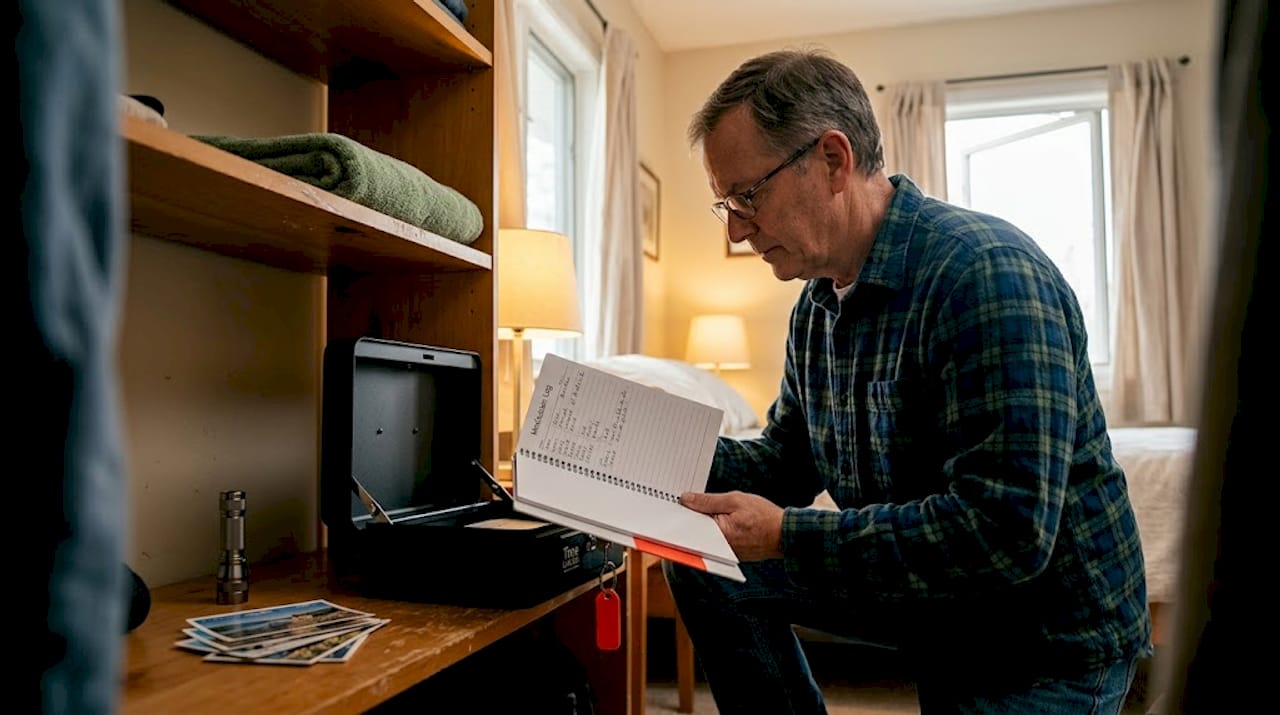
Discreet design matters more than people admit. A box that looks like a book, a decorative container, or a plain matte case does not announce its contents to anyone who walks through your door. That low-profile appearance is a legitimate patient privacy solution, not just an aesthetic choice.
Balancing security with accessibility
Here is the tension that most storage guides ignore: a lock that is too complicated to open is a lock that patients stop using. When security creates a barrier to taking medication on time, it becomes a health risk of its own.
15% of seniors report difficulty using traditional combination or key locks due to arthritis, reduced grip strength, or cognitive decline. That is a significant portion of the patient population for whom standard lockboxes create real problems.
The solution is not to abandon security. It is to match the lock type to the patient’s actual abilities. Biometric fingerprint locks remove the need to remember codes or manage keys entirely. For patients with Parkinson’s disease or multiple sclerosis, no-touch storage tools and accessible designs make daily medication routines manageable without sacrificing protection.
Practical ways to balance security and accessibility:
- Choose a lock mechanism the patient can operate independently on their worst day, not just their best.
- For patients with arthritis, look for accessible storage options with large buttons or touch-free entry.
- Involve caregivers in the setup process so they understand the system without needing to override it.
- Test the storage solution before committing. A lockbox that takes 45 seconds to open under stress is not a good fit for someone managing multiple daily doses.
The goal, as the least restrictive principle in care guidelines describes it, is maximum protection with minimum barrier to the patient’s independence.
Pro Tip: If you are choosing storage for an elderly family member, let them test the lock mechanism themselves before purchasing. What feels easy to you may be genuinely difficult for them.
How to set up discreet storage at home
Getting this right does not require a complicated system. It requires making a few deliberate decisions and following through consistently. Here is a practical sequence to follow:
-
Audit your current storage. Walk through your home and identify every location where medication currently lives. Note any spots exposed to heat, humidity, or easy visibility. This step alone often reveals two or three immediate problems.
-
Choose the right container for your medication type. Pills and capsules need a dry, sealed environment. Liquids and some topicals require temperature stability. CBD and cannabis-based treatments benefit from odor control in addition to physical security. Match the container’s features to what you are actually storing.
-
Pick a location that is not a bathroom or kitchen. A bedroom closet shelf, a locked drawer in a home office, or a dedicated storage box in a low-traffic area all work well. The primary reason for discreet storage is preserving medication efficacy, and location is a direct factor in that.
-
Manage your keys or codes carefully. Never tape a code to the outside of a lockbox. Never store a key on top of or directly beside the container. Proper key management is one of the most commonly skipped steps, and it is the one that most directly undermines the security you set up.
-
Handle disposal as part of your privacy routine. Before discarding any prescription bottle, remove or completely obscure the label. Use a black marker, peel the label off entirely, or cut it into pieces. This single habit eliminates a major source of personal health data exposure.
-
Review your setup every few months. Medications change. Living situations change. A storage solution that worked six months ago may no longer fit your current needs. A quick quarterly check keeps the system working.
Pro Tip: Use a medication log stored inside the lockbox. It helps you track doses without leaving bottles visible on counters, and it gives caregivers accurate information without requiring open access to your supplies.
My take on why most patients get this wrong
I have seen the same pattern repeat itself. Patients invest real effort in managing their health, following prescriptions carefully, attending appointments, and tracking symptoms. Then they store everything in a bathroom cabinet and consider the job done.
What I have learned is that the storage step feels administrative, so it gets treated that way. But it is not administrative. It is clinical. The medication you take is only as effective as the conditions it was stored in. A pill that has been sitting in a humid bathroom for six weeks is not the same pill your doctor prescribed.
The other thing I keep coming back to is dignity. Patients deserve to manage their health without broadcasting it. Whether you are using prescription pain medication, mental health treatment, or cannabis-based therapy, your medical choices are yours. A discreet lockbox is not paranoia. It is a reasonable boundary.
I am also cautious about overreliance on technology. Biometric dispensers are genuinely useful, especially for patients with physical limitations. But they require power, software updates, and occasionally fail. A solid mechanical lockbox with a well-managed key is still a dependable foundation. Technology should add to that, not replace it.
The 78% of users who report greater peace of mind after switching to lockboxes are not imagining that benefit. Security and privacy reduce anxiety. That reduction is part of your health outcome, not separate from it.
— Bujify
Protect your medication with the right storage
If this article has made one thing clear, it is that secure, discreet storage is not optional for patients who take their health seriously. The good news is that the right solution does not have to be complicated or expensive.
Treelockbox builds lockable storage boxes designed specifically for patients who need security, discretion, and ease of use in one product. Every lockable storage box from Treelockbox combines physical security with a low-profile design that does not draw attention, whether it is sitting on a shelf or traveling with you. For patients managing CBD or cannabis-based treatments, the added odor control and American-crafted durability make a real difference in daily routines. You can also explore the full range of secure storage options to find what fits your specific patient storage needs. And if you need multiple units for a caregiving setting, wholesale pricing is available directly through the site.
FAQ
Why is discreet storage important for patients?
Discreet storage protects medication potency, prevents unauthorized access by children or visitors, and shields personal health data on prescription labels from exposure. It is a direct patient privacy solution with measurable safety benefits.
What is the safest place to store medication at home?
A cool, dry location away from bathrooms and kitchens is best. A locked container in a bedroom closet or dedicated drawer protects both the medication’s effectiveness and your privacy.
Can children really access medications on high shelves?
Yes. Children can reach shelves up to 48 inches high, and 60,000 children end up in emergency rooms annually from accidental ingestion at home. A locked container is the only reliable barrier.
How do I dispose of medication bottles without exposing my health information?
Remove or fully obscure the prescription label before discarding any bottle. 42% of discarded bottles still have readable labels in household trash, making this a critical step in protecting your confidential storage.
Are free lockboxes available for patients?
Yes. $15 million in federal funding was allocated in 2023 to support medication safety, with free lockboxes now available through programs in 22 states. Check with your local pharmacy or public health department for availability in your area.