

Keeping cannabis fresh longer: The adult consumer's guide
You spent real money on quality flower, and within two weeks it’s dry, harsh, and half as potent as the day you brought it home. Keeping cannabis fresh longer isn’t a luxury concern — it’s the difference between getting what you paid for and throwing money away. THC, CBD, and the terpenes that give each strain its distinct character are chemically fragile. Without the right conditions, they degrade fast. This guide walks you through the science, the preparation, the storage setup, and the daily habits that keep your cannabis performing at its best for months, not days.
Table of Contents
Key Takeaways
| Point | Details |
|---|---|
| Storage conditions matter | Light, oxygen, temperature, and humidity control are essential to preserving cannabis freshness and potency. |
| Use proper containers | Airtight amber or violet glass jars with humidity packs outperform plastic and loose bags. |
| Prepare cannabis well | Properly dried and cured whole buds last longer than improperly handled or ground cannabis. |
| Minimize exposure | Limit container openings and avoid fridge/freezer storage to prevent degradation and trichome damage. |
| Track freshness routinely | Monitor aroma, color, and texture and label storage dates to optimize cannabis use before quality declines. |
Understanding why cannabis loses freshness
Cannabis freshness doesn’t just fade randomly. Four specific variables drive nearly all degradation: light, oxygen, heat, and moisture imbalance. Each one attacks your flower differently, and they often work together to speed up the process.
THC and other cannabinoids degrade via light, oxygen, and temperature, converting into less potent compounds like CBN over time. CBN isn’t useless, but it’s sedating rather than euphoric, which means your sativa starts feeling like a sleep aid. That’s a problem whether you’re a recreational consumer or a medical patient relying on a specific effect profile.
Terpenes are even more vulnerable. These aromatic compounds evaporate or oxidize faster than cannabinoids, so the sensory experience often degrades before you notice a potency drop. Your flower might still test at a reasonable THC percentage but smell like hay and taste like cardboard. Light causes the most significant cannabinoid loss over time, even outpacing temperature as a degradation driver.
Here’s what you’re up against with each variable:
-
Light (UV): Breaks down cannabinoid molecular bonds directly, even through some glass
-
Oxygen: Oxidizes THC into CBN and degrades terpenes through chemical reactions
-
Heat: Accelerates every degradation process and encourages mold growth above 77°F
-
Humidity imbalance: Too dry destroys trichomes; too wet invites mold and bacterial growth
Understanding these four forces is the foundation for everything else in this guide. You can find cannabis storage essentials designed to address all four simultaneously, which matters more than most people realize.
With the science clear on what causes cannabis to lose freshness, next we’ll cover the preparation steps to ready your flower for long-term storage.
Preparing your cannabis for long-term storage
How cannabis is handled before it ever reaches a storage container determines a ceiling on how fresh it can stay. Even the best jar in the world can’t fix flower that was improperly dried or handled carelessly.
According to best practices for cannabis preservation, buds should be dried thoroughly yet not over-dried. Optimal flower feels slightly crisp on the outside but still has a little give when gently squeezed. Bone-dry buds have already lost significant terpene content and will crumble in storage. Under-dried flower carries moisture that breeds mold within days of sealing.
Follow these steps before placing any flower into long-term storage:
-
Confirm proper cure. Buds should have completed a minimum 2-week cure in breathable containers. The cure drives out chlorophyll and stabilizes moisture content.
-
Check moisture by feel. Stems should snap cleanly, not bend. Buds should not feel spongy or wet to the touch.
-
Inspect for mold. Look for white powdery spots, unusual discoloration, or any ammonia-like smell before sealing.
-
Keep buds whole. Store flower unground. Ground cannabis degrades faster because grinding dramatically increases surface area exposed to oxygen.
-
Use clean tools. Handle buds with clean tweezers or gloved hands. Finger oils transfer bacteria and strip trichomes from the surface.
You can find detailed guidance on the full process in our cannabis preparation guide if you want to go deeper on curing technique.
Pro Tip: If you’re buying pre-packaged flower from a dispensary, check the packaging date. Flower that sat in a plastic container for two months before you bought it has already lost a measurable percentage of its terpene content, no matter how good your storage is from that point forward.
Now that your cannabis is perfectly prepared, let’s explore how to select and set up the ideal storage environment.
Choosing and setting up the right storage system
This is where most consumers make their biggest mistakes. The container you choose and how you configure it determines how well every other effort pays off.
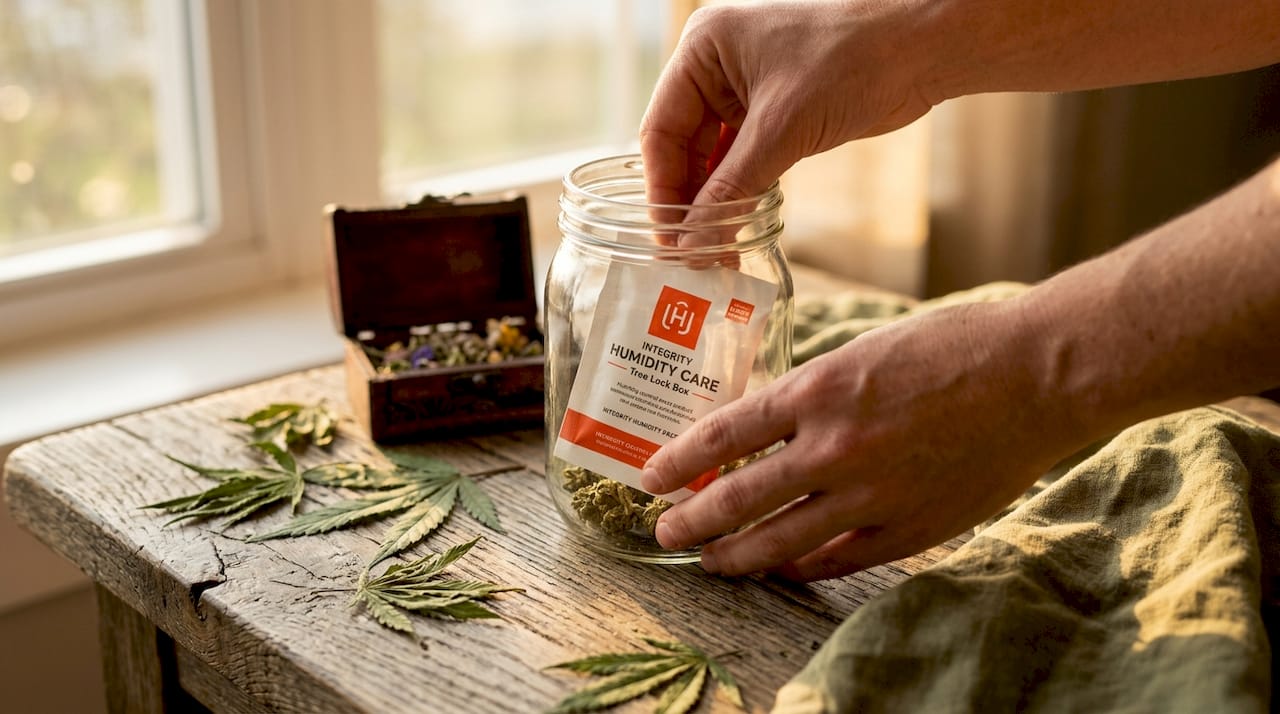
Amber or violet glass jars with airtight seals and humidity packs keep cannabis fresh for six months or longer by controlling humidity and blocking UV light. Clear glass or plastic lets in the light that destroys cannabinoids. Dispensary bags and plastic containers also create static electricity that pulls trichomes off buds and onto the container walls.
Here’s how different storage options compare:
| Storage method | UV protection | Humidity control | Oxygen barrier | Best for |
|---|---|---|---|---|
| Amber/violet glass jar | Excellent | With humidity pack | Good (airtight seal) | 1 to 6 months |
| Clear glass jar | Poor | With humidity pack | Good (airtight seal) | Short term only |
| Vacuum sealed + opaque container | Excellent | With humidity pack | Excellent | 6 to 12 months |
| Plastic bag | None | None | Poor | Not recommended |
| Dispensary container | Poor | None | Poor | Temporary only |
| Titanium/metal tin | Excellent | With humidity pack | Good | Travel and daily use |
Key setup principles for your storage system:
-
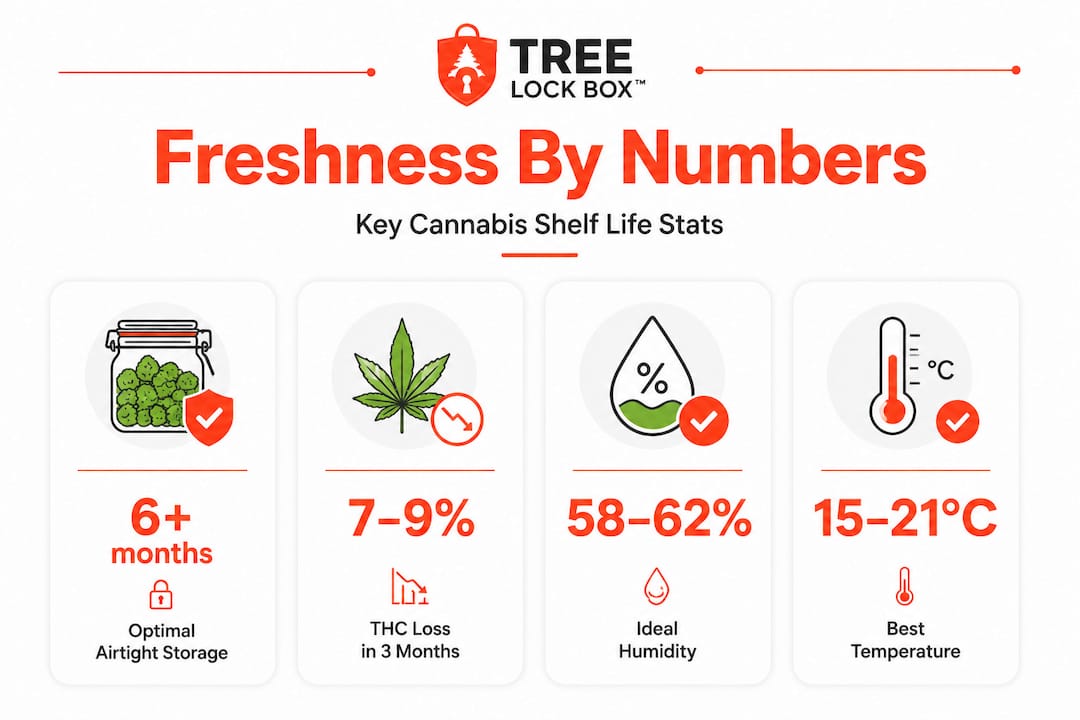
Target 58 to 62% relative humidity using two-way humidity control packs. These packs both add and absorb moisture to maintain the target range automatically.
-
Keep temperature between 60 and 70°F (15 to 21°C). A cool, dark cabinet or drawer works well for most home setups.
-
Fill jars 75 to 80% full. Too much headspace means excess oxygen; too little makes it hard to manage humidity packs.
-
Store in complete darkness. Even indirect light through a window across the room causes cumulative UV damage.
For storage beyond six months, vacuum sealing removes oxygen exposure nearly completely and pairs well with an opaque container and a humidity pack inside the vacuum bag. This is the method dispensaries and medical producers use for bulk storage.
Pro Tip: Place your humidity pack at the bottom of the jar before adding flower. This positions it to regulate moisture from below, which mimics natural airflow dynamics and distributes humidity more evenly through the container.
A well-configured lockable storage box kit combines light blocking, locking security, and space for humidity packs in one unit, which simplifies the entire setup. You can also browse individual storage accessories to build your system piece by piece.
With your storage set up correctly, let’s review how to properly use and maintain it to maximize freshness retention.
Maintaining freshness: Best practices and common mistakes to avoid
A great storage setup only works if you use it correctly. The habits you build around opening, handling, and monitoring your containers matter as much as the container itself.
Each container opening introduces oxygen, disrupting the humidity balance and accelerating THC oxidation. Open your jars briefly and reseal immediately. If you’re accessing your stash daily, consider splitting it into a smaller “daily use” jar and a larger “reserve” jar that you open less frequently.
“The single most underrated storage habit is keeping different strains in separate, labeled containers. Mixed strains cross-contaminate terpene profiles, and you lose the distinct character of each one.”
Common mistakes that accelerate freshness loss:
-
Storing in the fridge or freezer. Temperature swings cause condensation and make trichomes brittle and prone to snapping off. This is one of the most persistent myths in cannabis storage.
-
Ignoring depleted humidity packs. A rigid, dried-out humidity pack is no longer doing anything. Replace packs every 2 to 4 months.
-
Mixing strains. Each strain has a unique terpene profile. Storing them together blends and dilutes those profiles.
-
Using dirty tools. Bacteria and oils from hands or contaminated tools compromise your microclimate over time.
If you open a container and find your flower has dried out, don’t discard it. Add a fresh 62% RH pack, reseal, and allow 24 to 48 hours for rehydration. The terpenes that evaporated won’t return, but the texture and smokability will improve noticeably.
For more detailed handling guidance, the storage and cleaning tips section covers tool maintenance and container care that supports long-term freshness.
Proper daily care ensures your storage system performs well. Next, we’ll cover how to verify and track freshness over time.
Tracking and verifying freshness over time
Storage without monitoring is guesswork. Tracking lets you catch degradation early, adjust conditions before quality drops significantly, and make smarter decisions about when to consume your stash.
Medical patients should track storage conditions and dates to quantify potency retention, since cannabinoid loss is gradual but measurable under specific humidity and temperature conditions. For patients depending on consistent dosing, this isn’t optional — it’s essential.
Start with these labeling and tracking habits:
-
Label every container with strain name, purchase date, and storage start date.
-
Note the humidity pack installation date so you know when to replace it.
-
Log any condition changes, like a room that gets warmer in summer, that might affect your storage environment.
What to look for when inspecting your flower:
-
Aroma: Fresh cannabis has a strong, distinct smell. A fading or hay-like smell means terpene loss. A musty or ammonia smell means mold — discard immediately if you detect either.
-
Color: Healthy flower stays green. Browning or yellowing indicates oxidation and age.
-
Texture: Properly stored flower has a slight give. Crumbling means over-drying; stickiness or clumping means excess moisture.
Potency declines by roughly 7 to 9% THC over three months even under optimal storage conditions. That number climbs sharply if temperature, humidity, or light control slip. Knowing this helps you prioritize consuming older stock first and refreshing your stash strategically.
For guidance on handling flower during inspection without damaging trichomes, the no-touch cannabis handling approach is worth reviewing.
Having reliable verification methods completes the loop for effective freshness management. Now, let’s explore a unique perspective on cannabis storage science.
A fresh perspective on cannabis storage: Beyond simple jars
Here’s the honest truth most storage guides won’t tell you: a jar alone is not a storage system. It’s a container. The difference matters more than most people appreciate.
The container is not just a barrier but a key system determining oxygen ingress and moisture dynamics critical for stability. When you drop flower into a mason jar and screw on the lid without a humidity pack, without checking the fill level, and without controlling the storage location, you’ve addressed maybe one of the four degradation variables. You’ve blocked some oxygen. That’s it.
Treating cannabis storage as a multifactor stability problem explains why single-focus methods underperform. Humidity control, oxygen exclusion, and light blocking work together. Fixing one without the others still leaves major degradation pathways open.
The other thing most guides miss is that storage is not static. Your home’s temperature changes with the seasons. Humidity packs exhaust themselves. A jar that worked perfectly in January might be failing by July because the room got warmer. Effective storage means checking in, adjusting, and treating your setup like a living system rather than a one-time installation.
Vacuum sealing and nitrogen packaging represent the most complete approaches because they attack two of the four main degradation drivers simultaneously. Oxygen is nearly eliminated, and moisture is locked at the moment of sealing. Paired with an opaque container in a cool location, this is as close to professional-grade preservation as a home consumer can achieve.
Our comprehensive cannabis storage guide maps out this systems-based approach in practical terms if you want to build a setup that actually holds up over months.
Enhance your cannabis storage with Tree Lock Box solutions
Now that you understand what it takes to keep cannabis fresh longer, the right tools make these principles far easier to execute consistently.
Tree Lock Box builds lockable cannabis storage box kits designed specifically around the four degradation variables: light, oxygen, heat, and moisture. Each box combines a light-blocking enclosure, an airtight design, and space for humidity packs to maintain the microclimate your flower needs. Whether you’re a daily recreational consumer or a medical patient who needs consistent, reliable potency, these solutions remove the guesswork from storage. Browse the full range of cannabis storage accessories to find humidity packs, prep tools, and container options that fit your setup. Dispensaries and caregivers managing larger quantities can explore wholesale cannabis accessories for bulk pricing on professional-grade storage gear.
Frequently asked questions
What is the ideal temperature to store cannabis for maximum freshness?
The ideal storage temperature is between 60 and 70°F (15 to 21°C), as higher temperatures accelerate cannabinoid degradation and raise the risk of mold growth. A cool, dark cabinet away from appliances that generate heat works well for most home setups.
Why is controlling relative humidity important when storing cannabis?
Cannabis flower stays fresh between 58% and 62% relative humidity, which prevents terpene evaporation from over-drying and stops mold from forming in overly moist conditions. Two-way humidity packs automatically maintain this range without any manual adjustment.
Can vacuum sealing cannabis improve its shelf life?
Yes. Vacuum sealing removes oxygen exposure nearly completely, which dramatically slows THC oxidation and terpene degradation, making it the preferred method for storage lasting six months or longer.
Is it safe to store cannabis in the refrigerator or freezer?
No. Temperature swings cause condensation inside the container, and freezing makes trichomes brittle and prone to breaking off, which directly reduces potency and changes the texture of your flower.
How often should humidity packs be replaced in cannabis storage?
Humidity packs should be replaced every 2 to 4 months, or sooner if the pack feels completely rigid or a color-indicator card shows it’s exhausted, to maintain consistent moisture control inside the container.