

The Role of Storage in Smoke Freshness Explained
Storage is the single most controllable factor in cannabis smoke freshness, directly determining whether cannabinoids and terpenes survive intact from purchase to use. Most consumers focus on strain selection or rolling technique, but the chemical stability of what they smoke depends almost entirely on how it was stored. Temperature, humidity, oxygen exposure, and light each trigger distinct degradation pathways that strip potency and flatten flavor. Understanding the role of storage in smoke freshness means understanding the chemistry behind those pathways, and then making simple, consistent choices that protect your stash every day.
How do temperature and humidity affect the freshness of stored cannabis?
Temperature is the most aggressive degradation driver in cannabis storage. Cannabinoids degrade nearly completely in six months at 40°C in extract formulations, which means leaving your stash in a warm car or near a stove is not a minor inconvenience. It is a fast track to flat, weak smoke. Even at moderate heat, the process accelerates: THCA converts to THC through decarboxylation, and THC itself oxidizes into CBN, a non-intoxicating compound that signals degraded flower.
The science points to a clear target range. Optimal storage conditions sit at temperatures at or below 25°C (roughly 77°F) and relative humidity between 55% and 65%. Staying within these parameters slows the chemical clock significantly. A study tracking cannabis under these conditions found THCA and THC half-lives of approximately 21 to 28 months, meaning properly stored flower retains most of its potency for nearly two years.
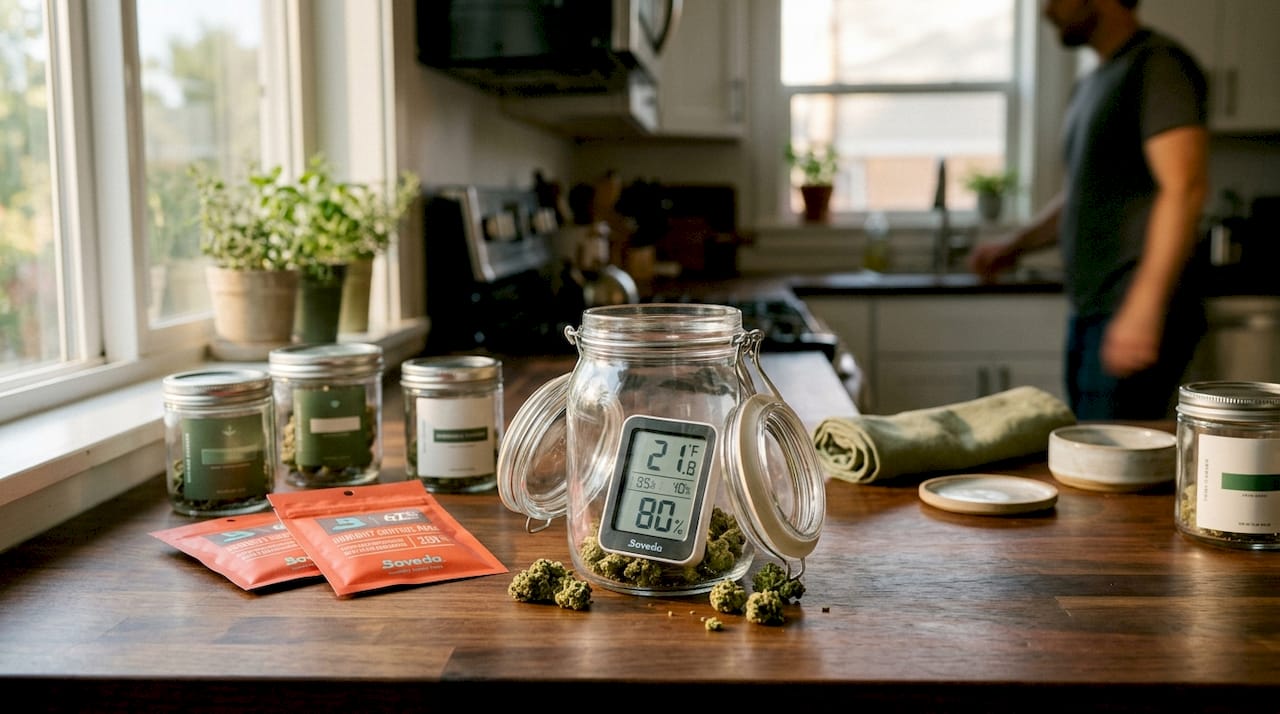
Humidity works in both directions, and getting it wrong in either direction costs you quality. Too dry, below 45% relative humidity, and terpenes evaporate faster, leaving smoke that tastes harsh and one-dimensional. Too humid, above 65%, and you create conditions where mold and mildew thrive on the flower surface. The sweet spot is not just about feel. It is about preserving the aromatic compounds that make each strain distinct.
Here is what to watch for in practice:
- Below 45% RH: Flower becomes brittle, terpenes off-gas rapidly, and smoke turns harsh
- 55–65% RH: Terpene profiles stay intact, cannabinoids remain stable, and texture is preserved
- Above 65% RH: Microbial risk rises sharply, and mold can develop within days in warm conditions
- Above 25°C (77°F): Decarboxylation and oxidation accelerate, reducing both potency and flavor
Pro Tip: Use a small digital hygrometer inside your storage container to monitor real-time humidity. A $10 device gives you more control than any premium jar alone.
Why is controlling oxygen exposure and light important for smoke freshness?
Oxygen is the chemical enemy of stored cannabis. Every time oxygen contacts the flower, it drives oxidation reactions that convert THC into CBN and break down terpenes into less aromatic compounds. The result is smoke that smells stale, tastes flat, and delivers a fraction of the expected effect. Nitrogen-modified atmosphere packaging addresses this directly: under inert gas conditions, CBN formation stayed below 1.0%, compared to measurably higher levels in air-exposed samples. That single data point shows how much oxygen contact matters.
Light exposure adds a separate but equally damaging mechanism. A 2026 Springer Nature review confirmed that light alters volatile and non-volatile profiles in stored cannabis, degrading both aroma compounds and cannabinoid concentrations. UV light is the primary culprit, but even indirect ambient light causes cumulative damage over weeks. This is why dark glass or opaque containers consistently outperform clear plastic bags in long-term freshness tests.
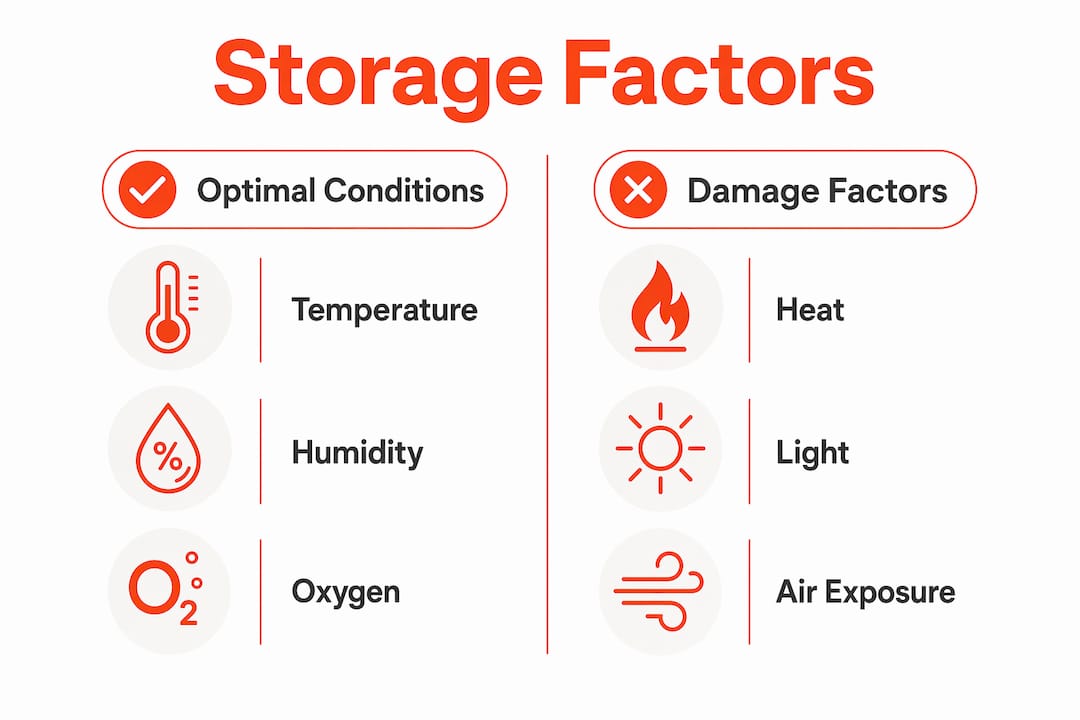
The practical takeaway breaks into two categories:
Oxygen control strategies:
- Choose airtight glass jars with rubber-sealed lids over loosely fitting containers
- Minimize how often you open the container, since each opening floods the headspace with fresh oxygen
- Consider nitrogen-flushed packaging for long-term storage of larger quantities
Light protection strategies:
- Store in amber or UV-blocking glass rather than clear glass
- Keep containers inside a drawer, cabinet, or dedicated stash box rather than on a countertop
- Avoid transparent plastic bags entirely for anything stored longer than a day or two
Pro Tip: If you buy cannabis in clear packaging, transfer it to an amber glass jar within 24 hours. The original packaging is designed for display, not preservation.
Freshness preservation depends on multiple interacting variables rather than any single factor, which means fixing only one issue while ignoring others still leaves your stash vulnerable.
How do different storage containers compare for preserving smoke freshness?
Not all containers perform equally, and the differences are measurable. Water activity and packaging permeability interact to determine freshness outcomes, meaning two containers showing the same internal humidity reading can produce different results based on the material they are made from. Glass is non-permeable. Plastic is not.
Here is a direct comparison of the most common storage options:
| Container type | Oxygen barrier | Humidity control | Best use case |
|---|---|---|---|
| Amber glass jar (airtight) | High | Moderate (add humidity pack) | Daily use, 1–4 weeks |
| Vacuum-sealed glass | Very high | Low without pack | Medium-term, 1–3 months |
| Nitrogen-inert packaging | Highest | Controlled at packaging | Long-term, 3+ months |
| Plastic zip bag | Low | None | Short-term only, under 24 hours |
| Plastic container (airtight) | Moderate | Moderate | Acceptable short-term backup |
Vacuum sealing removes most of the oxygen from the headspace, which significantly slows oxidation. The limitation is that vacuum pressure can compress and damage delicate flower structure, affecting the burn and draw. Nitrogen-inert packaging, used commercially, solves both problems: it displaces oxygen without applying pressure. For home consumers, the closest equivalent is a quality airtight glass jar combined with a humidity control pack like Boveda.
Container opening frequency is an underappreciated variable. Every time you open a jar, you replace the low-oxygen headspace with fresh air. Consumers who open their storage container multiple times daily are effectively undoing the protection the container provides. A practical fix is to portion out a few days’ supply into a smaller secondary container, keeping the main stash sealed and undisturbed.
For consumers who use different cannabis storage cases, the material and seal quality of the case itself matters as much as the container inside it.
What practical smoke storage techniques keep your stash fresh?
Knowing the science is useful. Turning it into a daily habit is what actually preserves your smoke. These steps are ordered by impact, starting with the changes that make the biggest difference.
-
Choose the right container from the start. An amber glass jar with an airtight rubber seal is the baseline. It blocks light, resists permeability, and holds a humidity pack without off-gassing chemicals into your flower.
-
Add a humidity control pack. Boveda packs, sized for your container volume, maintain a target RH passively. The 62% option suits most flower. Replace packs when they become rigid, which signals they are exhausted.
-
Store in a cool, dark location. A drawer, cabinet, or dedicated stash box away from heat sources and windows is the target. Consistent temperature matters more than hitting a specific number. Fluctuations cause condensation inside containers, which spikes humidity unpredictably.
-
Minimize how often you open your main container. Portion out two to three days of supply into a smaller jar. Keep the main stash sealed. This single habit dramatically reduces cumulative oxygen exposure over weeks.
-
Clean your containers between refills. Residue from old flower, including degraded terpenes and plant matter, can contaminate fresh cannabis and accelerate off-flavors. A quick rinse with isopropyl alcohol and a full dry before refilling keeps the environment neutral.
-
Adapt your approach for extracts and concentrates. Extracts are more temperature-sensitive than flower, degrading faster under the same heat conditions. Concentrates benefit from refrigeration or even freezing in airtight, moisture-proof containers, unlike flower which suffers from freeze-thaw humidity cycles.
Pro Tip: Label your containers with the date you opened them. Most consumers dramatically underestimate how long their stash has been sitting. Dated containers make freshness management concrete instead of guesswork.
For a deeper look at avoiding stale herb storage, the evidence-based methods align closely with the steps above but go further into product-specific handling.
Key takeaways
Proper cannabis storage preserves smoke freshness by controlling temperature, humidity, oxygen, and light, with each variable triggering distinct chemical degradation when left unmanaged.
| Point | Details |
|---|---|
| Temperature ceiling matters | Store at or below 25°C to prevent accelerated THC degradation and decarboxylation. |
| Humidity sweet spot | Target 55–65% RH using humidity control packs to preserve terpenes and prevent mold. |
| Oxygen is the primary enemy | Airtight or nitrogen-inert containers keep CBN formation below 1.0% versus open-air storage. |
| Light causes chemical damage | Use amber or opaque containers and store away from all light sources to protect volatile compounds. |
| Opening frequency counts | Portion out daily supply to minimize how often the main container is exposed to fresh air. |
What most storage guides get wrong
Here is the honest view from Treelockbox after working with cannabis consumers and storage products for years: most people treat storage as a one-time decision rather than an ongoing practice. They buy a nice jar, drop in a humidity pack, and consider the problem solved. Then they open that jar six times a day, leave it on a sunny shelf, and wonder why their flower tastes flat two weeks later.
The research confirms what we see in practice. Multiple interacting variables determine freshness outcomes, not a single container purchase. Consistent behavior, specifically limiting oxygen exposure through disciplined opening habits, matters as much as the container itself. A $5 mason jar used correctly outperforms a $60 designer stash box used carelessly.
There is also a product matrix issue that almost no consumer guide addresses. Flower and extracts do not degrade the same way. If you store a concentrate in the same conditions as your flower, you are likely under-protecting it. Concentrates need cooler, more stable environments because their chemical structures are more vulnerable to heat-driven breakdown. Treating your whole stash as one category is a mistake that costs potency quietly over time.
The practical advice we give is this: build a system, not a setup. Choose your container, set your humidity target, pick a storage location, and then protect that system with consistent habits. Freshness is not a product feature. It is a practice.
— Tree Lock Box
Protect your stash with the right tools from Treelockbox
The science is clear: freshness depends on the container, the conditions, and the habits you build around both. Treelockbox designs lockable stash boxes and storage accessories specifically for cannabis consumers who take quality seriously. From odor-controlling lockable boxes to airtight storage units built for daily use, every product is made to keep your smoke fresh from the first session to the last. Explore the full storage and accessories shop to find the right setup for your stash size and lifestyle. For answers to common questions about tools, cleaning, and storage conditions, the cannabis tools FAQ covers the details that matter most.
FAQ
What is the ideal humidity for storing cannabis?
The target range is 55–65% relative humidity, maintained consistently using humidity control packs like Boveda. Staying within this range preserves terpene profiles and prevents both dryness and mold growth.
How long does properly stored cannabis stay fresh?
Under optimal conditions at 25°C and 60% RH, THCA and THC half-lives run approximately 21 to 28 months, meaning well-stored flower retains most of its potency for close to two years.
Does opening the storage container affect freshness?
Yes. Each time you open a container, you replace the low-oxygen headspace with fresh air, accelerating oxidative degradation. Portioning out a few days of supply into a smaller secondary jar reduces this exposure significantly.
Is glass better than plastic for cannabis storage?
Glass is non-permeable and does not off-gas chemicals, making it the superior choice. Plastic containers allow slow moisture and oxygen exchange through the material itself, which degrades freshness faster than glass even when the lid is sealed.
Should extracts and flower be stored the same way?
No. Extracts are more sensitive to temperature-driven degradation than flower and benefit from cooler storage, including refrigeration in airtight containers. Flower stored in a freezer risks humidity damage from freeze-thaw cycles, so the two product types require different approaches.