

Hidden Storage Solutions Explained for Smarter Living
Hidden storage solutions are specialized designs that conceal belongings inside furniture, walls, and everyday objects to improve organization, security, and aesthetics without adding visual clutter. The concept goes by several names in interior design circles, including concealed storage, secret compartments, and integrated storage. Whatever you call it, the core principle is the same: every item has a place, and that place stays out of sight. For cannabis users especially, discreet storage is not just a preference. It is a practical necessity for privacy, childproofing, and keeping a tidy home. This guide covers hidden storage solutions explained from the ground up, including the best techniques, technologies, and design principles available in 2026.
What are the most effective hidden storage concepts?
Concealed storage ideas work across every room in a home, and the best ones use space that already exists but goes completely unused. The most effective techniques share one trait: they look like part of the room, not like storage.
Here are the most practical options by location:
- Toe-kick drawers: The 3–4 inch space beneath kitchen cabinets is almost always wasted. Toe-kick drawers slide into that gap and hold flat items like baking sheets, cutting boards, or rolling trays. They are completely invisible when closed.
- Under-stair storage: The triangular void beneath a staircase can hold pull-out drawers, a small closet, or even a built-in cabinet. Most homes never use this space at all.
- Recessed wall niches: Cutting a shallow niche between wall studs creates a built-in shelf that sits flush with the wall surface. It adds storage without pushing anything into the room.
- Ottoman storage: A storage ottoman works as seating, a footrest, and a concealed container. It is one of the fastest ways to reduce visible clutter in a living room.
- Behind-mirror cabinets: A mirror mounted on hinges conceals a shallow cabinet behind it. Bathrooms use this trick constantly, but it works just as well in bedrooms and hallways.
- Under-bed drawers: Platform beds with built-in drawers use floor space that would otherwise collect dust. This is one of the highest-capacity hidden storage options in any bedroom.
Maximizing vertical space with tall wardrobes and loft-style shelving creates usable storage without consuming floor area. Rooms feel lighter and less crowded when storage climbs the walls instead of spreading across the floor.
Pro Tip: Add LED motion-sensor lighting inside any concealed cabinet or drawer. The light activates only when you open the compartment, so the storage stays discreet from the outside while remaining easy to use in the dark.
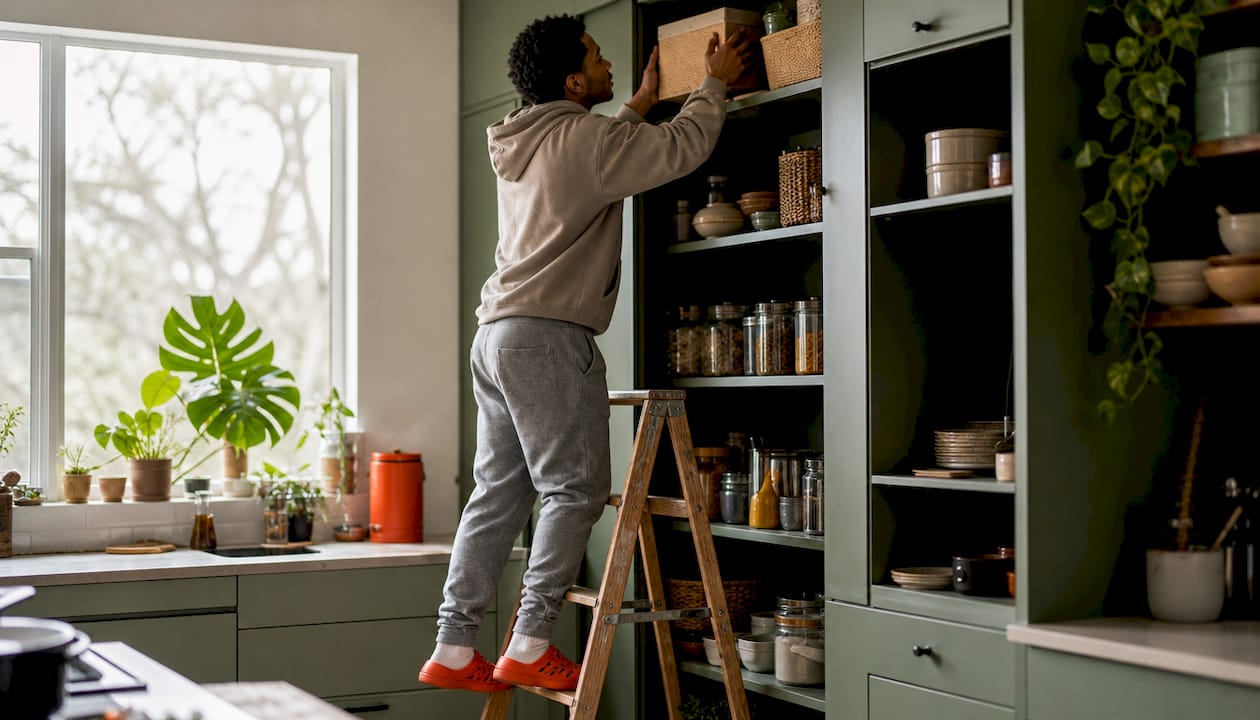
Motion-sensor LED lighting inside hidden compartments improves accessibility without giving away the location of the storage. It also uses far less energy than a standard light left on inside a cabinet.
How can technology improve hidden storage security?
Modern technology has changed what hidden storage can do. The best systems now combine physical concealment with electronic access control, making them genuinely secure rather than just out of sight.
The most useful technologies for secure concealed storage include:
- Biometric fingerprint drawers: Biometric storage solutions now offer access speeds as fast as 0.1 seconds and support up to 30 unique fingerprints. That speed means you never fumble with a key when you need something quickly, and the multi-user support lets trusted household members access the same compartment.
- Push-to-open hardware: Push-to-open systems eliminate visible handles entirely. You press the cabinet face, it springs open, and the surface looks completely flat when closed. Combined with invisible hinges, the result is furniture with no visible seams or hardware.
- Encrypted digital containers: For sensitive digital files or backup records, LUKS-based encrypted containers provide cryptographic protection that prevents unauthorized access even if a device is physically found. This complements physical hidden storage for a complete security approach.
- Dummy password features: Some biometric drawers include a decoy password function. Entering a specific code triggers a silent alarm or opens a decoy compartment, adding a layer of protection against coercion.
Push-to-open hardware and invisible hinges preserve the architectural look of a room. Furniture with no visible handles reads as sculpture first and storage second. That is exactly the goal for anyone who wants concealment without obvious tells.
What design principles make hidden storage work long-term?
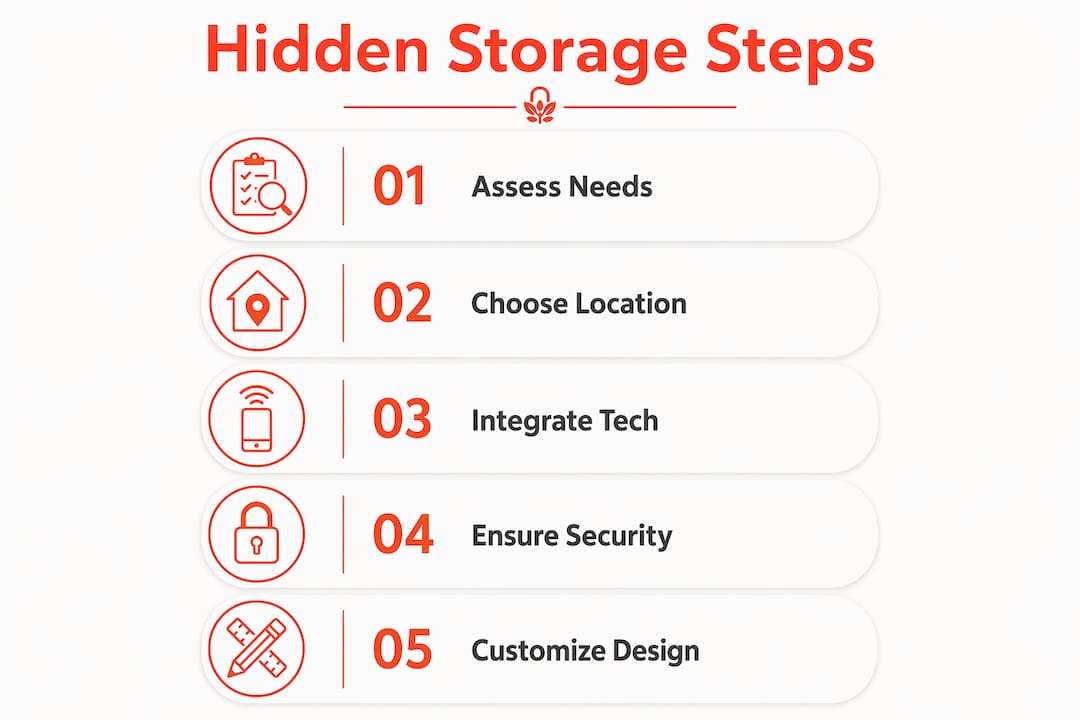
Good concealed storage does not happen by accident. It requires deliberate planning around how you actually use your space, what you need to reach daily, and how the storage fits the visual flow of the room.
Follow these principles to build a system that stays functional over time:
- Group items by frequency of use. Professional organizers recommend keeping daily-use items in the most accessible hidden spots and pushing seldom-used belongings deeper into concealed spaces. A drawer you open every morning should be easy to reach. A compartment for seasonal items can be tucked further away.
- Match materials and finishes to the existing room. A hidden cabinet built from wood that clashes with your floors draws attention instead of disappearing. The goal is for storage to read as part of the architecture, not as an addition.
- Start with one high-impact piece. Home design experts advise beginning with a single versatile item, like a storage ottoman or under-bed drawer set, before committing to built-in renovations. This approach delivers immediate results and helps you understand what you actually need before spending more.
- Preserve the room’s architectural narrative. Furniture that acts as functional sculpture keeps the room’s visual story intact. A bench at the foot of a bed with a lift-top compartment looks intentional. A plastic bin shoved under a table does not.
- Plan for growth. Hidden storage systems work best when they can expand. Modular shelving inside a concealed closet, for example, can be reconfigured as your storage needs change.
Pro Tip: Before buying any hidden storage furniture, spend one week tracking which items you reach for most often. That list tells you exactly which compartments need to be fast and easy to access, and which can stay more deeply concealed.
How can hidden storage be customized for cannabis and personal items?
Cannabis users have specific storage needs that go beyond basic organization. Privacy, childproofing, odor control, and quick access all matter at the same time. Generic storage rarely checks all those boxes.
Here is how to build a cannabis storage setup that works on every level:
- Use a dedicated locking stash box. Secure cannabis storage boxes combine locking mechanisms with childproof features, keeping products safe from both unauthorized adults and curious children. A lockable box inside a concealed drawer gives you two layers of protection.
- Integrate storage with everyday furniture. A locked box inside an ottoman, a bedside table drawer, or a bookshelf cabinet looks completely ordinary from the outside. The concealment comes from the furniture, and the security comes from the lock.
- Prioritize odor resistance. Odor-resistant containers prevent cannabis smell from escaping into the room, which is the single most common way discreet storage fails. Airtight seals and activated carbon lining are the two most effective options.
- Separate daily-use items from long-term storage. If you use cannabis daily, keep a small, accessible container in your most convenient hidden spot. Store bulk supplies in a more deeply concealed location with a stronger lock. This two-tier approach keeps your routine fast without exposing everything at once.
- Check your secure storage features against a current checklist. Security standards for cannabis storage have evolved, and a checklist helps you confirm that your setup covers locking, odor control, childproofing, and discretion together.
For cannabis users who travel or move between locations, portability matters as much as security at home. A compact, lockable box that fits inside a bag gives you the same protection on the road that a built-in drawer provides at home.
Key Takeaways
Effective hidden storage combines physical concealment, smart technology, and deliberate design to keep personal items secure, organized, and completely out of sight.
| Point | Details |
|---|---|
| Start with one piece | A storage ottoman or under-bed drawer delivers immediate results before committing to built-in renovations. |
| Use biometric access | Fingerprint drawers with 0.1-second access speed provide fast, secure entry without visible locks or keys. |
| Group by frequency | Keep daily-use items in the most accessible hidden spots and store seldom-used items deeper in concealed spaces. |
| Layer cannabis security | Combine a locking stash box inside concealed furniture for two levels of protection and odor control. |
| Match finishes to the room | Storage that blends with existing materials disappears visually, which is the core goal of any concealment strategy. |
The honest truth about hidden storage most guides skip
Most articles on this topic treat hidden storage as a decorating project. It is not. It is a functional decision that affects how you live every day, and getting it wrong costs more than just money.
The biggest mistake I see is people buying concealed storage furniture before they know what they actually need to hide. They install a beautiful push-to-open cabinet and then fill it with things they grab three times a day. Now they are pressing a panel every time they want their phone charger. That is not concealment. That is inconvenience dressed up as design.
The second mistake is treating all hidden storage as equal. A recessed wall niche is great for books or decorative items. It is a terrible place for cannabis if you have children in the home. A biometric drawer is excellent for valuables. It is overkill for spare batteries. Matching the security level to the actual risk is what separates a functional system from an expensive one.
The technology piece is genuinely worth the investment when the item warrants it. Biometric access at 0.1 seconds is faster than finding a key. For cannabis users who want both speed and security, that combination is hard to beat. But the technology only works if the physical concealment is already solid. A fingerprint drawer sitting in plain sight on a desk is not hidden storage. It is just a locked drawer.
Start with the discreet cannabis storage guide if you are building a cannabis-specific setup. Get the concealment right first, then layer in the security technology.
— Tree Lock Box
Treelockbox products that complete your hidden storage setup
A well-planned concealed storage system needs the right tools inside it. Treelockbox offers secure cannabis storage and prep tools built specifically for users who need discretion, durability, and ease of use in one place. The lineup includes lockable stash boxes with odor control, portable storage units for on-the-go use, and ergonomic grinders designed for daily handling. American craftsmanship and custom engraving options make each piece feel intentional rather than generic. If you want a complete picture of what belongs in a secure cannabis setup, the cannabis tools FAQ covers storage, cleaning, and accessory questions in one place.
FAQ
What are hidden storage solutions?
Hidden storage solutions are furniture designs, architectural features, and containers that conceal belongings inside everyday objects or spaces. The goal is organization and security without visible clutter.
Where are the best places for concealed storage in a home?
Toe-kick drawers under kitchen cabinets, under-stair compartments, recessed wall niches, and under-bed drawers are the most space-efficient locations. Each uses space that already exists but typically goes unused.
How secure is biometric hidden storage?
Biometric fingerprint drawers offer access speeds as fast as 0.1 seconds and support up to 30 unique fingerprints, making them one of the fastest and most secure access methods available for home storage.
What is the best hidden storage option for cannabis?
A lockable, odor-resistant stash box placed inside a concealed furniture piece gives you two layers of protection. Childproof locking mechanisms and airtight seals are the two features that matter most for cannabis storage.
How do I start building a hidden storage system without renovating?
Start with a single versatile piece like a storage ottoman or a bed frame with built-in drawers. Home design experts recommend this incremental approach because it delivers immediate results and helps you identify your actual storage needs before investing in built-in solutions.