

Why Secure Home Storage Matters for Your Home
Most people assume that putting something away means it’s safe. It isn’t. Why secure home storage matters becomes obvious the moment a break-in happens, a fire damages documents, or a forgotten item gets ruined by moisture under the sink. But by then, the cost is already real. Whether you own your home or rent, the difference between storage that just holds things and storage that actively protects them is the difference between peace of mind and an expensive regret. This article breaks down what’s actually at stake and what you can do about it.
Table of Contents
- Key Takeaways
- Why secure home storage matters: physical security basics
- The real cost of poor storage
- How organized storage improves your home and your life
- Practical secure storage solutions for every living situation
- My take on the “one big safe” myth
- Secure your space with Treelockbox
- FAQ
Key Takeaways
| Point | Details |
|---|---|
| Physical security features matter | Fireproof safes and lockable units protect valuables from fire, theft, and unauthorized access. |
| Poor storage costs real money | Disorganized storage leads to damaged goods, wasted food, and unnecessary replacement purchases. |
| Organization improves daily life | Well-planned storage reduces clutter, lowers stress, and makes your home easier to use every day. |
| Decentralized storage is smarter | Spreading valuables across multiple secure locations reduces the risk of losing everything in one breach. |
| Renters have options too | Portable locked bins and lockable cabinets provide security without requiring permanent home modifications. |
Why secure home storage matters: physical security basics
The first thing most people think about when they hear “secure storage” is a heavy safe in a closet. That instinct isn’t wrong, but it’s incomplete. Physical security features span a wide range of tools, and each one addresses a different threat.
Fireproof protection is not optional
Fire is one of the most destructive threats to stored valuables, and most standard safes offer no protection against it at all. Fireproof safes withstand 1,150°F for 30 minutes or more, which is the minimum threshold needed to protect paper documents and cash from a typical residential fire. If your current storage is just a locked box without a fire rating, your birth certificate and insurance paperwork are one house fire away from being ash.
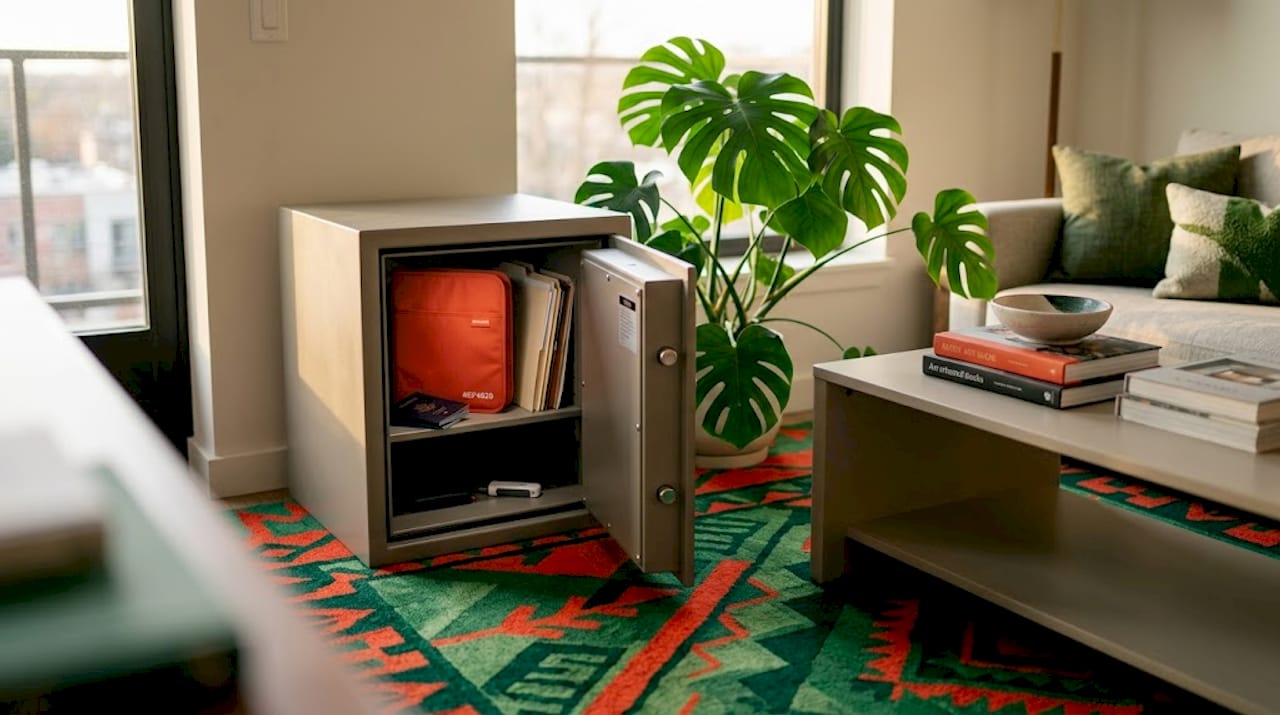
Lockable storage also addresses the more everyday threat: unauthorized access. This includes nosy guests, curious kids, and opportunistic thieves who rely on unlocked spaces. Secure storage significantly reduces theft compared to less-monitored alternatives, a principle that applies directly to residential homes.
Why decentralized storage outperforms a single safe
Here’s a concept most storage guides miss entirely. Decentralized storage across multiple home locations reduces the risk of a single breach wiping out everything you value. If all your important items live in one place and someone finds that place, they get everything. Distributing valuables across a bedroom lockbox, a fireproof filing cabinet, and a portable travel safe means no single point of failure.
Monitoring adds another layer. A basic alarm system or a doorbell camera doesn’t just catch intruders after the fact. It changes the math for anyone considering whether your home is worth the risk.
Pro Tip: Label your storage units generically on the outside. A box labeled “misc. cables” is far less interesting to a thief than one labeled “documents.”
- Use combination or key locks for items you access infrequently
- Choose biometric safes for items you need in seconds, like medications
- Store a backup key in a second secure location, never under a doormat
- Place heavier fireproof safes in low-visibility locations to slow any potential removal
The real cost of poor storage
The risks of inadequate storage go well beyond theft. Most of the damage from insecure or disorganized storage is slower and less dramatic, but it adds up to real money and real stress.
Food waste is a measurable problem
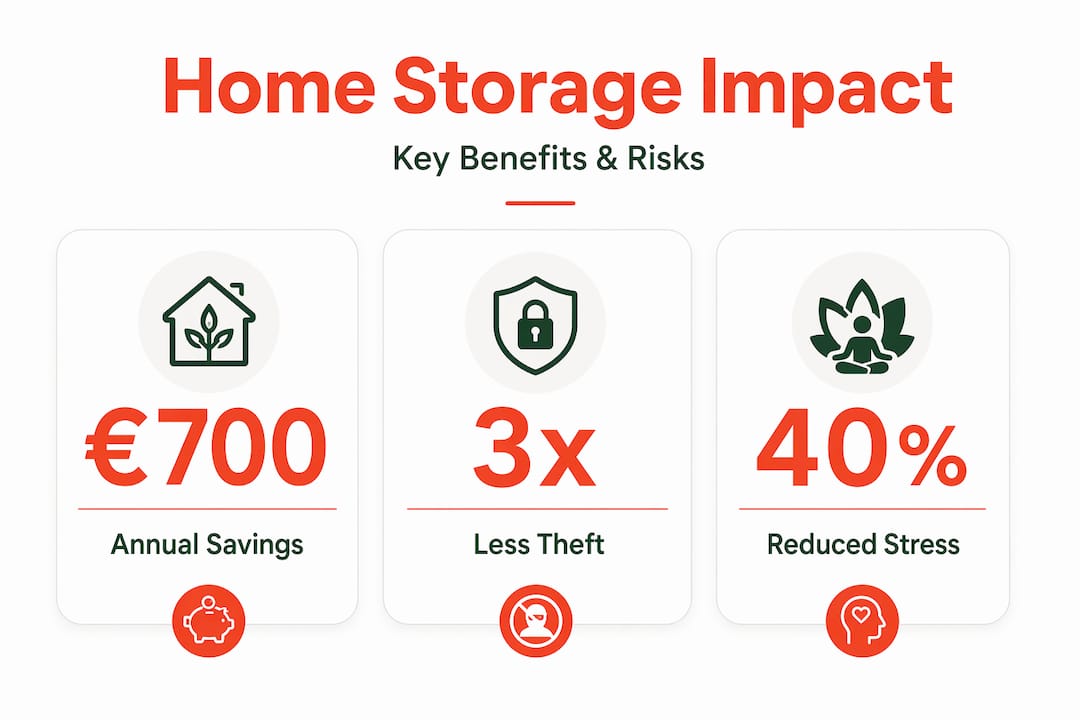
Poor kitchen and pantry organization wastes more than you think. The average household wastes around €700 annually in food due to disorganized storage. Items get pushed to the back of the fridge, forgotten, and thrown out. Duplicates get purchased because existing stock isn’t visible. A better-organized storage system, with clear bins, labeled sections, and first-in-first-out rotation, directly cuts that loss.
Pests and moisture do silent damage
Beyond food, poorly maintained storage attracts pests like rodents and insects. A box of old clothes in a damp basement becomes a nesting ground. Moisture warps wooden furniture, destroys electronics, and ruins paper records. These aren’t dramatic catastrophes. They’re quiet, gradual losses that accumulate over months until you open a box and find nothing salvageable inside.
Here’s what inadequate storage silently costs homeowners and renters every year:
- Documents destroyed by moisture or pests, requiring costly replacement
- Electronics damaged by uncontrolled humidity in storage spaces
- Clothing ruined by mold or rodent activity in unsealed bins
- Medications or supplements degraded by improper temperature storage
- Valuables lost track of and eventually replaced unnecessarily
The stress factor
Cluttered, disorganized spaces increase mental stress and impair focus. This isn’t abstract. When you can’t find your passport before a flight, or spend twenty minutes hunting for a charger you know you own, that’s storage failure manifesting as daily friction. The mental overhead of a disorganized home is a real cost, even if it doesn’t show up on a bank statement.
How organized storage improves your home and your life
Secure, well-planned storage doesn’t just prevent problems. It actively makes your home better to live in and more appealing if you ever decide to sell.
Expert Brittany Lulay points out that strategic storage increases home value and significantly improves daily livability. Buyers and renters alike respond to homes where storage feels intentional. A built-in mudroom organizer or a well-designed pantry signals that the home is cared for. That perception translates into real dollars during a sale or rental negotiation.
For renters especially, storage planning matters during life transitions. Modern self-storage offers flexibility during moves, remodels, or downsizing, helping people avoid hasty decisions about belongings they might later regret discarding. The same principle applies inside your own home: when storage is organized, you know what you have and you make better decisions about what to keep.
Here’s how to systematically improve storage across your home:
- Audit what you have. Walk through every storage area and note what’s actually being stored, what’s damaged, and what you haven’t touched in over a year.
- Categorize by access frequency. Daily-use items need accessible storage. Seasonal or rarely used items can go in harder-to-reach spots.
- Assign a security tier to each category. Documents, medications, and valuables get locked storage. General household items get organized bins.
- Optimize awkward spaces. Pull-out drawers and battery-operated lights turn dead space under stairs or in deep cabinets into genuinely useful storage.
- Review annually. Storage needs change. What worked two years ago may be creating new problems today.
Pro Tip: If you have a storage area you avoid using because it’s inconvenient, that inconvenience is costing you. One afternoon and a $30 pull-out shelf can turn an ignored corner into your most useful storage spot.
Practical secure storage solutions for every living situation
The right storage solution depends on what you’re protecting, where you live, and whether you can make permanent modifications to your space.
Fireproof safes vs. lockable boxes
| Feature | Fireproof Safe | Lockable Box/Cabinet |
|---|---|---|
| Fire protection | Yes, rated to 1,150°F+ | No |
| Portability | Low to medium | High |
| Cost | $100 to $500+ | $30 to $200 |
| Best for | Documents, cash, hard drives | Daily-use valuables, medications, personal items |
| Renter-friendly | Moderate (heavy, freestanding) | Yes |
Fireproof safes are the right call for anything irreplaceable. Lockable boxes and cabinets cover the broader category of items you want secured but need regular access to. Most households benefit from having both.
What renters need to know
Renters face real limitations. You generally can’t bolt a safe to a wall or install a dedicated storage room. But portable locked bins and freestanding lockable cabinets require zero modifications and move with you. For discreet residential storage, especially for medications, CBD products, or personal items, a quality lockable box is often the most practical solution available.
For those storing smart home devices or surveillance equipment, improper storage of CCTV and camera equipment creates real privacy and security vulnerabilities. Devices should be stored with access controls managed and outdated equipment retired rather than left connected.
True storage security combines physical protection with active monitoring. A lockable cabinet paired with a basic alarm system covers both fronts without a large investment.
My take on the “one big safe” myth
I’ve spent years paying attention to how people actually store things versus how they think they do. And the most common mistake I see is over-relying on a single heavy safe as the complete answer to home security.
The logic sounds solid. One strong, fireproof, locked box. Everything important goes inside. But in practice, that approach creates a single point of failure and a target that any experienced thief recognizes immediately. I’ve watched homeowners lose entire collections of documents and valuables because they consolidated everything in one obvious location.
What actually works is a layered approach. Spread things out. Use a fireproof safe for the truly irreplaceable items, a quality lockable box for daily-access valuables, and basic organization systems for everything else. The goal isn’t to build a fortress. It’s to make your home harder to compromise than the next one, and to protect yourself from the slow losses that have nothing to do with theft at all.
Secure home storage isn’t a project you complete once and forget. It’s a system you build, adjust, and maintain. When it works, you won’t notice it. That’s the point.
— Bujify
Secure your space with Treelockbox
If you’ve realized your current storage setup has gaps, you don’t need a full home renovation to fix them. Treelockbox offers lockable storage solutions built for real residential use, including portable lockable boxes with odor control and durable construction suitable for valuables, personal items, and specialty storage needs like CBD products or medications.

Whether you’re a homeowner looking to protect documents and personal items or a renter who needs a secure solution that moves with you, the Treelockbox shop has options that balance security, portability, and everyday convenience. American-made, customizable, and designed for people who take their belongings seriously. Explore the full range and find the right fit for your home.
FAQ
What makes home storage truly secure?
Secure home storage combines physical locks, fire-rated protection, and placement strategy. A fireproof safe rated to 1,150°F for 30 minutes paired with a lockable secondary unit covers the most common threats.
Can renters use secure storage solutions without modifying their space?
Yes. Portable lockable boxes and freestanding locked cabinets require no permanent installation, making them fully renter-friendly and easy to move when you relocate.
How does disorganized storage actually cost money?
Disorganized storage leads to wasted food, damaged belongings, and unnecessary replacement purchases. Households can lose hundreds of dollars annually from food waste alone due to poor organization.
Is one safe enough to protect all home valuables?
One safe is better than nothing, but decentralized storage across multiple locations reduces the risk of a single breach compromising everything you own. Using a combination of storage types is smarter than relying on one unit.
How often should I audit my home storage setup?
Once a year is the minimum. Storage needs shift with life changes like moving, adding family members, or acquiring new valuables, so an annual review keeps your system current and effective.