

Discreet Cannabis Storage Explained for Privacy in 2026
Discreet cannabis storage is defined as the use of airtight, odor-proof, and lockable containers designed to contain scent, preserve freshness, and prevent unauthorized access. The best setups combine activated carbon odor barriers, silicone-sealed airtight jars, and humidity control packs to protect both your privacy and your product. Whether you need discreet medical cannabis storage at home or a portable cannabis kit for travel, the right container does three jobs at once: blocks odor, maintains ideal humidity, and keeps your supply organized and secure. This guide breaks down the science, the options, and the practical habits that separate a truly private setup from one that just looks the part.
What makes discreet cannabis storage work?
Discreet cannabis storage depends on two separate but related functions: odor containment and freshness preservation. Most people focus on one and neglect the other, which is why so many setups fail on at least one front.
How odor control technology actually works
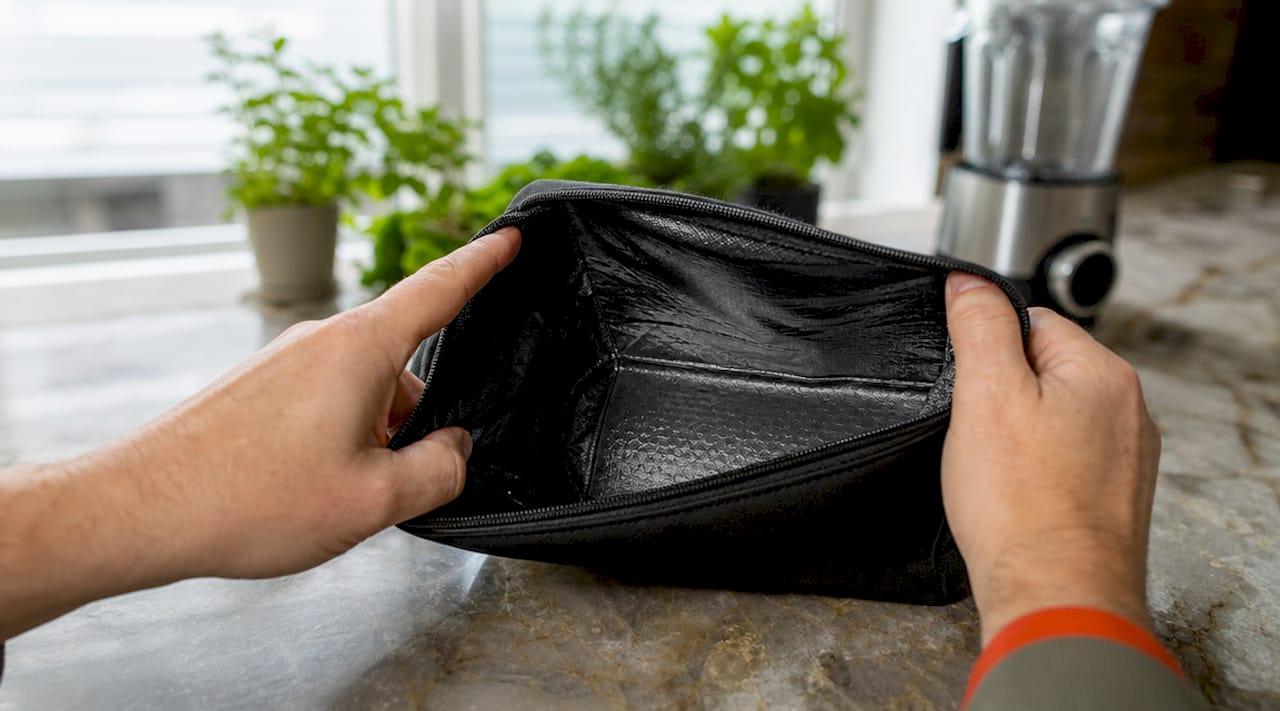
Activated carbon is the core technology in smell-proof storage. Carbon-lined bags and cases trap volatile organic compounds (VOCs) before they escape into the surrounding air. The catch is that carbon liners saturate over 6 to 12 months of regular use, after which odor control drops noticeably. That means your bag that worked perfectly last year may be doing almost nothing today.
Airtight sealing is a different mechanism entirely. Silicone gaskets and vacuum-sealed lids physically block air exchange rather than absorbing odors. Smell-proof does not mean airtight, and airtight does not automatically mean smell-proof. The most effective discreet containers use both: an airtight inner seal to stop VOCs from escaping in the first place, plus an outer carbon layer to catch anything that gets through.
Light and oxygen are the other two enemies. UV light degrades cannabinoids and terpenes within days of exposure. Oxygen accelerates oxidation, which flattens flavor and reduces potency. High-density polymer containers, UV-blocking glass, and metal tins all address this, though glass with a UV-blocking coating remains the most inert material for long-term home storage.
- Activated carbon: Absorbs VOCs but requires replacement or reactivation every 6 to 12 months
- Silicone gasket seals: Block air exchange physically, preserving terpenes and preventing odor escape
- UV-blocking materials: Glass with UV coating, metal, or opaque polymer prevent light degradation
- Dual-stage sealing: Airtight inner container plus carbon-lined outer layer provides the strongest odor barrier
Pro Tip: Place a small hygrometer inside your storage container rather than relying on touch or smell to judge conditions. Monitoring RH accurately is the only reliable way to know your cannabis is stored correctly.
How to maintain freshness with humidity and temperature control
Humidity is the single most overlooked factor in cannabis storage. Odor control gets all the attention, but humidity above 65% RH promotes mold while humidity below 55% RH causes terpenes to evaporate. Both outcomes degrade your product, and neither is reversible.
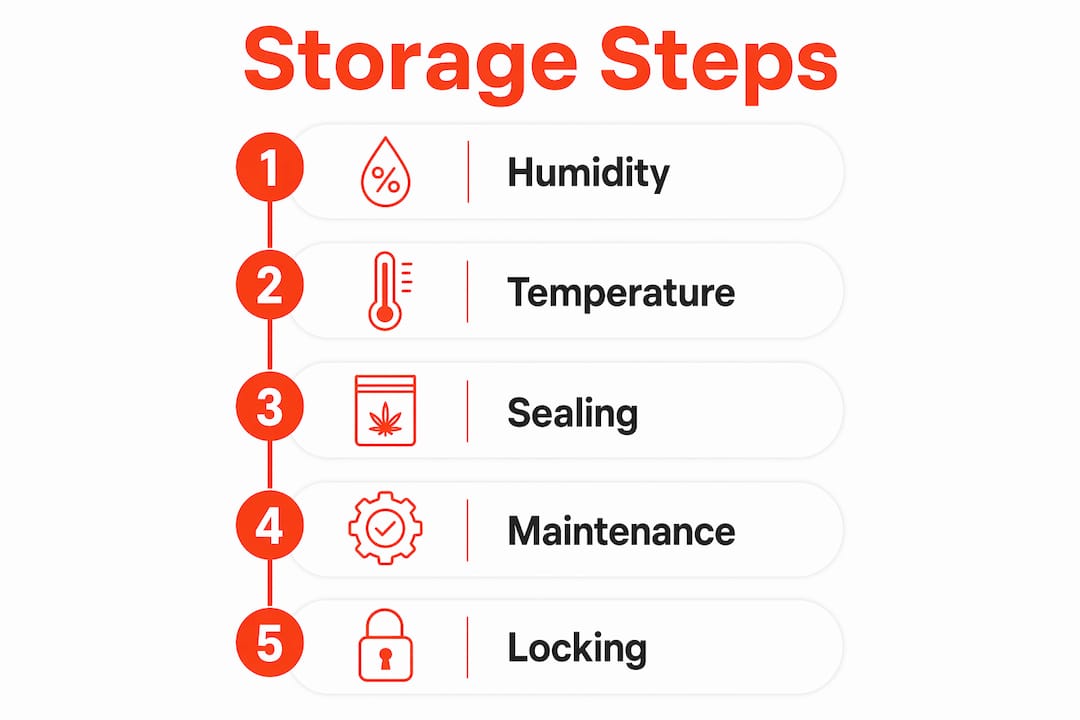
The target range is 58 to 62% relative humidity. Boveda 62% two-way humidity packs are the most widely used solution. They release or absorb moisture as needed to hold the container at a stable level. One pack handles roughly 1 ounce of flower in a standard mason jar, though larger containers need proportionally more coverage.
| Storage condition | Ideal range | Risk if outside range |
|---|---|---|
| Relative humidity | 58–62% RH | Mold above 65%; terpene loss below 55% |
| Temperature | Below 70°F (21°C) | Terpene degradation above 77°F |
| Light exposure | None (dark storage) | UV degrades cannabinoids rapidly |
| Oxygen contact | Minimal | Oxidation flattens flavor and potency |
Temperature matters almost as much as humidity. Storage above 77°F accelerates terpene breakdown, which is why a cool, dark cabinet or drawer outperforms a countertop jar in a warm kitchen. Refrigerators introduce humidity fluctuation every time the door opens, and freezers cause trichomes to become brittle and break off. Neither is recommended for everyday storage.
Regular maintenance is non-negotiable. Clean silicone seals with isopropyl alcohol every few weeks to prevent residue buildup that compromises the seal. Replace humidity packs when they harden completely. Check your hygrometer reading before adding fresh product to an existing container, since mixing dry and properly humidified flower throws off the balance.
Comparing popular discreet storage solutions for home and travel
The right storage format depends on whether you need long-term home storage, a portable daily carry, or a full travel kit. Each format makes different tradeoffs between odor control, capacity, and portability.
| Storage type | Odor control | Portability | Best use case |
|---|---|---|---|
| Airtight UV glass jar | Excellent (airtight seal) | Low (fragile, bulky) | Home long-term storage |
| Carbon-lined smell-proof bag | Good (short-term) | High (flexible, lightweight) | Travel and daily carry |
| Lockable metal stash box | Excellent (dual-layer) | Medium (compact but rigid) | Home and short trips |
| Vacuum-sealed container | Superior | Low to medium | Long-term terpene preservation |
For home storage, airtight glass jars with silicone gasket lids remain the gold standard. Vacuum-sealed cannabis retains 85% terpene intensity after 60 days compared to just 40% with standard sealed jars. That gap is significant enough to justify the investment in a vacuum pump lid system if you store more than a few grams at a time.
For portable cannabis kit packing and cannabis on the go storage, carbon-lined bags offer the best combination of flexibility and odor reduction. Smell-proof bags are designed for short-term carry, not long-term storage, and residue left inside can still trigger detection even when the bag appears clean. The practical solution for travel is to place an airtight glass or metal container inside a carbon-lined outer case. This two-layer approach handles both freshness and odor simultaneously.
Organized storage kits that include compartments for accessories reduce cross-contamination of odors between grinders, pipes, and flower. Compartmentalized storage also reduces visual clutter, which is its own form of discretion. A well-organized kit that opens cleanly reads as intentional and controlled rather than haphazard.
- Use UV-blocking glass jars for home storage of more than a week’s supply
- Pack a rigid airtight container inside a carbon-lined bag for travel
- Keep accessories in separate compartments to prevent odor transfer
- Replace carbon-lined bags annually regardless of visible wear
Pro Tip: For the best discreet medical cannabis containers, look for options with both a silicone gasket seal and an opaque or UV-blocking exterior. Medical users who store multiple strains benefit most from organized cannabis storage that labels and separates each variety.
Why lock your cannabis storage
Locking your cannabis storage is not just about theft prevention. Children and teens account for 75% of cannabis-related poison control cases, which makes child-resistant locking a genuine safety requirement in any home with minors or visiting children. Edibles are the highest-risk category because they look identical to regular food.
Beyond child safety, locked storage reduces suspicion and prevents accidental openings in shared living spaces or public settings. A locked box signals intentionality and responsibility. It also prevents the kind of accidental discovery that happens when a bag shifts in a backpack or a lid comes loose in a car.
The three main lock types each serve different needs:
- Child-resistant push-and-turn mechanisms: Built into many airtight jars; effective for casual deterrence but not serious security
- Combination locks: No key to lose; suitable for home stash boxes and travel cases; resettable for shared households
- Key locks: Highest security; best for home storage boxes where you control access completely
Lockable cannabis storage also has practical legal benefits in states where cannabis must be stored out of reach of minors or secured during transport. A locked container demonstrates compliance in a way that a zip-lock bag never can. For anyone storing medical cannabis, a lockable box with a combination or key lock is the minimum standard worth maintaining.
Key takeaways
Discreet cannabis storage requires dual-layer sealing, humidity control at 58 to 62% RH, and a lockable container to protect privacy, freshness, and safety simultaneously.
| Point | Details |
|---|---|
| Dual-layer sealing is the standard | Combine an airtight inner container with a carbon-lined outer layer for maximum odor control. |
| Humidity control preserves quality | Keep RH between 58 and 62% using Boveda packs and a hygrometer inside the container. |
| Carbon liners need replacement | Activated carbon saturates after 6 to 12 months and must be replaced to stay effective. |
| Locking protects people and privacy | Child-resistant or combination locks prevent accidental ingestion and reduce suspicion in shared spaces. |
| Organization reduces scent transfer | Compartmentalized kits keep accessories and flower separated, cutting cross-contamination and visual clutter. |
What we’ve learned building storage solutions that actually work
Most articles on this topic treat odor control and freshness as separate problems. After years of designing and testing lockable stash boxes at Treelockbox, we’ve found they are the same problem approached from two angles. A container that controls odor but lets humidity run wild will produce moldy flower that smells worse than it would have uncontained. A container that maintains perfect humidity but leaks scent defeats the entire purpose of discreet storage.
The insight that changed how we think about this: discretion is a system, not a product. A single smell-proof bag is not a discreet storage solution. A UV glass jar with a Boveda pack inside a locked, carbon-lined case is a discreet storage solution. The difference is the number of failure points you’ve eliminated.
We also see a consistent mistake in how people approach travel. They buy a smell-proof bag and assume the job is done. Travel storage reduces odor probability but does not guarantee invisibility, and residue buildup inside a bag undermines even new carbon liners over time. The right portable cannabis kit packs an airtight container first, then places it inside the odor-barrier layer. That sequence matters.
One more thing worth saying plainly: cheap plastic bags are not discreet storage. They are temporary containment. If privacy and quality matter to you, the investment in a proper lockable container with real sealing technology pays for itself the first time you avoid a problem that a zip-lock bag would have caused.
— Tree Lock Box
Build your discreet storage setup with Treelockbox
Treelockbox designs lockable stash boxes and portable storage units built specifically for the standards this article describes. Every product in the Treelockbox shop is selected for airtight sealing, odor control, and secure locking. You’ll find options for home storage with UV-blocking materials and humidity pack compatibility, as well as compact travel cases with carbon-lined interiors and combination locks. The storage and accessories guide covers product selection by use case, from single-strain medical storage to full portable kits. American-made craftsmanship, fast shipping, and custom engraving options are available across the lineup.
FAQ
What is discreet cannabis storage?
Discreet cannabis storage refers to airtight, odor-proof, and lockable containers that prevent scent from escaping while preserving freshness and keeping cannabis out of sight. Effective setups combine activated carbon odor barriers with silicone-sealed airtight containers and humidity control packs.
What humidity level is best for storing cannabis?
The ideal range is 58 to 62% relative humidity. Above 65% RH increases mold risk, while below 55% RH causes terpene evaporation and loss of aroma and potency.
How long do smell-proof bags stay effective?
Carbon-lined smell-proof bags typically remain effective for 6 to 12 months before the activated carbon saturates and odor control declines. Regular cleaning and avoiding leaving residue inside extends their useful life.
Why should I use a locked cannabis storage box?
Locked storage prevents accidental ingestion by children, who account for 75% of cannabis-related poison control cases. It also reduces suspicion in shared spaces and demonstrates legal compliance during transport in many states.
What is the best portable cannabis storage setup for travel?
The most effective portable setup places an airtight glass or metal container inside a carbon-lined smell-proof case. This dual-layer approach preserves freshness and controls odor simultaneously, which neither layer achieves reliably on its own.