

Why Medical Cannabis Storage Matters for Patients
Proper medical cannabis storage is the single most important factor in preserving the potency, safety, and therapeutic consistency of your medicine. When active compounds like THC and CBD degrade from poor storage conditions, you lose the anti-inflammatory, sleep-aiding, and pain-relieving effects you depend on. This guide covers why medical cannabis storage matters, what destroys potency fastest, how long properly stored cannabis stays effective, and which containers and practices give you the most reliable results. Named solutions include amber glass jars, Boveda humidity packs, and lockable airtight containers.
Why medical cannabis storage matters more than most patients realize
Medical cannabis preservation is not the same as simply keeping cannabis fresh. It is a pharmacological concern. When THC converts to CBN through oxidation and light exposure, the therapeutic profile of your medicine changes. CBN is sedating but far less potent for pain relief, inflammation, or anxiety than THC. That shift happens silently, without any visible sign on the flower itself.
Patients often confuse storage with hiding. They tuck cannabis into a drawer or a plastic bag and consider the job done. The result is degraded medicine that delivers inconsistent relief. For patients managing chronic conditions, that inconsistency is not a minor inconvenience. It directly affects treatment outcomes.
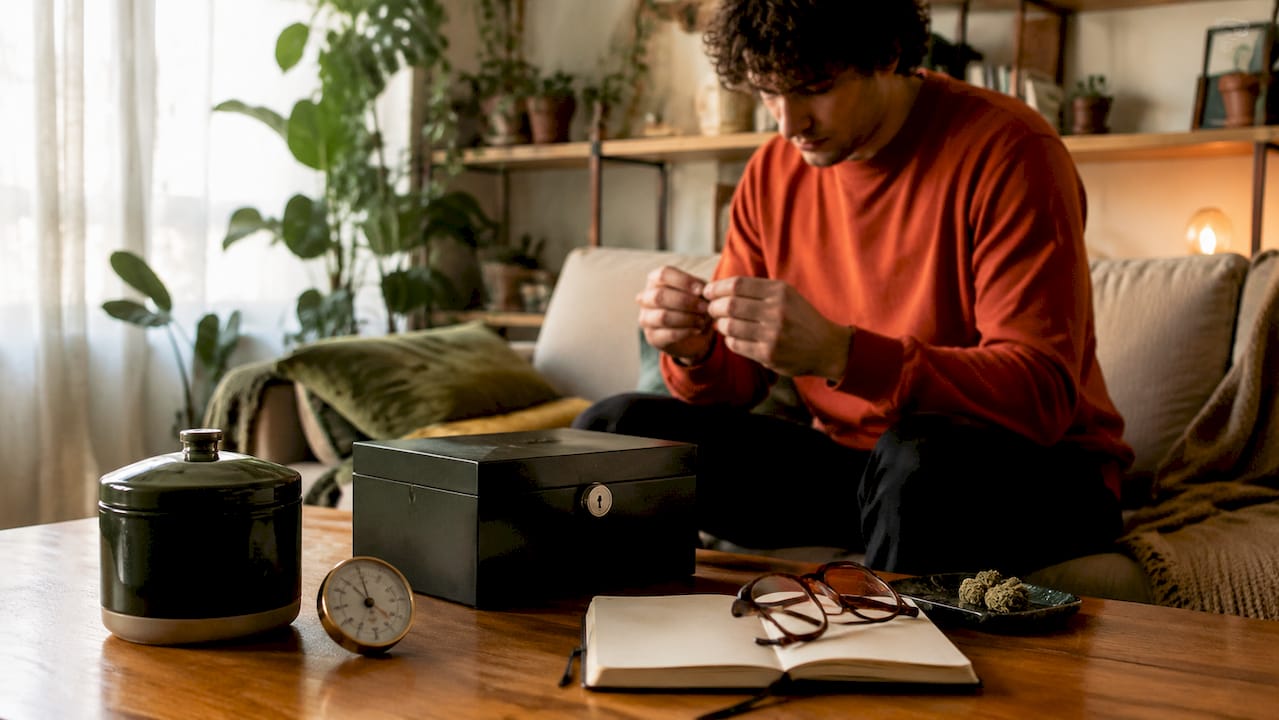
Cannabis doesn’t expire like food but degrades pharmacologically. That distinction matters. You will not get sick from old cannabis, but you will get less medicine. Medical cannabis users should focus on preserving medicinal potency, not food-safety expiration dates.
What causes medical cannabis to degrade and lose potency?
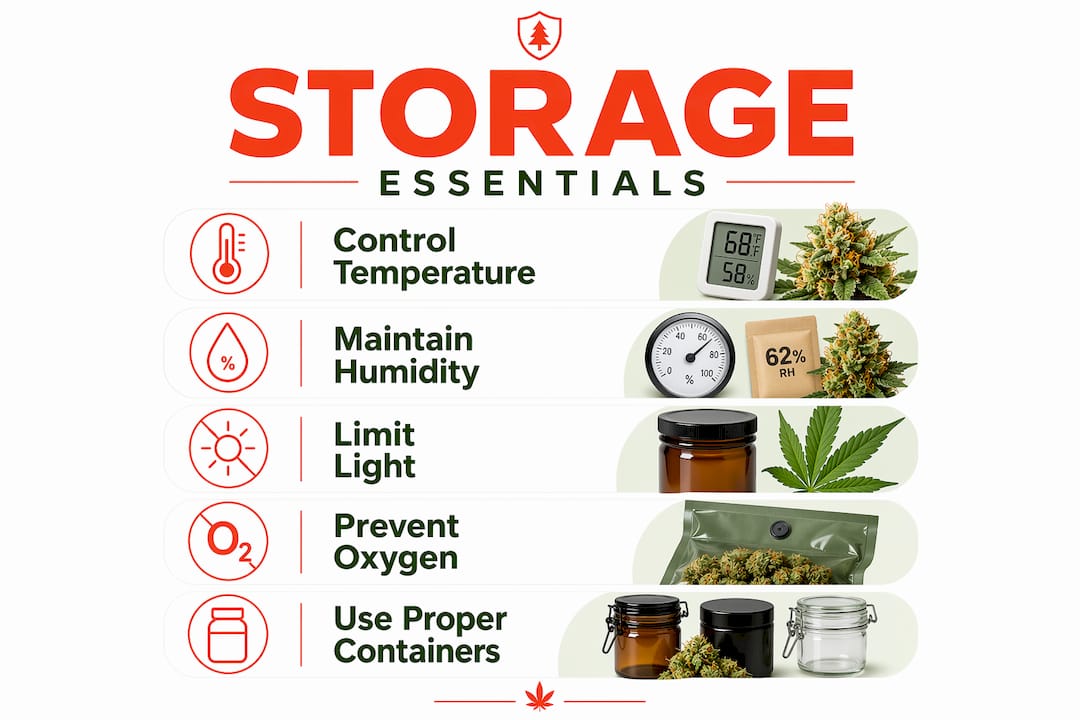
Four environmental factors destroy cannabis quality. Understanding each one helps you make smarter storage decisions.
- Light: UV light causes more cannabinoid degradation than heat or oxygen combined. UV radiation breaks down THC at the molecular level. Clear glass jars and windowsill storage are two of the worst choices a patient can make.
- Oxygen: Oxygen exposure drives oxidative degradation, converting THC into CBN and breaking down terpenes. Every time you open a container, you introduce fresh oxygen. Vacuum sealing is the gold standard for long-term storage.
- Heat: Temperatures above 25°C (77°F) accelerate cannabinoid degradation and promote mold growth. Heat also causes terpenes to evaporate, stripping the flavor and medicinal complexity from your flower.
- Humidity: The optimal humidity range is 58–62% RH. Below that range, terpenes evaporate and flower becomes brittle and harsh. Above 65% RH, mold and mildew become a serious risk, especially for immunocompromised patients.
Pro Tip: Buy a small digital hygrometer and place it inside your storage container. They cost under $10 and tell you instantly whether your humidity is in the safe zone.
Terpenes are not just about aroma. Proper storage preserves medicinal terpene profiles like myrcene for sleep and beta-caryophyllene for inflammation. When those compounds evaporate or oxidize, you lose part of the therapeutic effect even if the THC percentage looks unchanged.
How long does medical cannabis stay effective?
Storage conditions directly determine how long your medicine stays at full strength. The difference between good and poor storage is not weeks. It is months of therapeutic value.
| Storage Condition | THC Retention at 6 Months | THC Retention at 12 Months | Notes |
|---|---|---|---|
| Optimal (15–21°C, 58–62% RH, dark, airtight) | ~95% | >80% THC retained | Peak quality maintained |
| Average (room temp, some light, loose seal) | ~80% | 70–75% | Noticeable potency decline |
| Poor (plastic bag, light exposure, warm) | ~70% | 60–65% | Significant loss within weeks |
| Very poor (open container, heat, humidity swings) | Significant loss in 2 weeks | Severe degradation | Mold risk increases sharply |
Properly stored cannabis retains over 80% THC over 18 months. That number means a patient with a consistent storage setup can rely on their medicine performing predictably for well over a year. By contrast, poor storage causes noticeable potency loss within 2 weeks. Two weeks is not a long time. It means a bag left on a counter or in a car can already be delivering less medicine than you think.
Medical cannabis flower stored at 15–21°C and 55–65% RH remains at peak quality for approximately 6 months and retains therapeutic utility for up to 12 months. That is the target window every patient should plan around. If you buy a 30-day supply, you have time on your side. If you buy in bulk, your container choice becomes critical.
What are the best containers for storing medical cannabis?
The right container does most of the work for you. The wrong one undoes everything else.
Amber glass jars with airtight seals
Amber or UV-blocking glass jars are the standard recommendation for home medical cannabis storage. Glass does not leach chemicals into your flower the way plastic does. The amber tint blocks UV radiation. An airtight seal keeps oxygen out. Pair a properly sized jar with a Boveda or Integra Boost humidity pack and you have a complete preservation system.
A quality medical cannabis storage setup costs $10–$20, using amber glass jars, airtight seals, and humidity packs that need replacing every 3–4 months. That is a small investment compared to the cost of degraded medicine. Humidity packs are not optional extras. They are the mechanism that keeps your RH in the 58–62% target range automatically.
What to avoid
Plastic bags and clear containers are the two most common storage mistakes. Plastic is permeable to oxygen and can transfer odors and trace chemicals to your flower. Clear containers offer zero UV protection. Both accelerate the degradation you are trying to prevent.
Refrigerating or freezing cannabis can cause moisture condensation and structural damage unless you use vacuum-sealed techniques. Most patients do not have the right equipment for safe freezer storage. A cool, dark, climate-stable cupboard is safer and more practical for everyday use.
Professional-grade options
Professional packaging uses nitrogen-modified atmospheres and UV-blocking seals to maintain stability. Home users can approximate this by using vacuum-sealed amber glass jars with humidity packs. The goal is to remove as much oxygen as possible and block all light exposure.
Frequent container opening introduces oxygen and disturbs humidity balance, accelerating cannabinoid and terpene loss. Use appropriately sized jars so there is minimal headspace above your flower. A half-full large jar has more degradation risk than a full small jar.
Pro Tip: Divide your supply into weekly portions stored in separate small jars. Open only the current week’s jar daily. The rest stays sealed and protected.
For patients who want to explore odorless storage options that combine UV protection with discreet design, purpose-built medical storage containers are worth the investment.
How do you store medical cannabis safely at home?
Preserving potency is only half the equation. Safe home storage also means protecting children, pets, and staying compliant with your state’s legal requirements.
Childproof and lockable storage is non-negotiable for households with children or pets. Cannabis flower, edibles, and tinctures should be stored in containers that cannot be opened without a key or combination. Many states require locked storage for medical cannabis in homes with minors. A lockable stash box that also controls humidity and blocks light solves multiple problems at once.
Key practices for safe home storage:
- Store cannabis in a locked container at or below 21°C, away from stoves, heaters, and direct sunlight
- Use odor-proof containers to prevent accidental exposure and to maintain discretion
- Label each container with the strain name, purchase date, and dispensary batch number for compliance and dosing accuracy
- Keep your storage location consistent so you always know where your medicine is
- Store cannabis separately from other medications to avoid confusion
Secure home storage solutions that combine childproof locks with humidity control give medical patients the best of both worlds. You do not have to choose between safety and potency preservation.
Pro Tip: Photograph your dispensary label before storing. If the label fades or falls off, you still have the batch number, THC percentage, and strain information on your phone.
Labeling matters for more than compliance. Knowing the exact strain and potency of what you are using helps you track which products work best for your condition. That information is only reliable if your storage has kept the medicine at its original strength.
Key takeaways
Proper medical cannabis storage preserves over 80% of THC for 18 months and prevents the pharmacological degradation that makes your medicine less effective.
| Point | Details |
|---|---|
| Four enemies of potency | Light, oxygen, heat, and humidity each degrade THC and terpenes; control all four simultaneously. |
| Optimal storage conditions | Store at 15–21°C and 58–62% RH in an airtight, UV-blocking amber glass jar with a humidity pack. |
| Cannabis shelf life | Properly stored cannabis retains peak quality for 6 months and therapeutic utility for up to 12 months. |
| Container choice is critical | Avoid plastic bags and clear jars; use amber glass with airtight seals and replace humidity packs every 3–4 months. |
| Safety and compliance | Use lockable, odor-proof containers and label every batch with strain, date, and potency for legal and dosing accuracy. |
What we’ve learned from patients getting storage wrong
At Treelockbox, we talk to medical cannabis patients regularly, and the same mistake comes up more than any other: people treat storage as an afterthought. They spend real money on quality flower from a licensed dispensary, then put it in a plastic sandwich bag in a kitchen drawer next to the stove. Two weeks later, they wonder why their medicine isn’t working as well.
The uncomfortable truth is that most potency loss is self-inflicted. It doesn’t happen at the dispensary. It happens at home, between purchase and use.
The second most common mistake is over-engineering the solution. Patients read about nitrogen-modified packaging and assume they need expensive equipment. They don’t. An amber glass mason jar, a Boveda 62% humidity pack, and a dark cupboard below room temperature handles the vast majority of home storage needs for under $15.
What I find most telling is the difference in treatment consistency patients report when they upgrade their storage. The medicine doesn’t change. The conditions it’s kept in do. And that change shows up in how reliably it works. For patients managing pain, sleep disorders, or anxiety, that reliability isn’t a luxury. It’s the whole point.
The maintaining cannabis potency guide we put together goes deeper on the science if you want to understand exactly what’s happening at the molecular level. But the practical takeaway is simple: treat your medicine like medicine, not like a snack.
— Tree Lock Box
Store smarter with Treelockbox
Treelockbox designs storage solutions specifically for patients who need their medicine to perform consistently. The lockable stash boxes and airtight storage containers in the Treelockbox catalog combine UV-blocking materials, humidity control compatibility, and childproof locking mechanisms in one unit. Every product is built for the patient who takes their medicine seriously. If you want a full breakdown of which container works best for your supply size and storage environment, the cannabis storage and tools guide covers every option with practical recommendations. Proper storage is the simplest upgrade you can make to your treatment.
FAQ
What is the ideal temperature for storing medical cannabis?
Medical cannabis stores best at 15–21°C (59–70°F). Temperatures above 25°C accelerate THC degradation and increase mold risk.
How long does properly stored medical cannabis stay potent?
Properly stored cannabis retains over 80% THC for up to 18 months. Peak quality lasts approximately 6 months under optimal conditions.
Can you store medical cannabis in the refrigerator?
Refrigeration is not recommended for most patients. Condensation from temperature changes damages flower structure and promotes mold unless you use vacuum-sealed containers.
What humidity level should medical cannabis be stored at?
The target range is 58–62% relative humidity. Below 55% causes terpene loss and brittleness. Above 65% creates mold and mildew risk.
Do i need a lockable container for medical cannabis at home?
Many states require locked storage for medical cannabis in homes with minors or pets. A lockable, odor-proof container also protects potency and keeps you compliant with local regulations.