

Odor Proof Edibles: Low Odor Prep and Airtight Storage for U.S. Homes
Yes, edibles can be stored nearly odor-proof, but only if you fix two things: seal them in airtight, non-porous containers and control the smell during preparation, not just after. Sealed gummies or capsules barely smell at all sitting in a jar. The real odor risk comes from decarbing flower or simmering an infusion, which is why picking a low-odor prep method matters as much as the container you buy.
TL;DR:
- True odor-proof storage depends on using airtight, non-porous containers like glass or steel with reliable seals, not just marketed “odor-resistant” options.
- Decarbing flower with sealed water bath methods or pre-made extracts reduces odor emissions compared to open-decay techniques.
- Long-term edible storage works best in vacuum-sealed bags in the freezer, while daily use containers should be dark, cool, and airtight to maintain potency and limit smell.
- For on-the-go discretion, layered containment such as double-bagging with activated carbon sachets offers the most effective odor control during transportation.
- Regular maintenance like seal checks, separating edible types, and proper storage habits reinforce odor management over time.
Table of Contents
- What Makes Edibles Smell (and Why Airtight Containers Help)
- How to Make Edibles Without Filling the Kitchen With Smell
- Storing Finished Edibles: Containers, Temperature, and Timing
- Taking Edibles on the Go Without Announcing It
- Fixing It When Storage Still Smells
- How Tree Lock Box Storage Fits Every Step Above
- What Actually Changes Once You Build the Habit
- Shop Tree Lock Box for Airtight, Lockable Storage
- Sources
- FAQ
What Makes Edibles Smell (and Why Airtight Containers Help)
Terpenes are the aromatic compounds responsible for cannabis smell, and they’re volatile, meaning they evaporate into the air easily. Once those molecules are airborne, moving air carries them straight to your nose, or your neighbor’s. Once cannabinoids and terpenes are baked into a gummy, capsule, or brownie, most of them stay bound in the food matrix. That’s why finished edibles kept sealed produce essentially minimal detectable odor compared to raw flower or an open jar of infused oil.
An airtight container doesn’t mask smell. It blocks air exchange, which stops odor molecules from escaping in the first place. That distinction matters when you’re shopping: a container marketed as “odor-resistant” without a true seal is really just slowing things down, not stopping them.
Material matters too. Glass and stainless steel are non-porous, so they don’t absorb terpenes over time the way some plastics do. Thin plastic bags or generic Tupperware can work short term but tend to degrade or warp, breaking the seal faster than solid glass or steel.
Here’s a simple way to check any container you already own:
- Seal the container empty, wait 30 seconds, then press down on the lid. If it resists and springs back, you likely have a real seal.
- Add a strongly scented item (a coffee bean works) for a few hours, then smell the outside. Any leakage shows up fast.
- Check the gasket or lid edge for cracks, warping, or a loose lid, which are the most common seal failures.
Statistic Callout: Volatile terpenes can disperse quickly into open air once a container is unsealed, so even a brief lid-off moment during transfer or serving can release a noticeable smell.
How to Make Edibles Without Filling the Kitchen With Smell
Decarboxylation and infusion are the two steps that generate the most odor in edible-making, and how you handle them determines whether your kitchen smells like a dispensary for the next six hours.
- Sealed mason jar decarb. Grind flower, seal it in a mason jar, and place the jar in a water bath (sous-vide style) or in the oven at a low, consistent temperature. This traps almost all the aroma inside the glass instead of venting it through your oven vents.
- Oven-in-bag method. A heat-safe sealed bag on a baking sheet cuts down on airborne terpenes significantly, though it’s slightly less contained than a sealed jar.
- Open-tray oven decarb. Spreading flower on a baking sheet, uncovered, is the traditional method and by far the smelliest. Skip it if discretion matters.
- Skip decarb entirely. Buying cannabis distillate or a pre-made neutral extract and mixing it directly into food cuts out the most odor-heavy step altogether. Makers who start from purchased distillate avoid the smell of decarbing whole flower from scratch.
For infusions, sealed slow-cooking in a mason jar (again, water bath style) beats an open saucepan every time. If you’re mainly after capsules or tinctures rather than baked goods, working from a pre-made extract turns the whole process into a five-minute, low-odor task instead of an all-afternoon one.
If you do need to decarb or infuse raw flower, a box fan in the window pulling air outward, paired with an inline carbon filter, clears lingering smell fast. Better yet, do the smelliest steps outside or in a garage with ventilation.
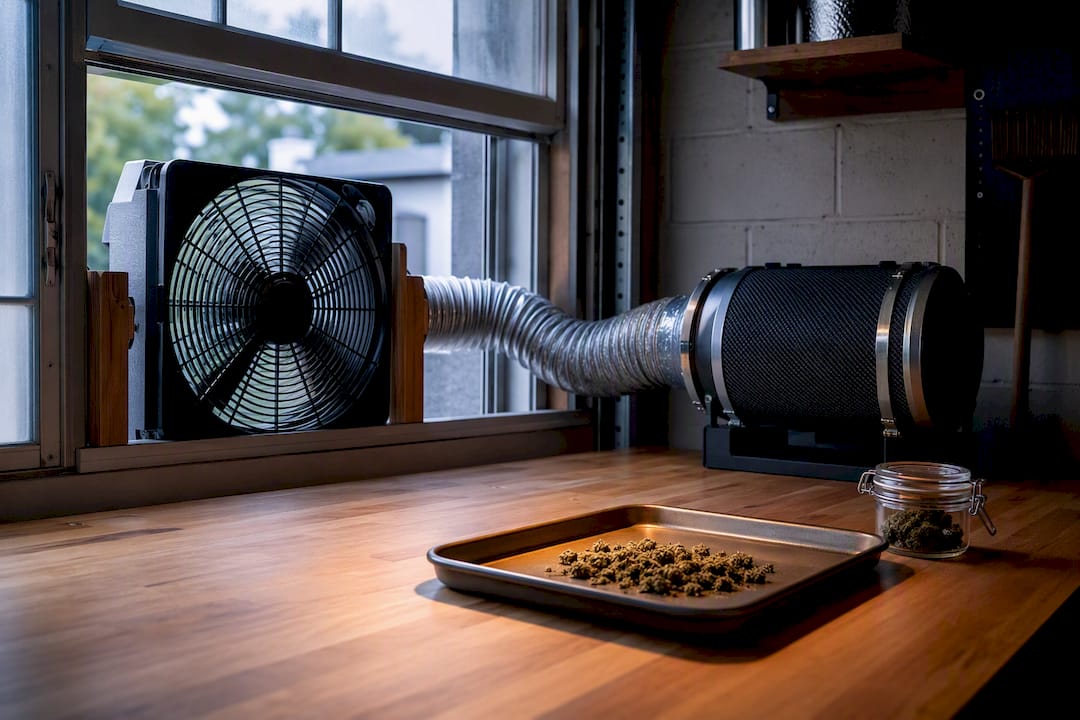
Pro Tip: If you’re vacuum-sealing raw flower before a water-bath decarb, double-check the bag seal before it hits hot water. A slow leak in hot water releases more odor than an open jar would.
Never decarb near an open flame, and always use oven mitts when pulling sealed glass jars from a hot water bath. Thermal shock can crack jars that go from hot water straight into cold air.
Storing Finished Edibles: Containers, Temperature, and Timing
A cool, dark, dry environment is the standard for edible storage, and it does double duty: it protects potency and keeps odor locked down. Cannabinoids degrade faster under light and heat, so an opaque or dark-tinted container preserves both freshness and discretion in one move.
Match the container to your storage timeline:
- Airtight glass jar: Best for daily or weekly use. Non-porous, doesn’t hold onto old smells, and a proper seal on a container like a borosilicate glass jar keeps things locked down without any special equipment.
- Vacuum-sealed bags: The strongest option for long-term freezer storage, since pulling out the air slows cannabinoid breakdown. Thaw the sealed bag to room temperature before opening, or condensation will soak into the edible and ruin the texture.
- Mylar or foil pouches: Light-blocking and a solid vapor barrier, good for gummies or chocolates you’re not opening daily.
- Thin plastic containers: Fine for a day or two, but not a long-term answer. They absorb odors and degrade faster than glass or steel.
Keep edibles below 70°F, away from humidity, and sealed tight enough that texture doesn’t dry out or turn gummy from moisture. Fridge storage works if the container is fully sealed. An open container in the fridge picks up moisture and other food smells fast.
Separate edible types by flavor and potency, and label with the date made. Mixing a peppermint chocolate with a citrus gummy in the same tin cross-contaminates flavor within days.
Taking Edibles on the Go Without Announcing It
Portable discretion comes down to layering: a solid container first, then a secondary barrier if you’re traveling through shared spaces like a car, backpack, or hotel room.
- Hard items like chocolates or pressed tablets do well in a small lockable container with a gasket seal.
- Individually wrapped gummies fit well in a smell-proof Mylar pouch, then dropped into a larger sealed container for a second layer of containment.
- An activated carbon or zeolite sachet tucked into the outer bag catches any stray odor molecules that escape the primary seal.
- Double-bagging (inner pouch plus outer sealed case) beats relying on a single container, especially for multi-stop days where you’re in and out of the bag repeatedly.
Pro Tip: Pack edibles at the bottom of a bag, away from where you’ll be reaching in and out. Every time a bag opens, you release a little trapped air, and less traffic near your stash means less exposure.
Cannabis laws vary significantly by state and by whether you’re crossing jurisdictional lines, so check your local regulations before traveling with edibles. This isn’t legal advice, just a reminder that odor control doesn’t override legal status.
Fixing It When Storage Still Smells
If your sealed container still smells off, don’t just assume the container is bad. Run through this quick sequence first:
- Redo the 30-second airtightness test: press the lid, count to 30, and check for resistance or leakage around the seal.
- If air escapes, transfer contents to a glass jar with a rubber gasket lid, which seals more reliably than most plastic containers.
- Add a carbon sachet inside the container as a backup layer while you sort out the seal issue.
- If multiple edible types are stored together, separate them. Mixed storage is one of the most common causes of “off” smells that aren’t actually odor leakage, just flavor bleed.
- Vacuum-seal anything going into freezer storage rather than relying on a standard lid.
A sour, fermented, or moldy smell is different from a terpene smell, and it means discard, not reseal. That usually points to moisture contamination, not a container failure. The most common mistakes are storing edibles in direct sunlight, using a container with a worn or cracked gasket, and skipping the seal check until after something already smells.
How Tree Lock Box Storage Fits Every Step Above
Everything covered so far points to the same conclusion: airtight, non-porous, lockable storage solves most of the odor problem, and preparation choices handle the rest. Tree Lock Box builds around that exact workflow.
- Airtight lockable boxes for home storage, built to hold a seal the way glass and stainless steel do, with the added benefit of a lock for households sharing space.
- Modular prep kits that pair with no-touch preparation tools, cutting down on hand contact and mess during the messiest, smelliest part of making edibles.
- Travel-ready containers sized for the double-sealing strategy covered in the on-the-go section, so you’re not improvising with sandwich bags before a trip.
The logical order is prep tools first, airtight container second, lockable stash box last. If you want the reasoning behind why sealed, non-porous storage outperforms plastic bins, the odor-proof container breakdown covers it in more depth, and the guide on secure home cannabis storage types walks through options by household situation.
What Actually Changes Once You Build the Habit
Discretion isn’t a one-time purchase. It’s a routine you repeat until it’s automatic. One reader we hear from often is a parent who preps gummies on Sunday afternoons while kids are around, so a sealed jar during the water-bath decarb step isn’t optional, it’s the whole plan. Another is a renter in a shared apartment who switched from a shoebox to a lockable tin after a roommate commented on smell that wasn’t even coming from an open container, just a loose lid.
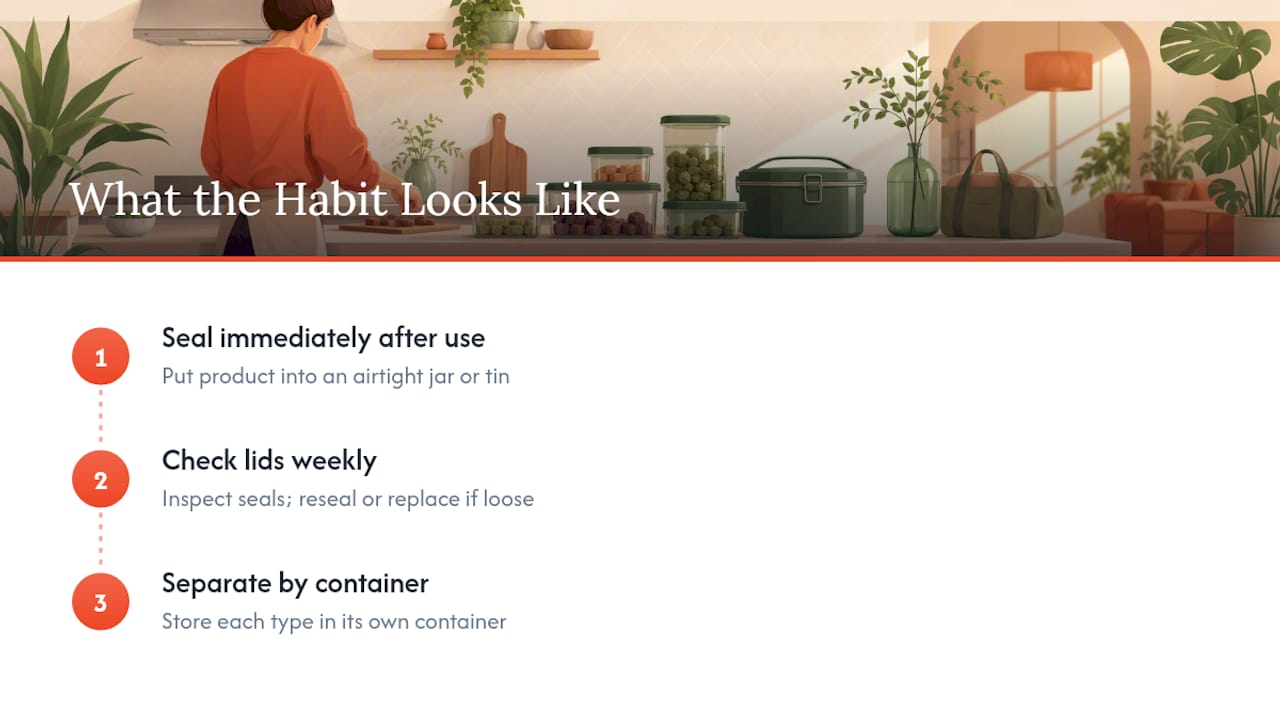
The habit that sticks looks like this: seal immediately after use, check the lid weekly, and separate types by container instead of piling everything into one bin.
— Tree Lock Box
Shop Tree Lock Box for Airtight, Lockable Storage
Every method in this guide comes down to the same fix: seal it right, and the smell problem mostly disappears. Tree Lock Box’s cannabis storage and prep tools are built around that, with lockable boxes sized for daily jars, travel tins for the double-sealing approach, and prep kits that keep decarb and infusion steps contained instead of venting through your kitchen. A starter setup, one lockable box for home storage plus a compact travel tin, covers both the storage and on-the-go situations covered above without needing to mix and match containers from multiple sources. If you’re still working through preparation methods, the no-touch prep guide pairs directly with the low-odor techniques covered earlier and shows the tools built for that exact workflow.
Sources
- Everything That Affects How Strong Edibles Smell in Storage
- How to Store Edibles for Maximum Freshness and Potency
- Glass Airtight Container Trio | Non-Toxic & BPA-Free | Caraway
FAQ
Can You Smell Edibles on Someone’s Breath?
Edibles produce far less breath odor than smoking, since there’s no combustion or exhaled smoke involved, and many people consider edibles among the most discreet consumption methods for this reason. Some products with strong flavor oils may leave a faint scent for a short time after eating, but it fades much faster than smoke odor.
Are Smell-Proof Bags Actually Airtight?
Not always. A bag marketed as smell-proof still needs a genuine airtight seal, whether that’s a locking zipper track or a heat-sealed edge, or terpenes will find their way out over time.
What’s the Best Container for Long-Term Edible Storage?
Vacuum-sealed bags stored in the freezer work best for long-term potency and freshness, since removing oxygen slows cannabinoid breakdown. Thaw sealed to room temperature first to avoid moisture damage.
Does Refrigerating Edibles Help With Odor?
Refrigeration helps preserve texture and potency, but only if the container is fully sealed. An unsealed container in the fridge absorbs moisture and other food odors instead of blocking its own smell.
Do Lockable Stash Boxes Help With Odor Control?
Yes, when they include a real gasket seal rather than just a lock. A lockable box adds security on top of odor control, which matters most for shared households or travel.