

Preventing Cannabis Smell From Spreading: 11 Methods That Work
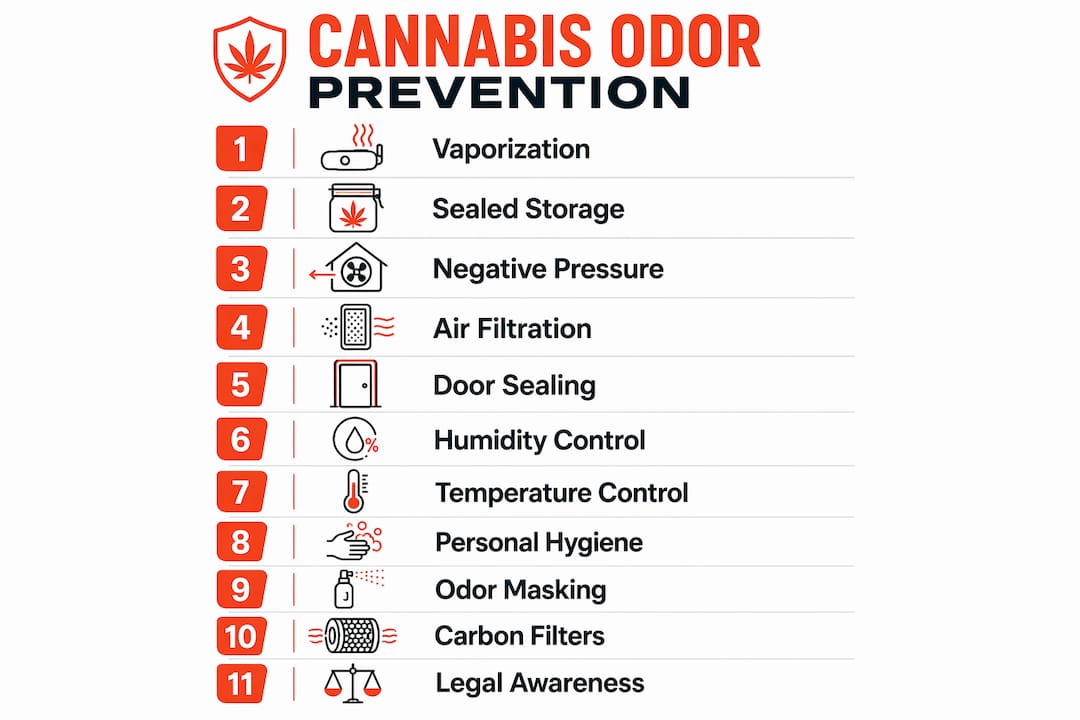
The most effective approach to preventing cannabis smell spreading combines four things: switching from combustion to vaporization, running a HEPA plus activated carbon air purifier continuously, storing your flower in airtight glass jars, and creating negative air pressure in your consumption space. No single trick does the job alone. Here is what actually works, ranked by impact.
Quick-reference methods:
- Switch to dry herb vaporization to cut odor output at the source
- Store cannabis in vacuum-sealed glass jars, not plastic bags
- Run a HEPA plus activated carbon air purifier near your consumption spot
- Use a Smoke Buddy or personal carbon filter when exhaling
- Create negative air pressure with a window exhaust fan
- Seal door gaps with weatherstripping and a door sweep
- Cover or filter HVAC vents during sessions
- Use enzymatic cleaners on fabrics and surfaces after sessions
- Avoid layering masking scents; neutralize instead
- Keep temperature and humidity low to reduce terpene volatility
- Wear a dedicated session hoodie and wash it separately
How to prevent cannabis smell from spreading indoors
The single biggest lever you have is switching to vaporization instead of combustion. Burning flower releases tar-heavy smoke that clings to walls, fabric, and carpet for days. Vapor dissipates faster and lacks the sticky molecular weight that pins terpenes to surfaces. Paired with a sealed room, this one change significantly cuts odor output.
After that, airflow design matters more than most people realize. Negative air pressure keeps odor inside your room by ensuring air flows inward through gaps rather than outward. A window exhaust fan blowing outside achieves this. When the door is sealed and the fan runs, fresh air gets pulled in through small gaps instead of scented air leaking out.
Door gaps are the primary escape route. Warm, terpene-laden air rises and pushes through any opening it finds. Weatherstripping the door frame and adding a door sweep at the base closes those pathways. For HVAC vents, magnetic vent covers ($5–$10 each) seal supply and return vents during sessions, preventing your central system from redistributing odor throughout the house.

High temperature and humidity intensify terpene volatility, making odors travel faster and farther. Keep your consumption room cooler and drier than the rest of your home. Soft furnishings like carpets, curtains, and throw pillows absorb odor and re-release it slowly, so minimizing fabric surfaces in your session room pays off over time.
Pro Tip: Balanced airflow beats raw fan power. If your exhaust fan moves air faster than your carbon filter’s rated CFM, terpene molecules pass through without being captured. Match fan speed to filter capacity for maximum scrubbing efficiency.
How to mask or neutralize cannabis odor effectively
The most common failure in odor control is relying on masking scents rather than mechanically removing molecules. Candles, incense, and cologne add fragrance on top of terpenes. Anyone familiar with cannabis will still detect it underneath. Real control means breaking down the molecule or removing it from the air.
Here is how to actually neutralize rather than mask:
- HEPA plus activated carbon air purifiers: Running one continuously near your consumption spot is the single most effective hardware investment. HEPA captures smoke particles down to 0.3 microns; the carbon layer adsorbs the volatile terpene compounds. Size the unit to your room and target 4–6 air changes per hour.
- Smoke Buddy and personal carbon filters: These devices contain activated carbon that captures exhaled smoke compounds before they reach the room air. Replace them regularly. Once exhaling through one feels hard, the carbon is saturated and it stops working.
- Ozone generators: Ozone oxidizes organic odor molecules at a chemical level and can reset a heavily contaminated room. The catch is real: ozone irritates lungs and the space must be completely unoccupied during treatment, including pets and plants. Run it for 30–45 minutes on a timer, then wait two hours before re-entering. Use it as a deep-clean reset, not a daily tool.
- Enzymatic cleaners: Standard household cleaners do not break down terpenes absorbed into fabric. Enzymatic formulas attack the organic molecules directly, making them far more effective on upholstery, carpets, and clothing.
- Vinegar solution on hard surfaces: A diluted white vinegar solution cuts through oily terpene residue on walls, counters, and hard floors. Simmer white vinegar on the stove briefly for a room-wide effect.
- Essential oils as a supplement only: Eucalyptus or peppermint can temporarily alter the sensory experience, but they do not neutralize terpenes. Use them alongside carbon filtration, never instead of it.
Best cannabis storage practices for controlling odor
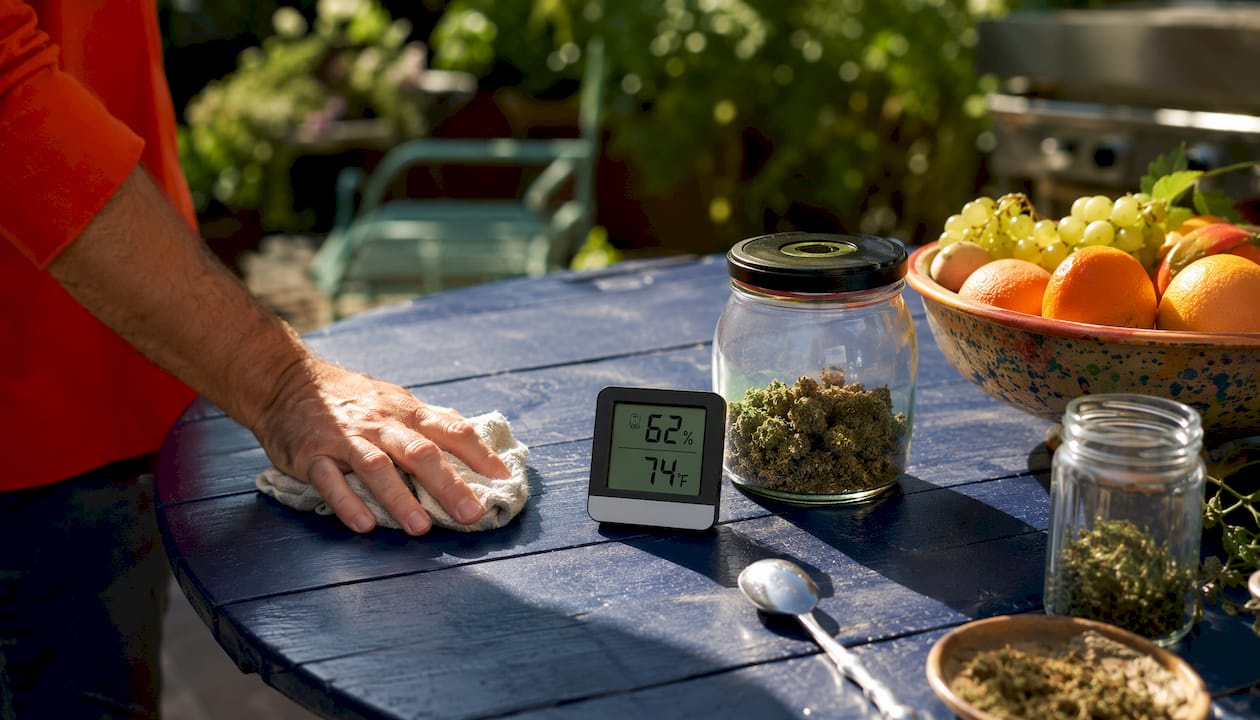
Storage is a 24/7 odor source. Even when you are not consuming, flower sitting in a plastic bag is continuously off-gassing terpenes into your room. Airtight storage is not optional if you want room-level odor control.
- Vacuum-sealed glass jars with silicone or rubber gaskets: Glass is non-porous and does not absorb or transmit odor. An airtight gasket seal traps terpenes inside completely. UV-protective glass also preserves freshness by blocking light degradation.
- Carbon-lined bags: These trap terpenes through adsorption and work well for travel or when glass is not practical. Look for bags with a double-seal zipper and a carbon lining throughout, not just at the opening.
- Avoid plastic bags entirely: Plastic is porous at a molecular level. Terpenes pass through the walls of a zip-lock bag over time, which is why your drawer smells even when the bag appears sealed.
- Cool, dark storage locations: High heat accelerates terpene volatility, pushing more odor molecules into the air. A drawer, cabinet, or dedicated lockbox away from heat sources keeps volatility low and freshness high.
- Dedicated lockable stash boxes: A lockable container adds a physical barrier and keeps everything consolidated. For guidance on choosing the right container type, the odor-proof container guide at Treelockbox covers the key differences between container materials and seal types.
Consistent sealed storage also protects potency. Terpenes that escape into the air are terpenes lost from your flower.
What science says about cannabis odor control
Terpenes are volatile organic compounds that evaporate at room temperature. Myrcene, limonene, and caryophyllene are the primary culprits. Because they are lipophilic, meaning they bind to fats and organic materials rather than water, a spray of water-based air freshener does almost nothing. They embed into fabric fibers, paint, carpet padding, and wood grain, then off-gas slowly for days.
Activated granular carbon works through adsorption, not absorption. Volatile organic compounds are chemically trapped inside the pores of the carbon rather than dissolved into it. One gram of high-quality activated carbon can have a surface area exceeding 3,000 square meters. That surface area is what makes thick carbon filters so much more effective than thin mesh pads: more surface means more dwell time, and more dwell time means more terpenes captured before air exits the filter.
HEPA filters capture smoke particles down to 0.3 microns but do not remove gaseous terpenes on their own. You need the carbon layer working alongside the HEPA membrane. A purifier marketed as “HEPA only” will clear visible smoke but leave the smell intact.
Negative pressure rooms work because physics dictates that air flows from high pressure to low. When your exhaust fan creates lower pressure inside the room, air from adjacent spaces flows inward through gaps rather than outward. Terpene-laden air cannot migrate to hallways or neighboring units because the pressure gradient is working against it.
Ozone generators are powerful but require strict safety practice. The EPA notes that ozone must be used only in unoccupied spaces due to lung irritation risks. For most users, a quality carbon filter air purifier running continuously is safer and more practical for daily odor management.
Legal and social considerations for cannabis odor in shared housing
Cannabis odor in multi-unit buildings is not just a social inconvenience. In many states, lease agreements explicitly prohibit smoking or cannabis use on the premises, and detectable odor can constitute a lease violation even where recreational cannabis is legal. Knowing your state’s laws and your lease terms before you consume indoors is the starting point.
Neighbors in shared buildings have legal standing to complain about odor intrusion. Some jurisdictions treat persistent cannabis odor as a nuisance under landlord-tenant law, which can trigger warnings, fines, or eviction proceedings. A few states with legal recreational cannabis, including Massachusetts, still allow landlords to prohibit use on their properties entirely.
The practical implication is that odor control in shared housing is not just about comfort. It is about protecting your tenancy. The methods that matter most in this context are negative pressure (so odor does not migrate through shared ductwork or hallways), sealed HVAC vents during sessions, and airtight storage at all times. Switching to vaporization or edibles removes the highest-risk odor source entirely.
If you live in a condo or co-op, check your HOA rules separately from your lease. Many HOAs have adopted cannabis-specific provisions that go beyond state law. Communicating proactively with neighbors and building management, rather than waiting for a complaint, tends to produce better outcomes.
Clothing and personal hygiene practices to reduce odor transfer
Smoke embeds into fabric faster than most people expect. A single session in a hoodie can make that hoodie the primary odor source in your closet for days. The fix is simple: designate one item of clothing as your session layer and keep it separate from the rest of your wardrobe.
A few habits that make a real difference:
- Dedicated session clothing: Keep a specific hoodie or jacket for smoking sessions. Store it in a sealed bag or a lockable container between uses so it does not contaminate surrounding clothes.
- Wash with enzyme detergent and a vinegar rinse: Standard detergent lifts surface dirt but leaves terpene residue behind. Enzyme detergent breaks down the organic compounds; a vinegar rinse in the final cycle cuts any remaining oily residue.
- Hair and hands: Terpenes cling to hair and skin. Washing your hands immediately after a session and tying back or covering your hair during consumption reduces transfer to furniture and other people.
- Mouth odor: Chewing gum or brushing teeth after a session addresses the most immediate personal odor. Staying hydrated also helps, since dry mouth concentrates odor compounds.
- Outdoor sessions when possible: Wind disperses terpenes far more efficiently than any indoor ventilation system. Even a balcony session with a Smoke Buddy reduces indoor odor exposure dramatically compared to an indoor session with a window cracked.
For a deeper look at keeping weed smell contained across different living situations, Treelockbox covers apartment-specific strategies including balcony use and shared-hallway considerations.
Treelockbox keeps your storage discreet and your space clean
Odor control starts before you ever light up. If your flower is sitting in a porous bag or an unsealed container, your room is absorbing terpenes around the clock regardless of how good your ventilation is. Treelockbox builds lockable, airtight storage solutions specifically for cannabis users who want that baseline handled.
The lockable stash boxes and prep tools at Treelockbox pair secure, odor-containing storage with the accessories you actually use: grinders, cone fillers, and cleaning tools, all in one organized setup. American-made, with custom engraving options and fast shipping. If you want your storage to work as hard as your air purifier, that is the place to start.
FAQ
What is the most effective method for preventing cannabis smell from spreading?
Switching from combustion to dry herb vaporization, combined with a HEPA plus activated carbon air purifier running continuously, greatly reduces odor output compared to smoking flower. Pair both with airtight storage and a sealed, negatively pressurized room for the strongest results.
Does a Smoke Buddy actually work?
Yes, but only when the carbon is fresh. Smoke Buddy and similar personal carbon filters capture a significant portion of exhaled smoke compounds. Once exhaling through the device feels hard, the carbon is saturated and needs replacement.
Can HEPA filters alone eliminate cannabis odor?
No. HEPA filters capture smoke particles but do not remove gaseous terpenes. You need an activated carbon layer working alongside the HEPA membrane to address both particulate matter and the volatile organic compounds responsible for the smell.
Is it legal to smoke cannabis indoors in a rented apartment?
It depends on your state and your lease. Even in states where recreational cannabis is legal, landlords can prohibit smoking or cannabis use on their properties. Check your lease and local tenant law before consuming indoors.
How often should I replace activated carbon filters?
Most manufacturers recommend replacing carbon filters every 2–3 months with regular use. Moisture from exhaled breath degrades the carbon faster than smoke does, so personal devices like Smoke Buddy may need replacement more frequently than room-level purifiers.
Key Takeaways
Preventing cannabis smell spreading reliably requires sealed storage, negative air pressure, activated carbon filtration, and vaporization working together, not any single fix applied alone.
| Point | Details |
|---|---|
| Vaporization cuts odor at the source | Switching from combustion to dry herb vaporization significantly reduces odor output, making every other method more effective. |
| Carbon filtration neutralizes, not masks | Activated carbon adsorbs terpene molecules chemically; masking with candles or sprays leaves the compounds intact and the smell detectable. |
| Storage is a continuous odor source | Vacuum-sealed glass jars with airtight gaskets stop terpenes from off-gassing into your room 24/7, not just during sessions. |
| Negative pressure contains odor to one room | A window exhaust fan creates inward airflow through door gaps, preventing scented air from migrating to hallways or adjacent units. |
| Treelockbox for airtight baseline storage | Treelockbox lockable stash boxes provide the sealed, odor-containing storage foundation that makes room-level odor control achievable. |