

Cannabis Storage for Daily Patients: 2026 Guide
Effective cannabis storage for daily patients means keeping flower in airtight glass containers at 60–70°F with 55–62% relative humidity, secured in a locked box away from children and pets. Medical cannabis is medication. Treating it like a casual stash leads to degraded potency, inconsistent dosing, and real safety risks. This guide covers the exact conditions, containers, and organization systems that chronic illness patients need to maintain their medicine from the first dose to the last.
1. ideal environmental conditions for daily cannabis storage
Temperature and humidity are the two variables that determine whether your cannabis stays medicine or becomes waste. Ideal storage conditions call for 60–70°F and 55–62% relative humidity. That range keeps trichomes intact, prevents mold, and preserves the terpene profile that makes each strain work the way it should.
Darkness matters just as much as temperature. UV light degrades cannabinoids faster than heat does. A dark closet or cabinet beats a sunny windowsill every time, even if the temperature feels right.
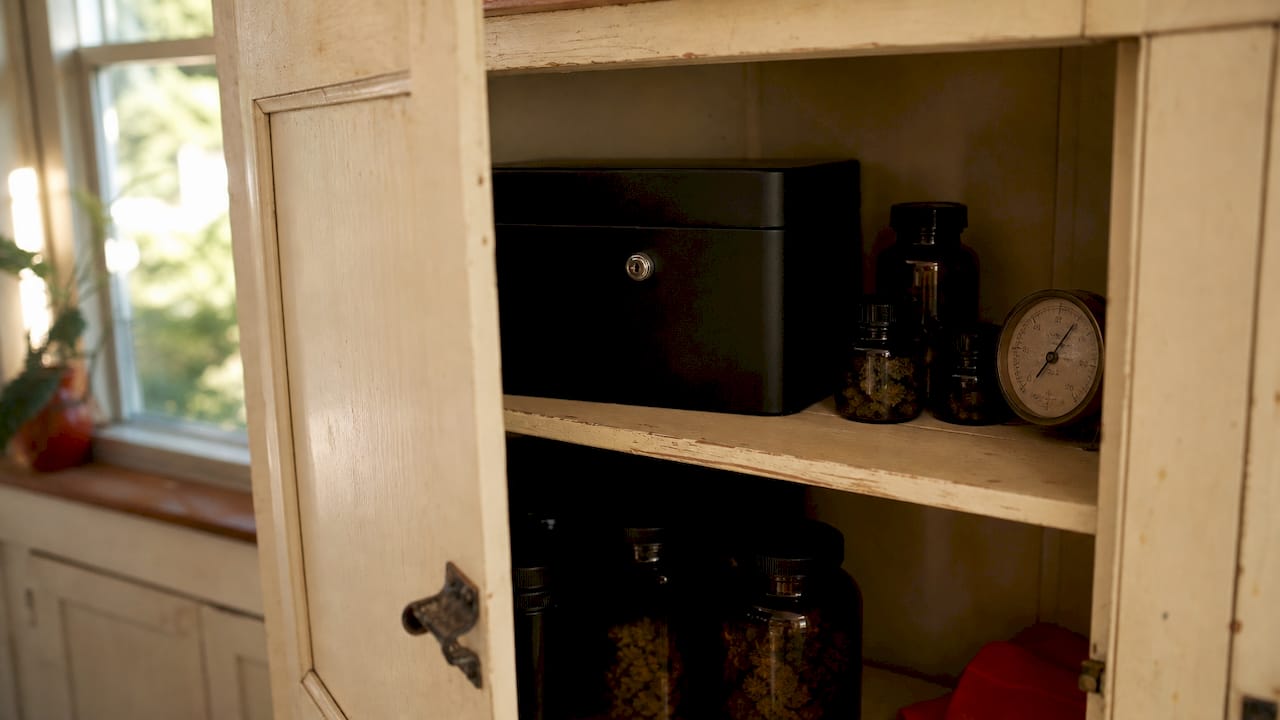
Two-way humidity packs like Boveda 62% or Integra Boost do the heavy lifting inside any container. Boveda packs cost about $2 each and extend shelf life to 6–12 months by actively adding or absorbing moisture as conditions shift. Replace them every 2–4 months, or when the pack feels hard and dry.
Pro Tip: Place a small digital hygrometer inside your storage container for one week when you first set it up. You will know exactly what your conditions look like before committing to a long-term setup.
2. best containers to preserve freshness and potency
Container material is not a minor detail. Plastic generates static that physically strips trichomes from flower, and lost trichomes mean lost potency. That is irreversible. Glass does not create static, does not leach chemicals, and blocks UV light when you choose amber or violet varieties.
Here is how the main container materials compare:
| Material | Pros | Cons |
|---|---|---|
| Amber/violet glass | No static, UV protection, airtight | Breakable, heavier |
| Clear glass | No static, widely available | No UV protection |
| Metal (airtight) | Durable, portable, light-blocking | Can affect flavor if not lined |
| Plastic | Cheap, lightweight | Static strips trichomes, degrades potency |
| Silicone | Good for concentrates | Not ideal for flower |
Airtight seals are non-negotiable for daily patients. Every time you open a container, you expose the contents to oxygen and humidity fluctuation. A quality seal minimizes that exposure. For patients managing multiple strains, smaller individual containers work better than one large jar. You protect each strain’s profile and reduce how often you open any single container.
The Syndicase 2.0 Mini Metal Storage Box is a practical example of what works for daily use. It features an airtight metal lid and a compact form factor that fits in a bag or nightstand drawer without drawing attention.
Pro Tip: Size your container to your weekly dose, not your full supply. Smaller containers mean less air exposure per opening, which keeps your medicine fresher longer.
3. secure storage in homes with children or pets
Security is a medical responsibility, not an optional upgrade. Safe cannabis storage requires locked containers in any home with children or pets, with original packaging kept intact for dosage and strain information. A curious child or a dog with a good nose can access an unlocked drawer in seconds.
Lockboxes designed for medical cannabis solve three problems at once: they prevent unauthorized access, control odor, and keep your medicine organized. Look for these features when choosing a lockbox:
- Combination or key lock with no easy bypass
- Odor-resistant lining or seal
- Enough interior space for multiple product types
- Durable construction that resists forced entry
- Discreet exterior with no obvious cannabis branding
Keeping cannabis in its original dispensary packaging inside the lockbox adds another layer of safety. Labels carry dosage instructions, strain names, and expiration dates. That information protects you as much as it protects anyone else in the household.
For a detailed breakdown of which locking storage types work best in different home setups, the secure home storage guide at Treelockbox covers the full range of options. Parents specifically will find the childproof storage strategies guide worth reading before choosing a lockbox.
4. daily organization and maintenance for medical cannabis
Organized storage prevents dosing errors and preserves medicine integrity. Dispensary staff consistently recommend this as a core routine for chronic patients. Disorganized storage leads to mixing strains, losing track of expiration dates, and accidentally using degraded product.
A practical daily organization system looks like this:
- Assign one container per strain or product type. Label each container with the strain name and the date you opened it.
- Store your most-used product in the most accessible spot. Reserve harder-to-reach areas for backup supply.
- Check humidity packs every 4 weeks. Replace them every 2–4 months before they fully harden.
- Conduct routine inspections of your stash every 6–8 weeks. Discard anything that smells off, shows mold, or has passed its dispensary-labeled date.
- Clean your containers with isopropyl alcohol every time you refill them. Residue from old flower affects the flavor and quality of fresh product.
For patients who use cannabis outside the home, portability matters. A small, lockable travel case with an airtight inner container handles the job without drawing attention. The organized storage guide at Treelockbox covers how to structure a system that works both at home and on the go.
Pro Tip: Keep a simple notepad or phone note tracking which strains you have open, when you opened them, and when you last replaced humidity packs. Two minutes of record-keeping prevents weeks of degraded medicine.
5. how different cannabis product forms require different storage
Flower, concentrates, tinctures, and edibles each degrade through different mechanisms. One storage approach does not cover all four. Each product type requires tailored conditions to stay effective and safe for daily patients.
Flower: Store in amber or violet glass with a Boveda or Integra humidity pack at 60–70°F. Refrigerators and freezers damage flower by causing condensation and making trichomes brittle. A cool, dark closet is the right environment.
Concentrates: Use original glass or silicone containers. Concentrates tolerate brief, careful refrigeration better than flower does, but condensation on the container when you remove it from the fridge is a real risk. Let the container reach room temperature before opening.
Tinctures: Store in a dark cabinet at room temperature. The alcohol base in most tinctures acts as a natural preservative. Avoid heat and direct light, which degrade cannabinoids over time.
Edibles: Refrigerate perishable edibles the same way you would any food product. Keep them in their original, labeled packaging inside a locked container. Edibles that look like regular food are a serious accidental ingestion risk.
| Product Form | Ideal Storage | Avoid |
|---|---|---|
| Flower | Airtight glass, 60–70°F, 55–62% RH | Fridge, freezer, plastic |
| Concentrates | Glass or silicone, sealed, cool | Condensation exposure |
| Tinctures | Dark cabinet, room temperature | Heat, direct light |
| Edibles | Refrigerated, original packaging | Unlocked or unlabeled containers |
Key takeaways
Proper cannabis storage for daily patients requires airtight glass containers, controlled humidity between 55–62%, and locked security to preserve potency and prevent accidental access.
| Point | Details |
|---|---|
| Temperature and humidity control | Store at 60–70°F with 55–62% RH using Boveda or Integra humidity packs. |
| Glass over plastic | Amber or violet glass prevents static damage to trichomes and blocks UV light. |
| Lock everything | Use a lockbox with a key or combination lock in any home with children or pets. |
| Product-specific storage | Flower, concentrates, tinctures, and edibles each require different conditions to stay effective. |
| Routine maintenance | Inspect your supply every 6–8 weeks and replace humidity packs every 2–4 months. |
What 10 years of watching patients store their medicine taught me
Most patients who come to us have the same problem. They spend real money on quality medicine and then store it in a plastic bag on a shelf. Within two weeks, they are wondering why their dosing feels inconsistent or why the flower smells flat. The answer is almost always storage.
The part that surprises people is how simple the fix is. A $15 amber glass jar, a $2 Boveda pack, and a lockbox that costs less than a single dispensary visit. That combination solves 90% of the storage problems I see. The patients who treat their cannabis like the medication it is get consistent results. The ones who treat it casually get inconsistent relief.
The other thing I have noticed is that organization matters more than patients expect. Mixing strains in one container, losing track of open dates, forgetting to replace humidity packs. These small habits compound into real problems for chronic illness patients who depend on predictable dosing. Building a five-minute weekly check into your routine changes everything.
My honest recommendation is to start with your most-used product and get that storage right first. One good container, one humidity pack, one locked box. Then expand the system from there. You do not need a perfect setup on day one. You need a better setup than what you have today.
— Tree Lock Box
Store smarter with Treelockbox
Treelockbox builds lockable storage and prep tools specifically for patients who use cannabis every day. The shop page carries airtight lockboxes, portable travel cases, and accessories designed to keep your medicine fresh, organized, and secure. Whether you manage flower, concentrates, tinctures, or edibles, there is a storage solution sized for your daily routine. Treelockbox also offers accessible cannabis tools for patients who need easier handling alongside their storage setup. Every product ships fast with guaranteed quality and discreet packaging.
FAQ
What temperature is best for storing medical cannabis?
Store medical cannabis at 60–70°F in a cool, dark location. Temperatures above 77°F accelerate cannabinoid degradation, while freezing damages trichomes and reduces potency.
Can i store cannabis in the refrigerator?
Refrigerators are not recommended for flower because condensation causes mold and cold temperatures make trichomes brittle. Tinctures and some edibles can be refrigerated safely in sealed, labeled containers.
How often should i replace humidity packs?
Replace Boveda or Integra humidity packs every 2–4 months, or sooner if the pack feels completely hard and dry. Fresh packs maintain the 55–62% relative humidity that preserves flower quality.
What is the safest way to store cannabis with kids at home?
Use a lockbox with a key or combination lock and keep cannabis in its original dispensary packaging inside the box. Original labels carry dosage and strain information that protects everyone in the household.
Does container material really affect potency?
Yes. Plastic containers generate static that strips trichomes from flower, permanently reducing potency. Amber or violet glass preserves terpene and cannabinoid profiles without static or chemical interaction.