

Cannabis Shelf Life Explained: Keep Your Stash Fresh
Cannabis shelf life is defined as the period during which cannabis products maintain their optimal potency, flavor, and aroma before environmental factors cause measurable degradation. For flower, that window sits at roughly 6 months of peak quality, with usable life extending to 18–24 months under ideal conditions. Most consumers lose significant potency long before that deadline simply because of poor storage habits. Understanding cannabis shelf life explained in full means knowing exactly which conditions accelerate decay and which ones slow it down.
The core chemistry is straightforward. Cannabinoids like THC and terpenes responsible for aroma are volatile compounds. They break down when exposed to light, heat, oxygen, and humidity swings. Controlling those four variables is the entire game.
What causes cannabis to degrade over time?
Light, heat, oxygen, and humidity are the four primary forces that destroy cannabis quality. Each one triggers a different chemical reaction, and together they can reduce a premium product to stale, weak material in weeks.
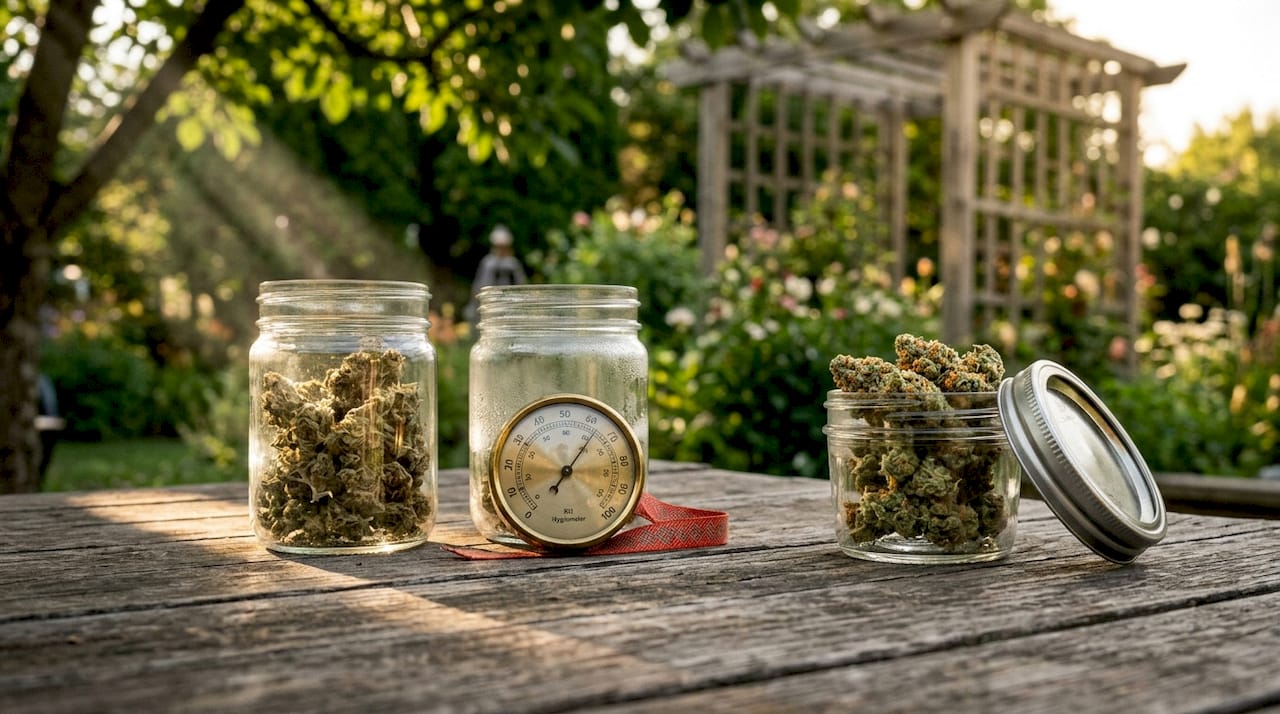
Light (UV exposure) is the fastest-acting enemy. Ultraviolet rays break down cannabinoid molecules directly, converting active THC into CBN, a mildly sedative compound with far less psychoactive effect. Clear glass jars left on a windowsill can show measurable THC loss within days of direct sun exposure.
Heat accelerates every degradation reaction. Terpenes, the aromatic compounds that give each strain its distinct smell and flavor, evaporate at relatively low temperatures. Storing cannabis near a stove, radiator, or in a hot car speeds up both terpene loss and cannabinoid breakdown simultaneously.
Oxygen causes oxidation. When THC oxidizes, it converts to CBN at a faster rate than normal aging alone would produce. Every time you open a container, you introduce fresh oxygen. Frequent access to a large stash compounds this problem significantly.
Humidity extremes create two opposite problems. Too much moisture (above 65% relative humidity) promotes mold and mildew growth, which makes cannabis unsafe to consume. Too little moisture (below 55% RH) causes terpenes to evaporate and flower to become dry, harsh, and brittle.
Degradation is driven fundamentally by controlling light, heat, oxygen, and humidity. Keeping these four variables stable is the single most effective thing you can do to preserve cannabis quality over time.
Pro Tip: Store your cannabis in a dark cabinet or drawer rather than on a shelf. Even indirect ambient light contributes to UV degradation over weeks and months.
How long does cannabis last by product type?
Shelf life varies significantly depending on how a product is processed, packaged, and what form it takes. Flower and concentrates behave very differently from edibles and tinctures.
| Product Type | Peak Freshness | Maximum Usable Life |
|---|---|---|
| Flower | Up to 6 months | 18–24 months (ideal storage) |
| Pre-rolls | Up to 3 months | 6 months (airtight tube) |
| Concentrates | 6–12 months | Up to 2 years (sealed, cool) |
| Vape cartridges | Up to 6 months | 12 months (upright, dark) |
| Commercial edibles | 6–12 months | Per printed best-before date |
| Tinctures | 1–2 years | 2+ years (dark glass, cool) |
| Topicals | 1 year | 1–2 years (sealed, room temp) |
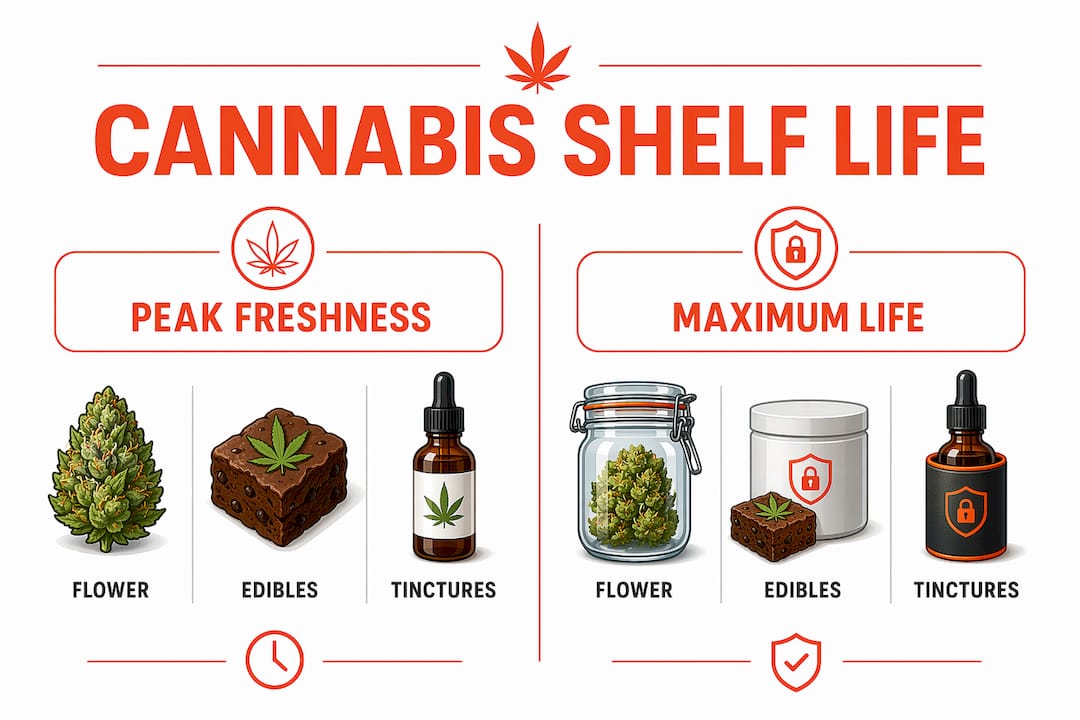
Flower degrades the slowest of the smokable formats when stored correctly. The ideal storage conditions are an airtight glass container, 59–63% relative humidity, and a temperature of 60–70°F in a dark environment. Deviate from those parameters and the timeline shrinks fast.
Pre-rolls are the most vulnerable smokable product. Pre-rolls degrade faster than flower because grinding increases surface area, exposing far more material to oxygen. Best practice is to use them within 3 months and store them in airtight tubes.
Vape cartridges carry their own unique risks. The oil inside oxidizes over time, and the hardware itself degrades. Vape cartridges stored upright in cool, dark conditions hold flavor and potency best when used within 6 months.
Edibles depend entirely on their ingredients. Commercial edibles last 6–12 months when sealed and stored per label instructions. Homemade edibles made with perishable ingredients like butter or eggs last only days to weeks, even refrigerated. Always check the printed best-before date on any packaged product.
Tinctures are among the most shelf-stable cannabis products. The alcohol or glycerin base acts as a preservative. Stored in dark glass bottles away from heat, tinctures can maintain quality for one to two years or longer.
Best storage practices to preserve cannabis freshness
The gold standard for home storage is simpler than most consumers expect. An airtight glass jar filled to about 70–75% capacity, paired with a 62% two-way humidity pack, kept in a dark and cool location covers the vast majority of what you need.
Here is the full approach, in order of priority:
- Choose glass over plastic. Plastic bags generate static that strips trichomes from flower and allow oxygen to permeate the material over time. Glass creates a neutral, airtight environment that does not interact chemically with your cannabis.
- Use a two-way humidity pack. Products calibrated to 62% RH absorb excess moisture when humidity rises and release moisture when it drops. Replace these packs every 2–3 months to maintain a stable environment.
- Store in a dark location. A cabinet, drawer, or dedicated storage box blocks UV exposure entirely. Opaque containers add a second layer of protection if you prefer to leave storage on a countertop.
- Keep temperatures between 60–70°F. A cool interior room works well. Avoid spaces near appliances, windows, or vents that cause temperature swings.
- Separate your working stash from your bulk supply. Maintaining a small working jar for daily use prevents your main stash from repeated oxygen exposure every time you access it. Open the bulk jar only when refilling the working jar.
- Skip the refrigerator and freezer. Refrigeration causes moisture and condensation inside the container, which promotes mold. Freezing makes trichomes brittle and prone to breaking off, which directly reduces potency.
Pro Tip: Label each jar with the strain name and the date you opened it. This simple habit tells you exactly how long each batch has been exposed to air, so you can prioritize older stock first.
The working jar strategy is one of the most underused techniques among regular consumers. Most people open one large container repeatedly throughout the week. Each opening floods the entire supply with fresh oxygen. Splitting your supply into a small daily jar and a sealed bulk container cuts that oxygen exposure dramatically.
How to tell if your cannabis has gone bad
Knowing when to use cannabis and when to discard it protects both your experience and your health. The signs fall into three categories: visual, olfactory, and tactile.
- Mold or mildew: White, gray, or green fuzzy patches on flower are mold. Do not consume moldy cannabis. Inhaling mold spores carries real respiratory health risks, and no amount of drying or trimming makes it safe.
- No smell: Fresh cannabis has a distinct, complex aroma from its terpene profile. If your flower smells like nothing, or smells like hay or cut grass, the terpenes have evaporated. The product is still technically usable but will taste flat and deliver a noticeably weaker effect.
- Excessive dryness or crumbling: Flower that turns to dust when touched has lost most of its moisture and terpenes. It will burn harshly and deliver a diminished experience.
- Spongy or wet texture: Cannabis that feels damp or spongy has absorbed too much moisture. This creates ideal conditions for mold even if none is visible yet.
- Color changes: Flower that has shifted from green to brown or tan has oxidized significantly. Some color change is normal with age, but dramatic browning signals heavy THC-to-CBN conversion.
Expiration dates on cannabis products are often conservative. Shelf life is more about sensory quality and potency than safety, unless mold is present. A product past its printed date is not automatically dangerous. Use your senses first, and discard anything showing mold without exception.
Key Takeaways
Proper storage is the single most effective way to extend cannabis shelf life and protect potency, flavor, and safety over time.
| Point | Details |
|---|---|
| Peak freshness window | Flower holds peak quality for about 6 months; usable life extends to 18–24 months under ideal conditions. |
| Four degradation enemies | Light, heat, oxygen, and humidity each trigger distinct chemical reactions that reduce potency and flavor. |
| Glass beats plastic | Airtight glass jars at 62% RH and 60–70°F outperform plastic bags for preserving trichomes and cannabinoids. |
| Product type matters | Pre-rolls degrade fastest; tinctures last longest. Match your storage method to the specific product form. |
| Working jar strategy | Keep a small daily jar and a sealed bulk supply to minimize oxygen exposure to your main stash. |
What I’ve learned about storage after years in this space
The most common mistake I see is overcomplicating storage. Consumers buy elaborate gadgets, try refrigeration, or rotate through a dozen different containers. None of that beats a simple, consistent system.
A labeled airtight glass jar with a fresh humidity pack, kept in a dark cabinet, outperforms complicated gadgets every time. The reason is stability. Cannabis degrades when conditions fluctuate. A simple system that you actually maintain consistently beats a sophisticated one you fiddle with constantly.
The refrigerator myth frustrates me most. People assume cold equals preservation. For cannabis, cold plus the humidity swings inside a fridge equals mold. I have seen perfectly good flower ruined in two weeks by refrigeration. The freezer is slightly better for very long-term storage of sealed concentrates, but for flower it creates brittle trichomes that break off the moment you handle the material.
My honest recommendation: invest in quality glass containers, keep a cannabis storage guide bookmarked for reference, and build a habit around the working jar method. The payoff is real. Cannabis stored correctly tastes better, hits harder, and lasts longer. That is not a minor upgrade. It changes the entire experience.
— Tree Lock Box
Treelockbox storage solutions built for freshness
Treelockbox designs storage gear specifically around the conditions that protect cannabis quality. The lockable stash boxes pair airtight seals with odor control, so your supply stays fresh and discreet at the same time. Every container is built to hold humidity packs without issue, keeping that 59–63% RH range stable between openings. If you want to put the working jar strategy into practice with purpose-built gear, the Treelockbox shop carries options sized for both daily carry and bulk home storage. For a full breakdown of which accessories pair best with your storage setup, the cannabis tools FAQ covers everything from humidity packs to grinders and cleaning tools.
FAQ
How long does cannabis flower last in storage?
Properly stored cannabis flower maintains peak quality for about 6 months and remains usable for up to 18–24 months under ideal conditions of 59–63% RH, 60–70°F, and airtight glass storage in a dark location.
Does cannabis actually expire or go bad?
Cannabis does not expire the way food does, but it does degrade. Potency and flavor decline over time, and mold can develop if humidity is too high. Discard any product showing visible mold; everything else is a quality judgment, not a safety emergency.
Why should I avoid storing cannabis in plastic bags?
Plastic bags generate static that strips trichomes from flower and allow oxygen to pass through the material, accelerating decay. Glass jars with airtight seals are the correct alternative for any storage lasting more than a day or two.
Can I store cannabis in the refrigerator to keep it fresh?
Refrigeration is not recommended for cannabis flower. Temperature and humidity fluctuations inside a fridge cause condensation inside containers, which promotes mold growth. A cool, dark cabinet at room temperature is a better choice.
What is the best humidity level for storing cannabis?
The ideal relative humidity for cannabis storage is 59–63%. Two-way humidity packs calibrated to 62% RH maintain this range automatically and should be replaced every 2–3 months to stay effective.