

Why Cannabis Freshness Matters for Potency and Flavor
Cannabis freshness is defined as the preservation of its cannabinoids and terpenes in their original, chemically intact state. Why cannabis freshness matters becomes clear the moment you compare a properly stored flower to one left in a plastic bag for three months. The difference is not subtle. THC degrades into CBN, terpenes evaporate, and what was once a flavorful, potent experience becomes flat and harsh. Freshness is the single most reliable indicator of cannabis quality, and it is fully within your control once you understand what drives degradation and how to stop it.
Why cannabis freshness matters: the science behind what you’re losing
Cannabinoid degradation is predictable and measurable. THC converts to CBN at a rate of 16% in year one, 26% in year two, 34% in year three, and 41% in year four when stored at room temperature in the dark. That progression matters because CBN produces a sedating, low-intensity effect rather than the full psychoactive experience most consumers expect from THC.
Terpenes degrade even faster than cannabinoids. Terpene loss causes muted aroma long before THC levels drop significantly, which is why cannabis can still test high in THC on a lab report but smell like dried grass in the jar. Terpenes are the volatile aromatic compounds responsible for the distinct scent of strains like Blue Dream or OG Kush. Once they evaporate, no storage technique brings them back.
Light is the most destructive environmental factor. UV exposure can destroy up to 50% of THC within just a few months of direct contact. Oxygen and heat compound the damage by accelerating terpene evaporation and speeding up the THC-to-CBN oxidation process. Humidity fluctuations add a third threat: too dry and the flower crumbles, losing trichomes; too moist and mold becomes a serious risk.
“Storage is an extension of cultivation. Effective storage locks in the chemical identity created by the grower and prevents irreversible decay. Every hour of poor storage undoes hours of careful cultivation.”
The degradation process is gradual, not sudden. You will not wake up one morning to find your flower has gone bad overnight. The loss accumulates slowly, which is exactly why many consumers do not notice until the experience has already declined significantly.
| Environmental Factor | Primary Damage | Speed of Impact |
|---|---|---|
| UV light | Up to 50% THC loss | Weeks to months |
| Oxygen exposure | THC oxidation, terpene loss | Days to weeks |
| Heat above 70°F | Accelerated cannabinoid breakdown | Days |
| Humidity below 55% | Trichome loss, brittle flower | Days |
| Humidity above 65% | Mold growth risk | 24–72 hours |
What are the ideal conditions for storing cannabis?
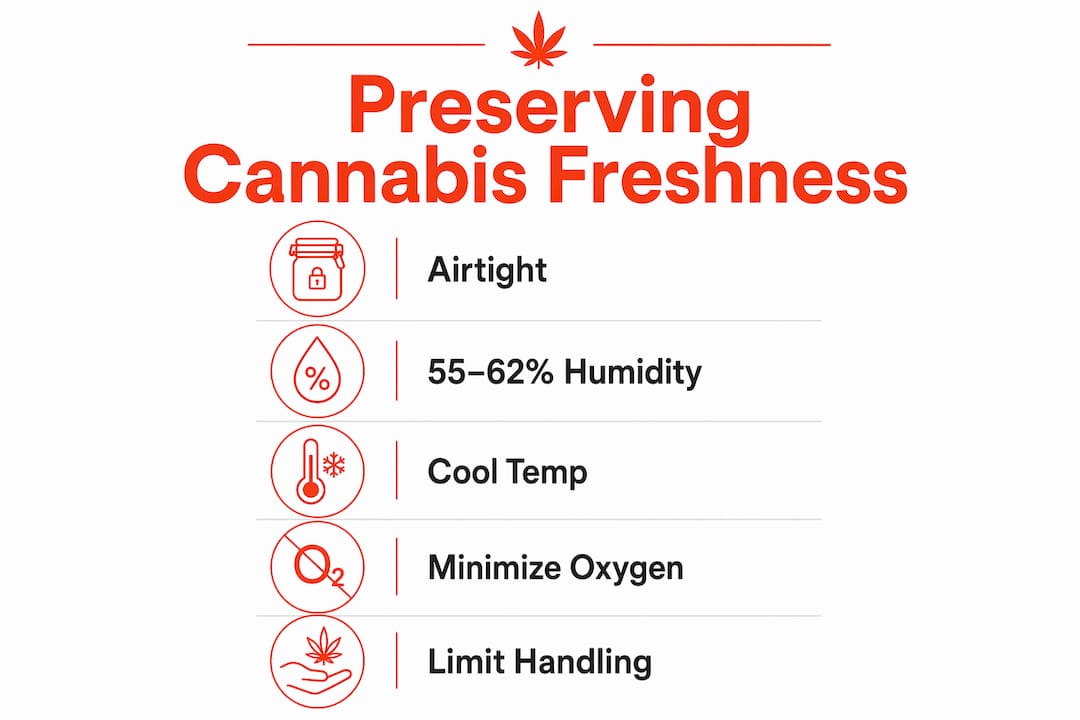
The industry standard for preserving cannabis quality is airtight glass containers, 55–62% relative humidity, and a cool, dark location between 60°F and 70°F. These three conditions work together. Airtight glass limits oxygen exposure. The humidity range keeps flower moist enough to preserve trichomes without creating a mold-friendly environment. The cool temperature slows the chemical reactions that break down THC and terpenes.
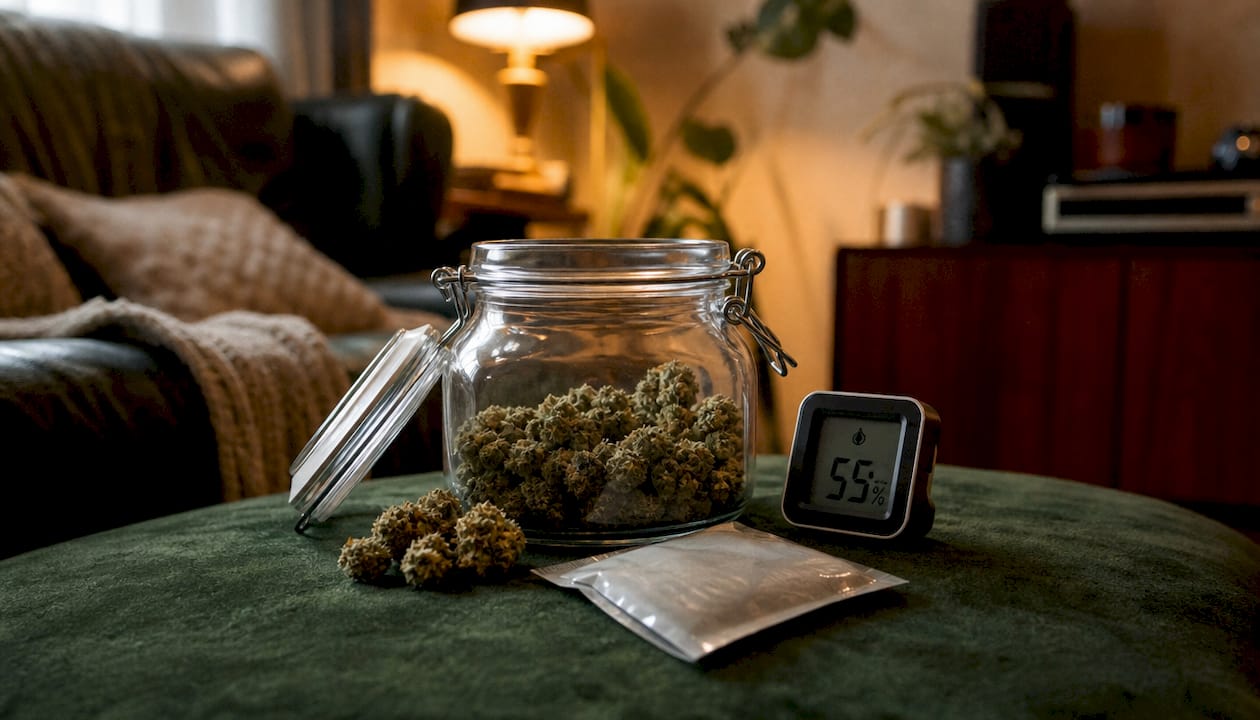
Humidity packs, such as those designed for cannabis storage, are a practical tool for maintaining the 55–62% range. However, humidity packs cannot restore lost terpenes. They improve texture and prevent further drying, but the flavor and potency that evaporated before you added the pack are gone permanently. Think of them as maintenance tools, not recovery tools.
Common storage mistakes accelerate freshness loss faster than most consumers realize:
- Plastic bags and containers: Plastic carries a static charge that pulls trichomes off the flower. It also does not create a true airtight seal.
- Refrigerators: Standard refrigerators cause condensation and temperature fluctuations that increase mold risk. Dry flower does not belong in a refrigerator.
- Freezing dry flower: Freezing makes trichomes brittle and causes them to snap off when handled. Only specific cannabis concentrates benefit from freezing.
- Leaving flower in its original dispensary bag: Most retail packaging is not designed for long-term storage. Transfer to glass within 24 hours of purchase.
- Storing near heat sources: Windowsills, countertops near stoves, and car gloveboxes all expose cannabis to temperature spikes that accelerate degradation.
Pro Tip: Fill your storage jar to minimize empty space. Excess headspace means excess oxygen, and oxygen in the container actively degrades both cannabinoids and terpenes. If you have a small amount of flower, use a smaller jar.
Proper storage preserves cannabis quality for 6–12 months when all three conditions are met consistently. That is a meaningful shelf life for consumers who buy in larger quantities or use cannabis medicinally and need consistent potency over time. For a deeper look at keeping cannabis fresh longer, the principles above apply across all flower types.
How do you know if cannabis has gone stale?
Stale cannabis announces itself through texture, smell, and effect. The physical signs appear first. Fresh flower feels slightly sticky and springy when gently squeezed. Stale flower feels dry, brittle, and crumbles easily. The trichomes, the tiny crystal-like structures that hold most of the THC and terpenes, have either dried out or broken off.
The sensory signs are equally clear:
- Muted or hay-like aroma: Fresh cannabis smells complex and distinct. Stale cannabis smells flat, grassy, or like dried herbs with no character.
- Harsh smoke or vapor: Degraded flower burns rough and produces an unpleasant throat sensation. This is partly from the loss of terpenes that smooth the experience.
- Less flavor complexity: A fresh Gelato strain tastes sweet and earthy. The same flower six months later with poor storage tastes like nothing in particular.
- Weaker, sedating effects: As THC converts to CBN, the effect profile shifts toward sedation and away from the energetic or euphoric experience the strain was known for.
Rehydration with a humidity pack can restore some texture to overly dry flower. But as noted, terpene loss is permanent. The aroma and flavor will not return. This is the most important reason to store cannabis correctly from the start rather than trying to fix it later.
Mold is the worst-case outcome of improper humidity. Mold appears as white, gray, or dark fuzzy patches on the flower and carries a musty odor. Cannabis with visible mold should not be consumed. The risk is not worth it, and no amount of drying or processing makes moldy flower safe.
Pro Tip: Test freshness before buying when possible. Squeeze a bud gently through the packaging or ask a budtender to let you smell the jar. A vibrant, complex aroma is the best real-world freshness indicator, far more reliable than THC percentage alone.
How to maximize freshness from purchase through daily use
The freshness clock starts the moment cannabis is harvested. Proper curing protects terpene integrity and reflects the care applied from cultivation through packaging. Choosing flower from a source that prioritizes curing and proper packaging is the first step in preserving what you paid for.
- Buy from reputable sources. Look for dispensaries that store flower in sealed, labeled containers with harvest or packaging dates. Freshness is a benchmark of premium quality, similar to standards applied in fine wine or specialty coffee.
- Transfer immediately. Move flower from its retail packaging into an airtight glass jar within 24 hours. Every hour in a non-airtight container is an hour of unnecessary oxygen exposure.
- Limit how often you open the jar. Frequent jar opening introduces oxygen that disrupts humidity balance and accelerates degradation. Open only when you need to, and close the lid firmly each time.
- Rotate your stash. If you keep multiple strains, use the oldest flower first. Label jars with the date you transferred the flower so you always know what to reach for first.
- Match container size to quantity. A large jar half-filled with flower holds too much oxygen. Use the smallest jar that fits your current supply.
Pro Tip: Avoid handling flower more than necessary. The oils on your fingers break down trichomes on contact. Use a small scoop or tongs when loading a grinder or cone filler.
The role of storage in smoke freshness extends beyond just keeping flower from going stale. Consistent storage conditions mean consistent effects, which matters especially for medical patients who rely on predictable potency for therapeutic use. Inconsistency in storage creates inconsistency in experience.
Consumers who avoid stale herb through disciplined storage habits report a noticeably better experience across every session. The investment in a quality glass jar and a humidity pack costs less than a single gram of premium flower. The return on that investment is every session tasting and performing the way it should.
Key Takeaways
Fresh cannabis retains its full THC potency, terpene complexity, and intended effects only when stored in airtight glass at 55–62% relative humidity, away from light and heat.
| Point | Details |
|---|---|
| THC degrades into CBN over time | At room temperature, THC loss reaches 16% in year one and 41% by year four. |
| UV light is the fastest destroyer | Direct UV exposure can eliminate up to 50% of THC within a few months. |
| Terpenes go before potency does | Muted aroma signals freshness loss even when THC levels still appear high on paper. |
| Humidity packs maintain, not restore | They prevent further drying but cannot recover terpenes that have already evaporated. |
| Container size and seal matter | Minimize headspace and use airtight glass to limit the oxygen that drives degradation. |
Freshness is the standard, not the exception
The cannabis industry has spent years focused on THC percentages as the primary quality signal. That focus is misplaced. Consumers often over-focus on THC numbers, but vibrant terpene expression and proper moisture are far better indicators of what you are actually going to experience. A 28% THC flower that has been sitting in a plastic bag for two months will underperform a 20% flower stored correctly in glass.
At Treelockbox, we have seen this pattern play out repeatedly. Consumers come in frustrated that their cannabis “doesn’t hit the same” as it did when they first bought it. The flower has not changed. The storage has failed it. The chemical identity that the grower spent weeks cultivating has been slowly erased by oxygen, light, and inconsistent humidity.
Freshness is not a luxury reserved for connoisseurs. It is the baseline standard for getting what you paid for. Treating storage as an afterthought is the equivalent of buying a quality bottle of wine and leaving it open on a sunny counter for a month. The product was good. The handling destroyed it.
The good news is that proper storage is not complicated or expensive. A quality airtight glass container, a humidity pack, and a dark, cool location are all you need. The discipline to keep the jar closed and away from heat does the rest. Freshness is an achievable standard for every consumer, every day.
— Tree Lock Box
Storage solutions built for freshness
Treelockbox designs storage accessories specifically for consumers who take freshness seriously. The cannabis storage and accessories shop carries airtight lockable stash boxes, portable storage units, and preparation tools built to protect your flower from the moment you get home. Every product addresses the core threats to freshness: oxygen, light, humidity fluctuation, and overhandling. For consumers who want detailed guidance on choosing the right storage setup, the cannabis tools FAQ covers storage containers, grinders, cone fillers, and cleaning tools in one place. Protecting your cannabis starts with the right gear.
FAQ
What causes cannabis to lose potency over time?
THC degrades into CBN through exposure to light, oxygen, heat, and time. At room temperature, this process eliminates 16% of THC in the first year and continues accelerating through year four.
How long does cannabis stay fresh in proper storage?
Cannabis stored in airtight glass at 55–62% relative humidity and 60–70°F retains quality for 6–12 months. Conditions outside this range shorten that window significantly.
Can you restore stale cannabis with a humidity pack?
Humidity packs restore moisture and improve texture in overly dry flower, but they cannot recover terpenes that have already evaporated. Flavor and aroma lost to degradation are permanent.
Is it safe to store cannabis in the refrigerator?
Standard refrigerators are not recommended for dry flower. Temperature fluctuations and condensation inside a refrigerator increase mold risk and accelerate freshness loss.
What is the fastest way to tell if cannabis is still fresh?
Smell is the most reliable test. Fresh cannabis has a complex, distinct aroma. Stale cannabis smells flat, grassy, or hay-like. Texture is the second signal: fresh flower is slightly sticky and springy, not dry and brittle.