

Does Weed Go Bad? Shelf Life and Storage Guide
Weed does not expire the way food does, but it absolutely degrades over time. THC breaks down, terpenes evaporate, and what was once a flavorful, potent flower becomes stale and weak. The question of whether cannabis goes bad is really a question of chemistry: light, heat, oxygen, and humidity all accelerate the process. Mold is the only true safety risk. Everything else is a quality issue. Knowing the difference helps you decide when to store better and when to toss it.
Does weed go bad, or does it just get weaker?
Weed degrades gradually rather than spoiling suddenly. A 2026 stability study found total THC degradation of 7.27–9.40% after just three months under recommended conditions. That number matters because it shows potency loss starts fast, even when you are doing everything right.
The primary chemical change is THC oxidizing into CBN (cannabinol). THC converts to CBN over time, which means less psychoactive punch and more sedating, drowsy effects. If your old stash hits differently than you expected, that conversion is why.
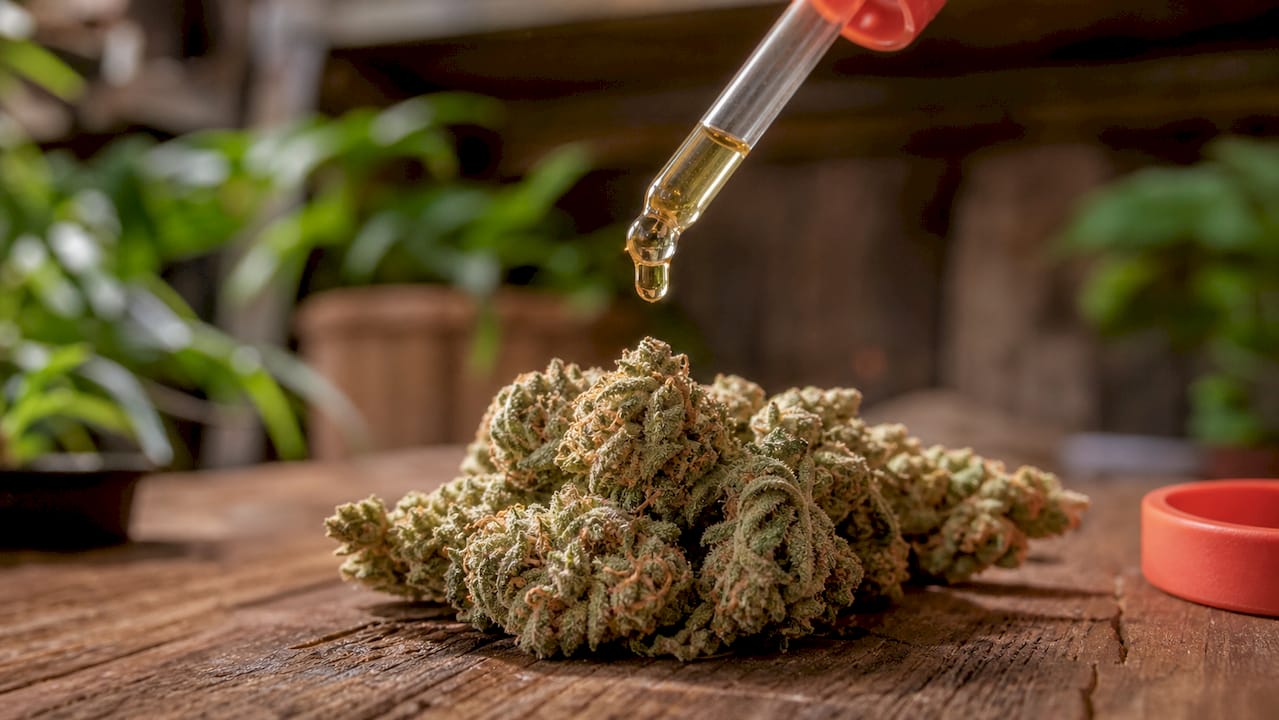
Terpenes go even faster. These aromatic compounds are volatile, meaning they evaporate at room temperature with minimal encouragement. Once terpenes are gone, the flavor and aroma profile of your cannabis is essentially flat. The smoke becomes harsher and less interesting, even if some THC remains.
The shelf life of cannabis is not fixed. Degradation rate depends on temperature and humidity through a process called kinetic modeling. Higher temperatures speed up every chemical reaction involved in breakdown. There is no single expiration timeline that applies to every situation.
What are the signs that weed has gone bad?
Identifying degraded cannabis is straightforward once you know what to look for. The signs split into two categories: quality decline and safety risk. Most old weed falls into the first category, not the second.
Here are the key indicators to check before you smoke:
- Color change. Fresh cannabis is green with visible orange or purple hues depending on the strain. Old flower turns brown or tan as chlorophyll breaks down and trichomes degrade.
- Texture. Properly cured cannabis has a slight give when squeezed. Overly dry weed crumbles to dust at a touch. Overly moist weed feels spongy and may clump together, which signals humidity problems.
- Smell. Fresh cannabis smells complex: earthy, citrusy, piney, or floral depending on the strain. Degraded cannabis smells like hay or cut grass. That flat, dull odor means terpenes have largely evaporated.
- Visible mold. White or gray fuzzy patches, dark spots, or a musty smell that is distinct from the hay-like staleness of old weed all point to mold. Mold is the definitive reason to discard cannabis, not just age.
- Harsh smoke. Old weed often burns hot and rough. That harshness comes from degraded plant material and the absence of terpenes that normally smooth the experience.
Pro Tip: Hold your jar up to a light source and look for white fuzz or dark irregular patches on the flower surface. Mold often hides in the center of dense buds, so break one open if you are unsure.
Expiration dates on cannabis packaging indicate expected quality decline, not a hard safety cutoff. A product past its label date is not automatically dangerous. Visible mold is the real hazard. Everything else is a potency and flavor conversation.
How long does weed stay fresh under ideal conditions?
The shelf life of cannabis under good conditions is longer than most people assume. Dry cannabis flower maintains quality for at least 12 months under temperatures at or below 77°F (25°C) and relative humidity between 55–65%, protected from light and oxygen. Some stability data suggest quality retention up to 24 months is achievable.
The table below shows how storage conditions affect freshness timelines:
| Storage Condition | Expected Shelf Life | Primary Risk |
|---|---|---|
| Ideal: 60–70°F, 58–62% RH, dark, airtight | 12–24 months | Minimal THC loss |
| Room temp, open container, ambient light | 3–6 months | Rapid terpene loss, THC oxidation |
| High humidity, poor airflow | Weeks to months | Mold growth |
| Freezer storage | Variable | Trichome damage from brittleness |
| Inert atmosphere packaging (nitrogen) | 18–24+ months | Very low CBN formation |
Packaging atmosphere makes a measurable difference. Inert nitrogen packaging keeps CBN formation low by removing the oxygen that drives THC oxidation. Commercial producers use this method. Home consumers can approximate it by minimizing headspace in airtight glass jars.
One counterintuitive finding from stability research: THC measurements can vary non-linearly because THCA decarboxylation and oxidative degradation happen simultaneously. This means a product can appear to gain THC briefly as THCA converts before the overall trend turns downward. Do not read a single potency test as the full story.
How to store weed to keep it fresh longer
Good storage is the single biggest variable you control. The right setup can extend your cannabis shelf life from a few months to well over a year. The wrong setup can ruin quality in weeks.
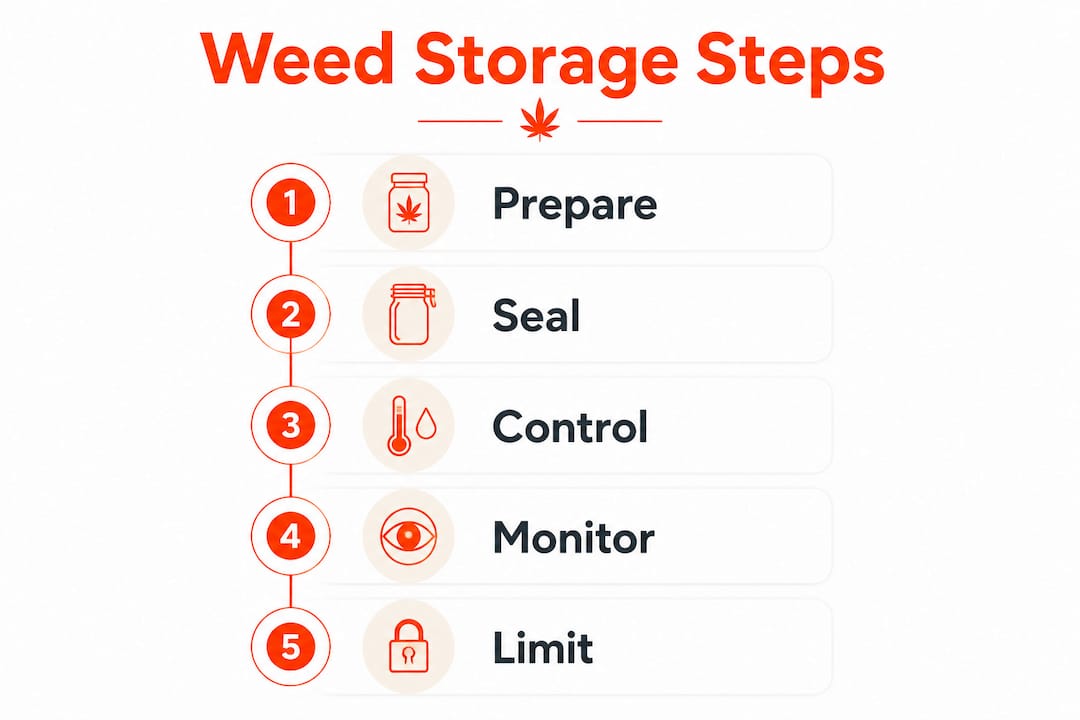
Follow these principles:
- Temperature: Store cannabis at 60–70°F (15–21°C). Heat accelerates every chemical reaction that degrades THC and terpenes. A cool, dark cabinet or drawer works well for most consumers.
- Humidity: Target 58–62% relative humidity. Excess moisture increases mold risk while too little humidity desiccates trichomes and reduces potency before any chemical degradation occurs. Boveda or Integra Boost humidity packs maintain this range passively inside a sealed container.
- Light: UV light degrades cannabinoids faster than almost any other environmental factor. Use opaque or UV-blocking glass containers. Clear plastic bags sitting on a sunny counter are the worst possible option.
- Oxygen: Minimize headspace in your storage container. Every cubic inch of air above your flower contains oxygen that drives THC oxidation. Fill your jar close to the top or use a smaller jar for smaller quantities.
- Container type: Airtight glass jars, such as mason jars or purpose-built odor-proof cannabis containers, outperform plastic bags and plastic containers. Glass does not off-gas chemicals and maintains a stable internal environment.
Pro Tip: Never store cannabis in the refrigerator. The temperature fluctuations from opening and closing the door create condensation inside your container, which raises humidity and invites mold. Freezing makes trichomes brittle and causes them to snap off when you handle the flower, directly reducing potency.
One more thing worth knowing: keeping weed fresh longer also means handling it less. Every time you open your container and dig through your stash, you are breaking trichomes, introducing oxygen, and letting terpenes escape. Portion your cannabis into smaller jars and only open what you plan to use.
Key takeaways
Old weed is almost always a quality problem, not a safety problem. Mold is the only reason to discard cannabis outright.
| Point | Details |
|---|---|
| Weed degrades, not spoils | THC and terpenes break down over time, reducing potency and flavor without making cannabis unsafe. |
| Mold is the real discard signal | Visible mold or a musty odor means toss it; age alone does not make cannabis dangerous. |
| Ideal storage extends shelf life | Storing at 60–70°F and 58–62% RH in an airtight, dark container preserves quality for 12–24 months. |
| Avoid freezing and refrigeration | Cold storage damages trichomes and creates condensation that accelerates mold growth. |
| Expiration dates signal quality, not safety | Label dates estimate when quality declines, not when cannabis becomes harmful to consume. |
What years of watching cannabis degrade taught me
Here is the honest truth most storage guides skip: the biggest losses happen in the first few weeks, not after a year. People obsess over long-term storage while leaving their flower in a plastic bag on the counter for a month. That is where the damage is done.
I have seen well-stored cannabis from six months ago smoke better than fresh flower that was handled carelessly. The variables that matter most are not exotic. They are the basics: a proper jar, a humidity pack, and a dark shelf. That setup beats any expensive storage gadget that does not address those three fundamentals.
The other thing I would push back on is the idea that old weed is worthless. If it has no mold and still smells like something, it is still usable. The experience will be different, probably more sedating due to CBN content, but not without value. I would rather smoke well-stored six-month-old cannabis than poorly stored two-week-old cannabis every time.
Where I draw the hard line is mold. No amount of “it’s probably fine” logic applies there. Inhaling mold spores is a genuine respiratory risk, and no stash is worth that. Learn to recognize the difference between the hay-like smell of terpene loss and the sharp, musty odor of active mold growth. That distinction is the most practical skill in this entire conversation.
— Tree Lock Box
Store smarter with Treelockbox
The research is clear: the right container and the right conditions are what separate a stash that lasts 12 months from one that goes flat in six weeks. Treelockbox carries lockable stash boxes and storage accessories built specifically to control light, oxygen, and odor, the three factors that destroy cannabis quality fastest. The collection includes airtight containers in multiple sizes, ergonomic grinders that minimize trichome damage during prep, and humidity-compatible designs that work with standard Boveda packs. If you want a deeper breakdown of which tools fit which storage situation, the cannabis storage and prep FAQ covers everything from container materials to cleaning routines. Good storage is not complicated. The right gear just makes it automatic.
FAQ
Does weed actually expire?
Weed does not have a hard expiration date the way food does. Quality declines over time through THC and terpene loss, but cannabis only becomes unsafe if mold is present.
How long does weed stay good in a jar?
Under ideal conditions at 60–70°F and 58–62% relative humidity in an airtight, dark glass jar, cannabis maintains quality for at least 12 months and potentially up to 24 months.
Can old weed make you sick?
Old weed without mold is generally not harmful, just weaker and less flavorful. Cannabis with visible mold or a musty odor should be discarded because inhaling mold spores poses a real respiratory risk.
What does bad weed smell like?
Degraded cannabis smells like hay or dried grass, a flat, dull odor that signals terpene loss. Moldy cannabis has a sharp, musty smell that is distinctly different from normal staleness.
Is it safe to smoke weed that has turned brown?
Brown coloring alone indicates age and terpene loss, not necessarily mold. Check for fuzzy patches, musty smell, and spongy texture before deciding. If none of those are present, the cannabis is likely just weaker, not unsafe.