

UV Protection in Storage: What Cannabis Consumers Need to Know
UV protection in storage is defined as the use of materials, coatings, and design features that block ultraviolet radiation from reaching stored products and their containers. For cannabis consumers, this is not a minor detail. UV light degrades cannabinoids, destroys terpenes, and breaks down the containers holding your product. Industry standards for light-sensitive products set the bar at blocking 90% or more of UV-A and UV-B rays to maintain product efficacy for over two years. The role of UV protection in storage determines whether your cannabis stays potent for months or loses its quality in weeks.
How UV radiation affects stored cannabis and storage containers
UV light does not just fade colors. It breaks molecular bonds inside your cannabis and inside the container holding it.
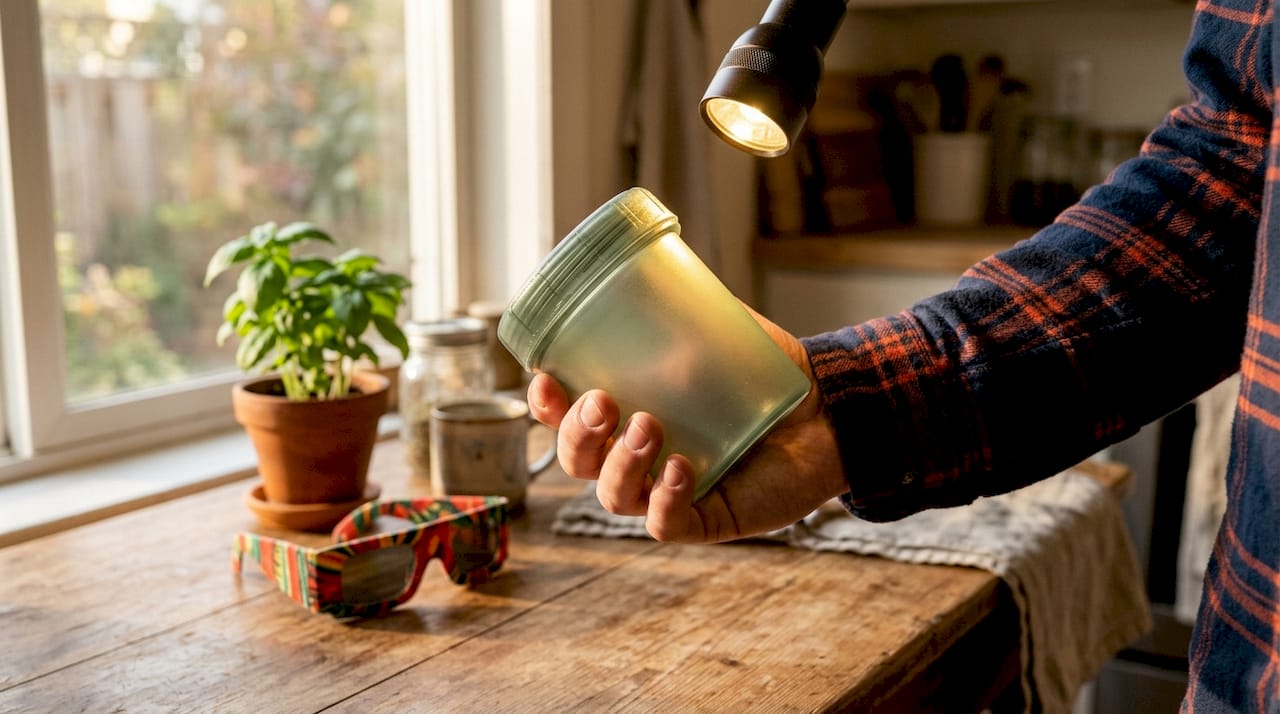
What happens to cannabinoids and terpenes
UV exposure triggers oxidation, which reduces THC and CBD concentrations and strips away the aromatic terpene compounds responsible for flavor and effect. This process starts before you notice any visible change. Packaging acts as an invisible shield, and UV-triggered chemical degradation in cannabis often occurs well before physical signs like fading become visible. By the time your flower looks bleached or smells flat, significant potency loss has already happened.
What happens to your container
UV radiation does not spare the container either. Here is what direct or indirect UV exposure does to storage materials over time:
- Brittleness and cracking: UV rays break polymer chains in plastic containers, making them fragile and prone to snapping.
- Fading and discoloration: Pigments in colored containers break down, which often signals that UV-blocking additives are also depleting.
- Seal failure: Lids and gaskets made from rubber or soft plastic lose elasticity, compromising the airtight seal that protects your cannabis from oxygen and moisture.
- Heat buildup: UV-induced heat inside a sealed container accelerates oxidation, compounding the damage to cannabinoids and terpenes.
UV-resistant containers outlast standard ones by a significant margin, reducing replacement frequency despite a higher upfront cost. That cost difference pays for itself when you stop replacing cracked containers and throwing out degraded product.
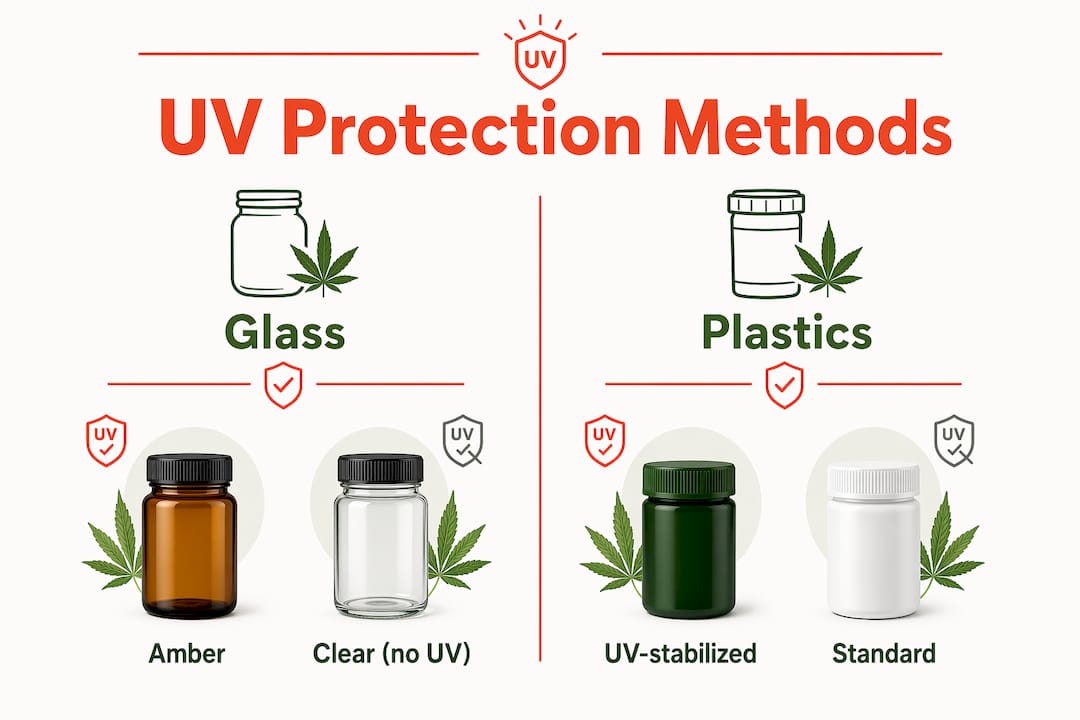
What UV shielding methods work best for cannabis storage?
Not all UV protection is equal. The material, the additive quality, and the design all determine how much UV light actually reaches your cannabis.
Amber glass
Amber glass blocks over 90% of UV light inherently, without any additional treatments. Pharmaceutical companies have used amber glass for light-sensitive medications for decades. It is heavier and more fragile than plastic, but it does not leach chemicals and its UV-blocking properties do not degrade over time the way plastic additives do. For home storage, amber glass jars are a reliable baseline.
UV-stabilized and tinted plastics
UV-stabilized plastics contain chemical additives that absorb UV radiation and convert it to heat before it reaches the contents. Tinted plastics add a layer of color that filters some UV wavelengths. The critical distinction: color alone does not guarantee UV protection. Only materials with lab-certified UV-stabilizing additives reliably block UV-A and UV-B rays. A dark-colored container with no certified additive offers far less protection than it appears to.
Opaque and coated packaging
Fully opaque containers block UV by preventing light from passing through at all. Some containers use UV-reflective coatings on the exterior to redirect radiation away from the contents. Supplemental liners inside a container add another barrier. These design layers matter most when a single material cannot achieve the required protection level on its own.
Pro Tip: When buying a UV-protective container, ask for the specific UV blockage percentage rather than accepting vague claims like “UV resistant.” A container certified to block 90%+ of UV-A and UV-B rays gives you a concrete, verifiable standard.
| Protection method | UV blockage | Durability | Best use case |
|---|---|---|---|
| Amber glass | 90%+ inherent | Very high (no additive depletion) | Home storage, long-term |
| UV-stabilized plastic | Varies by additive quality | Moderate (additives deplete) | Portable, everyday use |
| Tinted plastic (no additive) | Low to moderate | Low | Short-term only |
| Opaque container | Near-total (no light) | High | Maximum protection |
| UV-reflective coated container | High | Moderate | Outdoor or bright environments |
Why UV protection is essential for cannabis potency and longevity
The connection between UV shielding and cannabis quality is direct. Effective UV-resistant packaging extends shelf life and prevents spoilage in light-sensitive products, preserving taste, potency, and appearance. For cannabis consumers, that means the product you paid for stays closer to its original quality for longer.
“Packaging is the invisible shield that prevents UV-triggered chemical degradation in cannabis, which often occurs before physical signs like fading become visible. By the time you see the damage, the potency loss has already happened.”
The financial case is straightforward. Degraded cannabis means wasted money. A container that fails due to UV-induced brittleness means buying a replacement and potentially losing product to contamination. Premium storage containers block 90%+ UV radiation and maintain product efficacy for 24 or more months under normal conditions. That is a measurable return on a storage investment.
Industry expectations have shifted. Professional buyers and informed consumers now treat UV protection as a baseline requirement, not a premium feature. If you are serious about maintaining cannabis potency over weeks and months, UV shielding is non-negotiable. The cannabis you store today should perform as well in three months as it does on day one.
Practical tips to maximize UV protection in your storage setup
Choosing the right container is the first step. Using it correctly is the second. Most UV protection failures come from the second step.
-
Store in shaded, indoor locations. Even a UV-rated container loses ground when left on a sunny windowsill. Direct sunlight accelerates additive depletion and raises internal temperatures. A drawer, cabinet, or dedicated storage box away from windows is the right environment.
-
Specify UV blockage percentages when buying. Consumers should specify UV protection levels quantitatively, such as “blocks 85% UV,” rather than accepting vague marketing language. This applies whether you are buying a glass jar, a plastic container, or a stash box.
-
Pair UV protection with airtight sealing. UV blockers alone cannot prevent oxidation caused by oxygen and heat. Proper storage combines UV-resistant materials with controlled environments for maximum preservation. An airtight seal removes the oxygen that accelerates degradation alongside UV damage.
-
Control temperature. Heat compounds UV damage. Storing cannabis in a cool location reduces the rate of cannabinoid breakdown, even when UV exposure is already minimized.
-
Inspect containers regularly. UV stabilizers in plastics are sacrificial and eventually deplete. A container that performed well two years ago may now offer reduced protection. Check for brittleness, fading, or seal degradation as signs that a container needs replacing.
Pro Tip: Amber glass jars stored inside a lockable, opaque stash box give you two layers of UV protection. The glass blocks UV at the product level, and the outer box prevents any light from reaching the jar at all. This layered approach is the most reliable method for long-term storage.
Understanding durable materials for storage goes hand in hand with UV protection. A container that resists UV but cracks from physical stress still fails your cannabis.
Key Takeaways
UV protection in cannabis storage requires certified UV-blocking materials, airtight sealing, and shaded environments working together, because no single container feature prevents all degradation on its own.
| Point | Details |
|---|---|
| UV blockage standard | Look for containers certified to block 90%+ of UV-A and UV-B rays for reliable long-term protection. |
| Amber glass advantage | Amber glass blocks UV inherently and does not lose effectiveness over time the way plastic additives do. |
| Color is not protection | A tinted container without certified UV-stabilizing additives offers little real UV shielding. |
| Additive lifespan | UV stabilizers in plastics deplete over time, so inspect and replace containers before they fail. |
| Layered storage strategy | Pair a UV-rated container with an opaque outer box, airtight seal, and cool, shaded location for maximum results. |
The misconception that costs cannabis consumers the most
At Treelockbox, we see one mistake more than any other: consumers assume that any dark or tinted container protects their cannabis from UV damage. It does not. Color is a visual cue, not a performance specification. We have seen consumers store quality flower in dark-colored plastic containers for months, then wonder why the potency and aroma dropped off. The container looked protective. It was not.
The second misconception is that UV protection is a single-layer problem. Consumers buy a UV-rated jar and consider the job done. But there is no completely UV-proof container. UV protection exists on a spectrum, and the best results come from stacking layers: a certified container, an opaque outer box, an airtight seal, and a cool, dark storage location. Each layer handles what the previous one misses.
The industry is moving toward greater transparency on UV specifications, and that is a good shift. Consumers who ask for quantified UV blockage data are better protected than those who accept packaging claims at face value. The more you know about what your container actually does, the better decisions you make for your cannabis. That education gap is exactly what we built Treelockbox to close.
— Tree Lock Box
Treelockbox storage solutions built for UV protection
Treelockbox designs cannabis storage with UV shielding, airtight construction, and durable materials as core features, not afterthoughts. Every product in the Treelockbox shop is built to address the real causes of cannabis degradation: light, oxygen, and physical wear. Whether you need a lockable stash box for home use or a portable unit for travel, the lineup covers the full range of cannabis storage needs with American craftsmanship and verifiable quality. If your current setup relies on a tinted plastic bag or an unrated container, upgrading to a purpose-built storage solution is the single most effective step you can take to protect your cannabis investment.
FAQ
What does UV protection in storage actually do?
UV protection blocks ultraviolet radiation from reaching stored cannabis, preventing the oxidation that degrades cannabinoids, terpenes, and container materials. Without it, potency and flavor decline well before the product’s expected shelf life.
Is amber glass better than UV-stabilized plastic for cannabis?
Amber glass blocks over 90% of UV light inherently and does not lose that protection over time. UV-stabilized plastics are effective but contain sacrificial additives that deplete with prolonged exposure, making amber glass the more reliable long-term option.
How long does UV protection last in a plastic container?
UV stabilizers in plastics are sacrificial and eventually wear out, so UV resistance is not indefinite. The timeline depends on additive quality and how much direct light the container receives. Regular inspection for brittleness or fading tells you when a container needs replacing.
Does a dark-colored container protect cannabis from UV damage?
Color alone does not guarantee UV protection. Only containers with lab-certified UV-stabilizing additives reliably block UV-A and UV-B rays. A dark container without certified additives offers far less protection than its appearance suggests.
What is the best UV protection practice for cannabis storage?
The most effective approach combines a certified UV-blocking container with an opaque outer box, an airtight seal, and storage in a cool, shaded location. No single layer provides complete protection, so stacking multiple barriers delivers the best results.