

Fridges at 35–40°F Ruin Weed; Use a Jar and Lockbox at 60–70°F
Storing weed in the fridge is a bad idea for regular flower. The compressor cycles on and off, humidity swings with every door opening, and the temperature sits far colder than cannabis needs, all of which invite condensation and mold on your buds. Skip the fridge. An airtight glass jar with a humidity pack, kept in a cool, dark cabinet, does the job better and with none of the risk.
TL;DR:
- Cold, fluctuating temperatures and humidity swings inside household refrigerators promote mold growth and damage trichomes, making them unsuitable for flower storage.
- Maintaining storage at 60-70°F with 58-62% relative humidity using airtight glass jars and humidity packs better preserves freshness and potency.
- Vacuum-sealed frozen cannabis can retain long-term potency but risks trichome damage from handling when thawing or opening.
- Concentrates like live resin benefit from controlled cold environments, but flower performs best in stable, room-temperature conditions.
- Safe home storage includes locking containers, proper labeling, and keeping cannabis away from heat, light, and moisture-prone areas to prevent degradation and unauthorized access.
Table of Contents
- Why Refrigerators Usually Harm Cannabis
- When Cold Storage Actually Makes Sense
- How Do You Store Weed to Keep It Fresh?
- Transferring, Sealing, and Handling Flower Correctly
- Storing Weed Safely at Home
- The Tree Lock Box Take on Fridge Storage
- Sources
- FAQ
Why Refrigerators Usually Harm Cannabis
A household refrigerator runs at roughly 35 to 40 degrees Fahrenheit, and it doesn’t hold that number steady. The compressor cycles on and off, and every time someone opens the door, warm kitchen air rushes in and collides with the cold interior. That temperature swing is exactly what creates condensation, and condensation on plant material is how mold gets started.
Cannabis doesn’t want cold. It wants stable. The ideal storage window is 60 to 70 degrees Fahrenheit with 58 to 62 percent relative humidity, a range a fridge cannot reliably hit or hold. Cold air also makes trichomes, the resin glands that carry cannabinoids and terpenes, brittle and prone to snapping off the flower entirely.
Heat is the other side of the coin, and it’s worth understanding why cold feels like the obvious fix. Laboratory testing cited by Herb shows measurable THC loss over time when cannabis sits at room temperature, which is why people reach for the fridge in the first place. The mistake is treating “colder” as “better” instead of chasing stability.
What actually goes wrong inside a fridge:
- Humidity spikes every time the door opens, then drops as the compressor recovers.
- Condensation forms on the inside of jars and on the buds themselves.
- Trapped moisture plus organic material equals a mold risk within days, not weeks.
- Cold temperatures make trichomes stiff and easy to knock loose during handling.
The number that matters: ideal cannabis storage sits at 60–70°F and 58–62% RH. A typical fridge runs 20 to 30 degrees colder than the low end of that range, and its humidity behaves nothing like a stable environment.
When Cold Storage Actually Makes Sense
Cold isn’t always the enemy. It just needs to be controlled, and household fridges aren’t built to control it.
Some concentrates, particularly live resin, hold their terpene profile better in consistent cold. That’s different from flower because concentrates lack the delicate trichome structure that snaps under handling. A dedicated wine cooler or a purpose-built cannabis cooler works because it maintains a steady temperature without the door-opening chaos of a kitchen fridge.
For true long-term storage, a freezer can work, but only with a strict protocol:
- Vacuum-seal the flower completely before it goes anywhere near cold temperatures.
- Keep it sealed and untouched until you’re ready to use it, since thawed trichomes shatter easily if handled while cold.
- Let the sealed package return to room temperature before opening it, never the reverse.
- Treat this as a months-to-years strategy, not a weekly-use solution.
The tradeoff is real: you gain potency preservation over long stretches but risk physical damage to trichomes every time you handle frozen buds.
How Do You Store Weed to Keep It Fresh?
For the flower you’re actually going to smoke this month, the fix is simpler than a fridge or freezer and far more forgiving. Here’s the method that consistently outperforms cold storage tricks.
- Pick a jar that matches your quantity. An eighth doesn’t need a quart jar with three inches of empty air on top. Match the container to the amount so you’re not storing mostly oxygen.
- Use glass, not plastic or thin metal. Plastic can leach flavor and static can damage trichomes; glass is inert and doesn’t react with terpenes.
- Add a humidity pack. A 62% pack keeps buds slightly softer and more pliable; a 58% pack suits drier climates or flower you want to keep firmer. Vice’s storage guidance recommends matching the pack to your local humidity and adjusting from there.
- Store it somewhere dark, cool, and stable. A closet shelf, a dresser drawer, or an interior cabinet away from appliances all work. Avoid anywhere temperature swings by more than a few degrees over the day.
- Check the jar seal every time you open it. A loose lid defeats the entire point of an airtight container.
The specific numbers to aim for: 60–70°F and 58–62% relative humidity. Miss that window by a wide margin, in either direction, and you’re trading one problem for another.
Pro Tip: Amber or opaque glass isn’t required, but it helps. Clear jars are fine as long as the storage spot itself stays dark, since light degrades terpenes just as effectively as heat does.
Consumers who compare notes on long-term potency retention often find that the low-tech jar-and-cabinet method beats fridge or freezer tricks for anything you plan to use within a year.
Transferring, Sealing, and Handling Flower Correctly
Getting the setup right matters less than doing the daily handling right. A few habits make the difference between flower that stays fresh for months and flower that dries out or molds in weeks.
- Leave nugs whole when you transfer them. Grinding early exposes more surface area to air and speeds up cannabinoid breakdown. Grind only what you’re about to use.
- Minimize headspace. Extra air in the jar means extra oxygen, and oxygen accelerates the conversion of THC into CBN, the compound responsible for that stale, sedative-heavy flower. A jar that’s nearly full does a better job than a half-empty one.
- Rotate humidity packs on schedule. Most packs last one to two months before they need replacing; once a pack feels hard or crystallized, it’s spent.
- If flower has been in the fridge or freezer, don’t rush the reveal. Keep it sealed until it fully reaches room temperature, then open it. Opening cold flower to warm air is exactly how you introduce the condensation you were trying to avoid.
Handle frozen or refrigerated buds as little as possible while they’re still cold. Trichomes are brittle at low temperatures, and a single rough transfer can knock off a noticeable amount of the resin that carries flavor and potency.
Storing Weed Safely at Home
Good storage isn’t just about freshness. It’s about keeping cannabis away from kids, pets, and anyone who shouldn’t have access to it. A locked external container adds a real layer of protection beyond whatever jar you’re using inside it, and it’s worth the extra step in any household with children or pets.
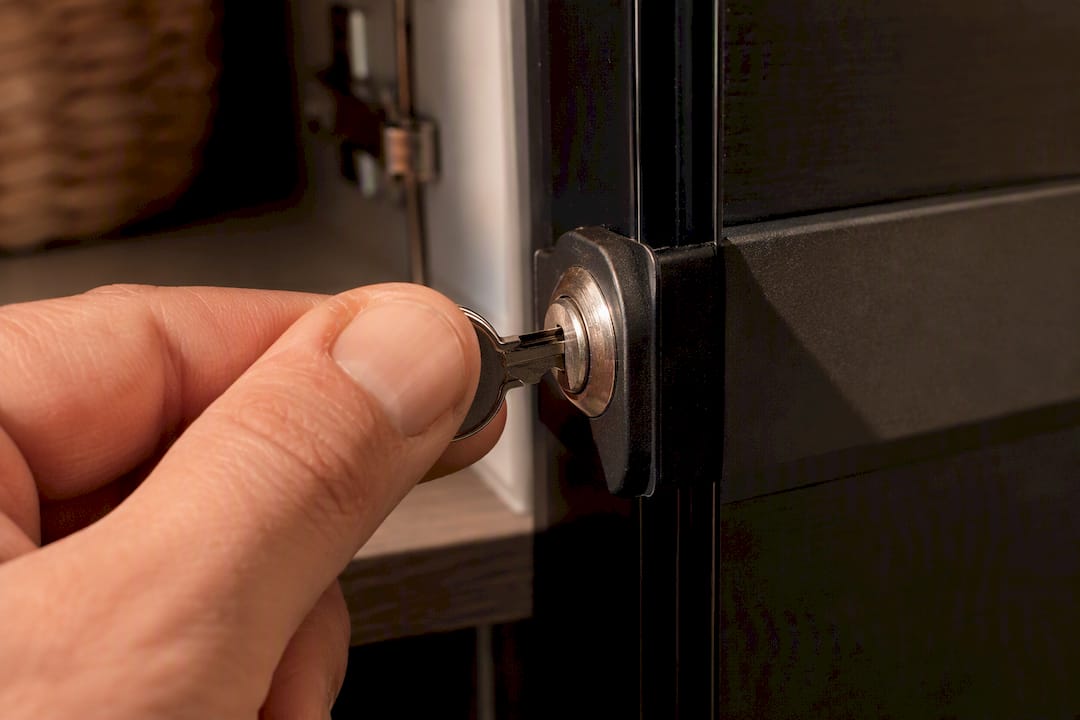
Odor control matters too. An airtight inner jar handles most of it, but a sealed outer box adds a second barrier against smell escaping into a room, especially in shared living spaces.
A few practical rules round out a safe setup:
- Label containers clearly, especially if you’re storing medicated or high-potency products separately from recreational flower.
- Keep cannabis out of sight, not on open shelving or countertops.
- Store the container away from bathrooms and kitchens, where humidity and temperature swing the most.
- Avoid windowsills entirely; direct light and heat both degrade quality fast.
The Tree Lock Box Take on Fridge Storage
We hear the same question constantly: “If cold slows decay, why not just use the fridge?” The honest answer is that a household fridge was engineered to keep milk from spoiling, not to hold a stable microclimate for delicate plant matter. It swings too much, too often.
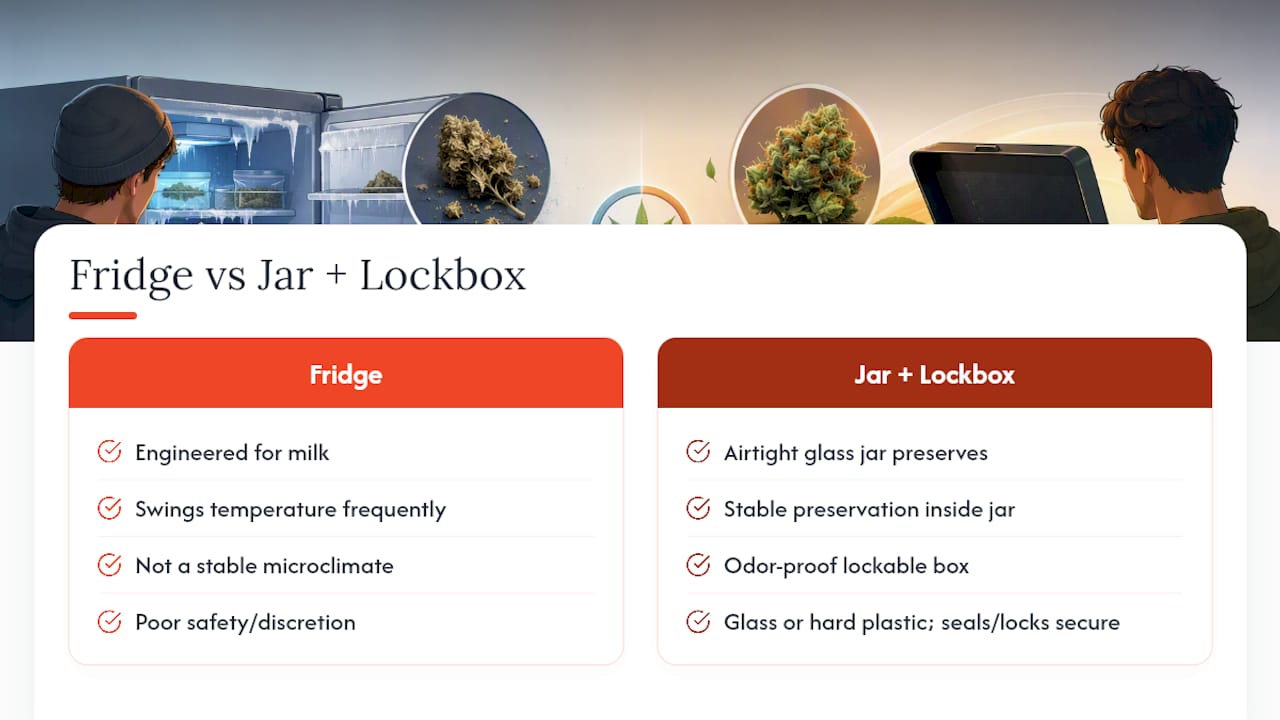
What we’ve learned from years of building storage products is that the jar does the preservation work, and the outer box does the safety and discretion work. An odor-proof lockable box around an airtight glass jar covers both jobs without asking a kitchen appliance to do something it was never designed for.
If you’re evaluating a storage product, look past the marketing and check three things: the seal quality on the lid, the material (glass or hard plastic over anything porous), and whether it locks securely if children or pets are in the house.
— Tree Lock Box
Sources
- How to Store Cannabis to Keep It Fresh | Herb
- How to store weed — Vice
- How to Store Cannabis Properly | Azarius
- How to store cannabis properly | CannaRadar
FAQ
Does Storing Weed in the Fridge Make It Hit Harder?
No. Cold storage doesn’t increase potency, and the humidity swings inside a fridge are more likely to degrade trichomes and encourage mold than improve any effect.
Is It Better to Store Weed in the Cold?
Consistent, moderate cold works for some concentrates, but flower does better in a stable 60 to 70 degree environment than in a cold, cycling fridge. Stability matters more than raw temperature.
Can You Store Weed in the Freezer Instead?
Only with vacuum-sealing and a strict no-touch-until-thawed rule. Frozen trichomes become brittle and break off easily if handled, so this method suits long-term stashes, not everyday flower.
How Long Does Properly Stored Weed Stay Fresh?
Flower kept in an airtight glass jar with a humidity pack, in a cool dark spot, typically holds peak quality for around six months and stays acceptable for up to a year or more depending on conditions.
What Humidity Pack Should I Use for Storage?
Either option stabilizes moisture far better than an uncontrolled environment like a fridge.