

Hiding Your Cannabis Box Discreetly: A Practical Guide
Hiding a cannabis box discreetly means combining airtight, smell-proof containers with clever concealment strategies that protect your privacy and keep your stash fresh. The industry term for this practice is secure cannabis storage, and it covers everything from container selection to placement tactics. Done right, your storage blends into everyday surroundings while preserving cannabinoids and terpenes for months. This guide covers the container features that matter most, the best camouflage methods for any home, and a step-by-step system you can set up today.
What makes a cannabis container effective for discretion?
The best containers for discreet cannabis storage share four non-negotiable traits: an airtight seal, opaque or UV-blocking walls, odor neutralization, and humidity regulation. Each one addresses a specific failure point that exposes your stash.
Airtight seals are the first line of defense. Oxygen degrades cannabinoids and terpenes faster than almost any other factor, so a container without a proper seal is already working against you. Look for silicone-gasketed lids on glass jars or stainless steel tins rated for food-grade storage.
Material choice shapes both freshness and discretion:
- Glass (borosilicate or amber): blocks UV light, preserves flavor, and does not absorb odors. The most reliable long-term option.
- Stainless steel: durable, opaque, and odor-neutral. Ideal for travel or high-traffic areas.
- Plastic: convenient but porous over time. Avoid for storage longer than a few days.
Odor control goes beyond a tight lid. Activated carbon linings neutralize terpene molecules chemically rather than masking them with a competing scent. Multi-stage carbon filtration is the leading method for trapping cannabis odors during both storage and transport. High-end lockable cases like those with adjustable carbon fiber dividers and waterproof zippers take this further by combining physical and chemical odor barriers in one unit.
Humidity regulation is the detail most people skip. Two-way humidity packs at 58–62% RH act as a personal humidor inside your container, preserving terpene profiles and preventing the dry, crumbly texture that produces stronger, more detectable odors. Boveda and Integra Boost both make packs in this range. Replace them every two to three months or when they harden.
Pro Tip: Place a small piece of black electrical tape over any reflective logo or label on your container. A plain, matte surface draws zero attention on a shelf.
How do you camouflage a cannabis box at home?
Subtlety and blending with household aesthetics is the single most important rule in cannabis box camouflage. A container that looks exactly like everything else around it will never raise questions.
Here are the most effective concealment methods, ranked by how naturally they integrate into a typical home:
-
Repurposed book safes. A hollowed hardcover on a bookshelf is one of the oldest concealment methods for good reason. It works because it requires zero explanation. Choose a title that fits your existing collection and place it spine-in with other books.
-
Decorative tins and boxes. A wooden keepsake box or vintage tea tin on a dresser reads as decor, not storage. Pair it with similar objects nearby so it never stands alone as the obvious “special” item.
-
False-bottom compartments in furniture. A drawer or chest with a false bottom provides the highest level of concealment. Maintaining wood moisture between 8–12% is critical during construction to prevent warping that could reveal the seam. Precise joinery and a matching finish make the compartment invisible under casual inspection.
-
Inside plain storage containers. A labeled “office supplies” bin or a craft storage box on a closet shelf is unremarkable. Nest your airtight jar inside it with a few actual pens or rubber bands on top.
-
Behind or inside other objects. The back of a linen closet, inside a winter boot, or behind a row of cleaning products under the sink are all low-traffic, low-curiosity spots.
One mistake that undermines all of this: novelty stash containers with explicit labeling are counterproductive. A container shaped like a cannabis leaf or labeled “stash” defeats the entire purpose. Subtlety always beats gimmicks.
Pro Tip: Avoid placing your concealed storage in the same spot every time you move it. Predictable locations are the first places curious visitors or children check.

How to build and manage a discreet stash box system
A complete stash box system has three components: the right container, the right location, and a maintenance routine. Setting it up takes about 20 minutes. Keeping it working takes five minutes a month.
Step 1: Gather your tools. You need an airtight glass or stainless steel jar, one or two humidity packs rated at 58–62% RH, and a lockable outer box or concealment container. For a full secure storage features checklist, Treelockbox covers every specification worth verifying before you buy.
Step 2: Choose your location. The ideal spot is dark, cool, and away from heat sources. A bedroom closet shelf, a cabinet in a low-traffic room, or a drawer in a home office all work well. Avoid the kitchen, where temperature swings and cooking odors complicate both freshness and concealment.
Step 3: Set up the container. Place your cannabis in the airtight jar with a humidity pack. Seal it. Place the jar inside your lockable outer box. Lock it. Place the outer box in your chosen concealment spot.
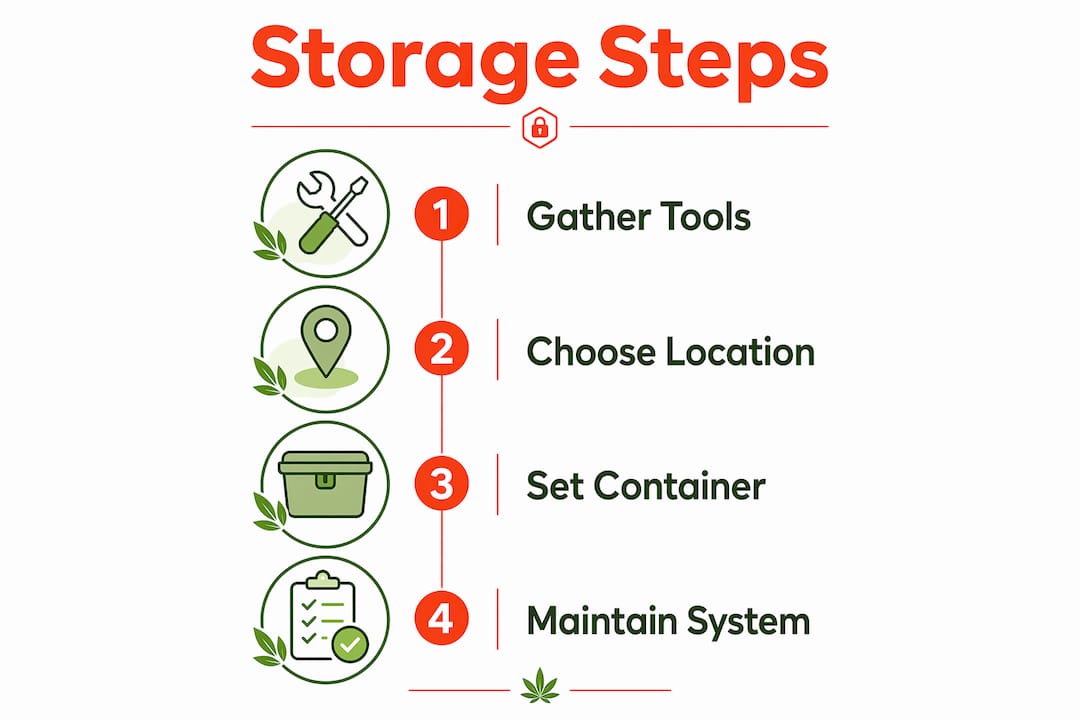
Step 4: Maintain the system. Check humidity packs monthly. Inspect seals every time you open the container. Replace any pack that feels rigid rather than pliable.
Here is a quick comparison of storage method options for different situations:
| Method | Best For | Key Advantage | Main Limitation |
|---|---|---|---|
| Glass jar in lockable box | Home base storage | Best freshness preservation | Not portable |
| Smell-proof pouch with lock | Travel or on-the-go | Compact and odor-neutral | Less durable long-term |
| False-bottom furniture compartment | Permanent home concealment | Highest visual discretion | Requires setup effort |
| Decorative tin in plain sight | Low-risk environments | Zero suspicion | Weaker odor control |
Common mistakes to avoid:
- Skipping the humidity pack and wondering why cannabis dries out within weeks
- Using a container with a worn or cracked gasket that leaks odor
- Storing in a warm spot like a windowsill or near a radiator
- Choosing a location that requires moving other objects to access, which creates visible wear patterns over time
How do you fix common discreet storage problems?
Seal failures and humidity neglect are the two most common reasons a stash system stops working. Both are easy to diagnose and fix.
Signs your seal is failing:
- Detectable odor outside the container even when closed
- Cannabis drying out faster than expected
- Visible cracking or flattening of the silicone gasket
Replace the gasket or the entire container. A compromised seal is not worth patching with tape.
Humidity problems break down into two directions. Too dry means your humidity pack is exhausted or your container is not fully airtight. Too humid means you added too much moisture or the container was not fully dry before sealing. Humidity packs at 58–62% RH prevent both extremes when the container is properly sealed. Mold appears when humidity climbs above 65% RH consistently, so monitor with a small digital hygrometer if you store larger quantities.
Odor leaks in a shared home require a two-layer fix. First, confirm your inner container is fully airtight. Second, add an activated carbon layer in the outer box. A small carbon sachet placed inside the lockable outer container catches any residual odor that escapes the inner jar.
Curious visitors or children are best addressed through lockable, secure storage rather than concealment alone. A lock removes access even if someone finds the container. Responsible ownership means the lock is not optional. For a deeper look at home storage safety features, Treelockbox breaks down which locking mechanisms hold up under real-world conditions.
Adjusting your location is sometimes the simplest fix. If you notice wear patterns on a shelf, dust disturbance, or any sign that someone has been near your storage spot, move it. No concealment method is permanent. Rotate locations every few months as a standard practice.
Key takeaways
Effective discreet cannabis storage requires an airtight container, a 58–62% RH humidity pack, and a concealment spot that blends naturally into your home environment.
| Point | Details |
|---|---|
| Airtight seal is non-negotiable | Oxygen and odor leaks are the top causes of both degradation and detection. |
| Humidity packs preserve freshness | 58–62% RH packs prevent dry, odor-prone cannabis and protect terpene profiles. |
| Subtlety beats novelty containers | Plain, unmarked containers hidden in plain sight outperform labeled stash boxes every time. |
| Locks add a second layer of security | A lock protects against unauthorized access even if someone locates your storage spot. |
| Maintenance prevents system failure | Monthly seal checks and pack replacements keep odor control and freshness intact. |
The part most guides get wrong about discreet storage
Most articles on hiding cannabis focus entirely on location. Find a clever spot, problem solved. That framing misses the bigger issue.
The location is the last 20% of the solution. The first 80% is the container itself. A leaking, odor-saturated jar hidden in the most creative spot in your home will still give itself away. The smell travels. The degraded product tells the story even if no one finds the container.
What I have seen consistently is that people invest in concealment and skip environmental control. They buy a decorative box that looks great on a shelf but put a cheap plastic bag inside it. The result is a perfectly camouflaged container that smells like a dispensary from three feet away.
The other misconception is that discretion and quality are separate goals. They are the same goal. A properly sealed, humidity-controlled container that preserves your cannabis also contains every odor molecule. You cannot have one without the other. When you invest in a quality airtight container with activated carbon and a proper lock, you are solving privacy and freshness in a single purchase.
Privacy is also responsible ownership. Keeping cannabis secured and out of reach of children or guests is not just about avoiding awkward conversations. It reflects the same standard you would apply to any controlled substance in your home. A lock is not paranoia. It is the baseline.
— Tree Lock Box
Treelockbox has the storage system you need
Treelockbox builds lockable stash boxes and storage accessories designed specifically for the system described in this guide. Every product in the cannabis storage collection combines airtight seals, odor control, and lockable security in one unit. You will find smell-proof boxes with carbon linings, humidity-compatible interiors, and durable locking mechanisms built for daily use. Treelockbox also carries organizational accessories that keep your full setup clean and accessible. American-made, custom-engravable, and backed by guaranteed quality, these are the containers worth investing in when concealment and freshness both matter.
FAQ
What is the best container for hiding cannabis discreetly?
An airtight glass or stainless steel container with a silicone-gasketed lid is the most effective option. Pair it with a 58–62% RH humidity pack and a lockable outer box for full odor control and security.
How do i stop my cannabis storage from smelling?
Use a container with an activated carbon lining and confirm the seal is fully intact. A two-way humidity pack at 58–62% RH also reduces odor by keeping cannabis from drying out and releasing excess terpenes.
Where is the best place to hide a stash box at home?
A dark, cool, low-traffic location works best, such as a bedroom closet shelf or a home office drawer. Avoid the kitchen and any spot near heat sources or windows.
Are novelty stash boxes effective for concealment?
No. Containers with explicit cannabis-related labeling or shapes draw attention rather than deflect it. Plain, unmarked containers that blend with existing home decor are far more effective for hiding weed in plain sight.
How often should i check my cannabis storage system?
Inspect seals and replace humidity packs every two to three months, or sooner if you notice odor outside the container or cannabis drying faster than expected. Regular checks prevent both quality loss and accidental detection.