

Cannabis Storage Mistakes Every Medical Patient Should Avoid
Medical cannabis patients lose potency, flavor, and safety from day one when they store their products incorrectly. The most common cannabis storage mistakes patients make include using plastic bags, freezing flower, ignoring humidity, leaving products in direct light, and opening containers too often. Here is a quick breakdown of the errors that do the most damage:
- Using plastic bags or dispensary pop-top containers as long-term storage, which allows oxygen and moisture in while static strips trichomes
- Freezing cannabis flower, which makes trichomes brittle and invites mold when the product thaws
- Storing in direct sunlight or near heat sources such as radiators, kitchen appliances, or car dashboards
- Skipping humidity control, leading to mold above 65% relative humidity or crumbling, terpene-depleted flower below 50%
- Opening containers frequently to check on the product, which resets oxygen exposure every time
- Keeping cannabis near strong-smelling household items like cleaning supplies or spices, which permanently alter the terpene profile
- Using oversized containers that leave too much air above the flower, speeding up oxidation
Each of these errors compounds over days and weeks, quietly degrading the medicine patients paid for.
Why proper cannabis storage matters for medical patients
Cannabinoids and terpenes are chemically fragile. THC, CBD, and the aromatic compounds responsible for both flavor and therapeutic effect break down when exposed to heat, light, oxygen, and moisture. For a recreational user, degraded cannabis is a disappointment. For a medical patient managing pain, anxiety, or a chronic condition, it can mean an ineffective dose at the worst possible moment.
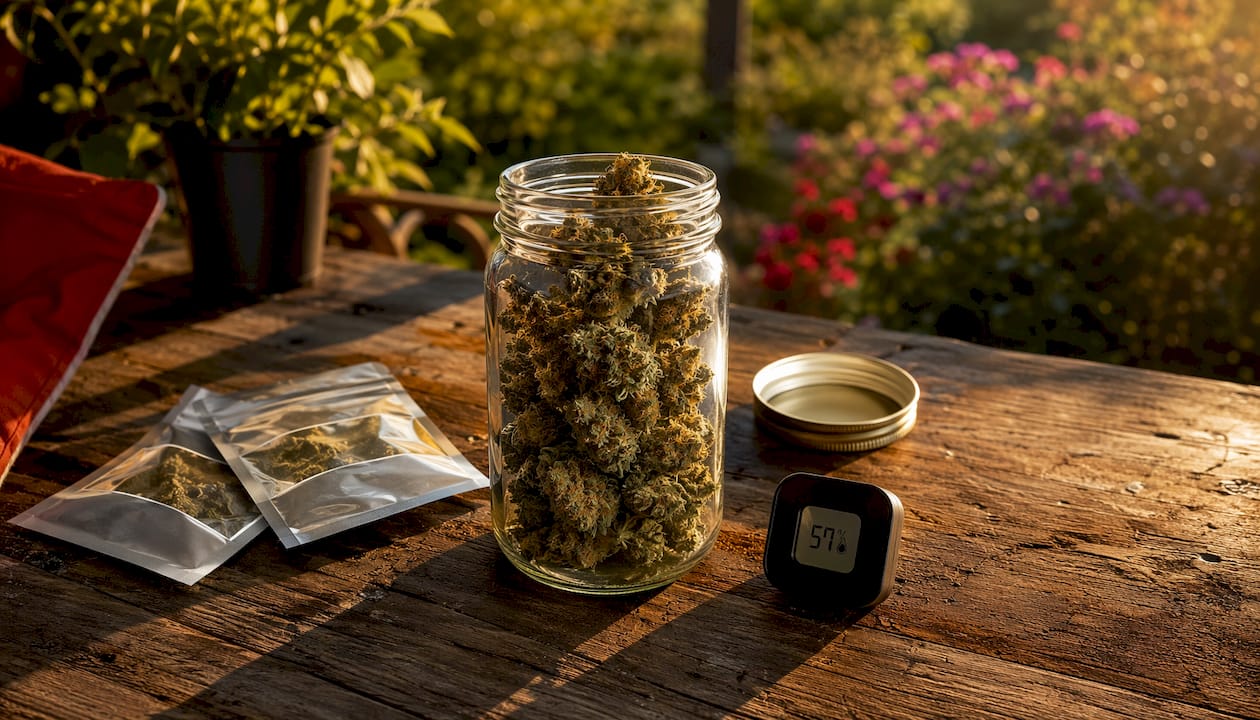
Mold is the more urgent safety concern. Aspergillus spores are present in most indoor environments and need only moisture and an organic surface to colonize. Improperly stored cannabis provides both. For immunocompromised patients, exposure to Aspergillus contamination carries serious health risks beyond a ruined product. Proper storage is not just about freshness; it is a genuine health precaution.
There is also a straightforward financial argument. Medical cannabis is expensive, and degraded product means patients either tolerate reduced efficacy or replace their supply sooner. Spending a few dollars on a quality glass jar and a humidity pack protects an investment that often runs into hundreds of dollars per month.
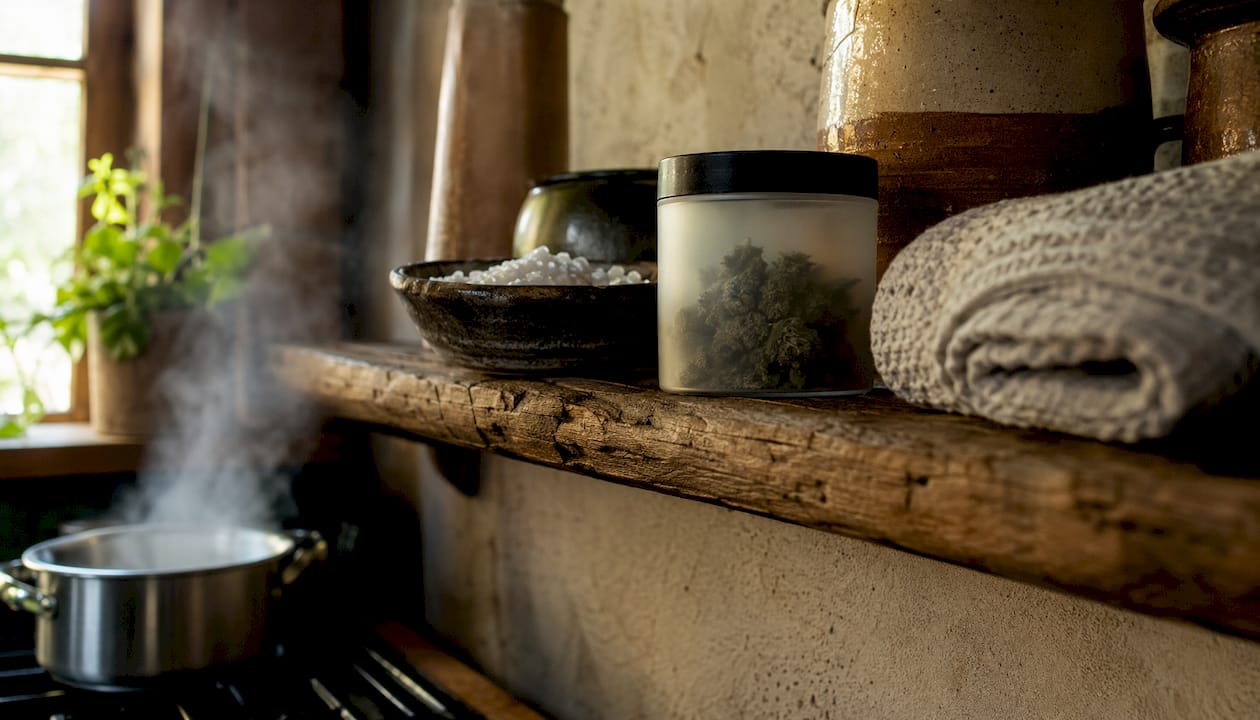
Essential cannabis storage principles for potency and safety
Four variables control whether your cannabis stays potent or degrades: temperature, humidity, light, and oxygen. Getting all four right is simpler than it sounds.
Temperature
The ideal storage temperature for cannabis is within a moderate room temperature range. Most rooms fall within this range, but the danger comes from heat accumulation: a jar sitting near a window, a stash box on top of a refrigerator, or cannabis left in a car on a summer afternoon. When cannabis gets warmer than 77°F, THC begins converting to CBN, a compound with different and generally weaker therapeutic properties. Terpenes evaporate at elevated temperatures too, stripping flavor and aroma.
Refrigeration slows degradation but introduces humidity management challenges. Freezing is worse for flower: trichomes become brittle at sub-zero temperatures and physically break off during handling.
Best practices:
- Store away from appliances, radiators, and windows
- Avoid vehicles, where temperatures inside a closed car can become very high during summer.
- Never freeze flower
Humidity
Humidity is arguably the most critical and most frequently mishandled storage variable. The ideal relative humidity for cannabis flower is 55%–62%. Above 65%, mold and mildew thrive. Below 50%, trichomes desiccate and terpenes evaporate faster, leaving flower crumbly and harsh.
Two-way humidity control packs, such as Boveda 62% or Integra Boost, maintain the target range inside a sealed container automatically. They release moisture when the air inside gets too dry and absorb it when humidity climbs. For medical patients storing flower regularly, these packs are the single most cost-effective upgrade available.
Best practices:
- Keep relative humidity between 55% and 62%
- Use a two-way humidity pack in every flower container
- Replace packs every 3–4 months, or when they feel rigid rather than pliable
Light
UV rays are the fastest degradation pathway for cannabinoids. UV-blocking containers reduce photodegradation by 90% or more compared to clear glass or translucent plastic. Amber glass, violet glass (such as Miron glass), and fully opaque containers all qualify. Clear dispensary jars are fine for a few days; for anything longer, they are inadequate.
Best practices:
- Use amber or violet glass jars for all flower storage
- Store containers in a drawer, closet, or cabinet rather than on an open shelf
Oxygen
Oxygen reacts with THC and terpene molecules through autoxidation, gradually reducing potency and altering flavor. The rate is slower than photodegradation but relentless. Each time you open a container, you exchange the internal air and restart the oxidation clock. Vacuum sealing is the gold standard for long-term storage. For everyday use, minimizing headspace by choosing a container sized to your current supply is the practical solution.
Best practices:
- Open containers only when accessing the product
- Use the smallest jar that fits your current supply
- Consider vacuum-sealed containers for long-term storage
Pro Tip: When you are down to the last quarter of a jar, transfer the remaining flower to a smaller container. The reduced headspace alone slows oxidation noticeably.
How to store different cannabis products
Different product types have different vulnerabilities. Treating all cannabis the same is one of the more common marijuana storage mistakes patients make.
Flower
Flower is the most storage-sensitive form. Use amber or violet glass jars with airtight rubber-gasket lids, add a Boveda 62% or Integra Boost pack, and store in a cool, dark location. Plastic bags are the worst option: they are porous to oxygen and moisture, generate static that strips trichomes, and offer zero UV protection.
- Never use standard zip-lock bags or dispensary pop-top tubes beyond a week
- Do not mix strains in one container; cross-contamination affects both flavor and humidity balance
- Never pre-grind more than a few days’ supply; ground flower degrades much faster than whole flower
Edibles
Edibles are food products first. Store them in airtight, food-safe containers away from heat and moisture, and always check expiration dates. Heat accelerates both cannabinoid degradation and food spoilage. Refrigeration works for most edibles, but check the packaging since some products (chocolate, for example) bloom or change texture when chilled and then warmed.
- Keep away from kitchen heat sources
- Store separately from flower; edibles introduce moisture that can promote mold in dry flower
- Label containers with purchase and expiration dates
Concentrates
Concentrates like wax, shatter, and rosin are best stored in glass or inert silicone containers for short-term use. For anything beyond a few days, glass is the better choice because silicone is permeable to terpenes, causing measurable terpene loss over time. The terpene profiles in live resin and live rosin carts, for instance, are particularly sensitive to storage conditions, which is why concentrate storage matters as much as the product itself.
Temperature swings are the biggest risk for concentrates. Moving cold-stored concentrates directly to a warm room causes condensation inside the container, damaging texture and encouraging mold. Let refrigerated concentrates come to room temperature before opening.
- Use glass containers for anything stored longer than a few days
- Equilibrate temperature gradually before opening cold-stored products
- Keep away from direct light
Vaporizers and cartridges
Store vape cartridges upright in a cool, dark place. Horizontal storage causes oil to pool against the mouthpiece or the coil, leading to leaks and uneven heating. Heat degrades the oil and can cause cartridges to leak entirely. Batteries should be stored separately from cartridges when not in use.
Topicals
Topicals are the most forgiving cannabis product to store. Follow the packaging instructions, keep them away from direct heat and sunlight, and close lids tightly after each use. Most topicals have preservatives that extend shelf life, but heat still degrades the cannabinoid content over time.
Common storage mistakes that damage cannabis quality
Beyond the basics, several specific errors catch patients off guard.
Storing near odor sources. Cannabis is a porous plant. It absorbs odors from cleaning supplies, spices, and air fresheners, permanently altering the terpene profile. A sealed glass jar in a dedicated drawer solves this completely.
Using oversized containers. A large jar holding a small amount of flower leaves significant air volume above the product. That headspace accelerates oxidation. Using large jars for small amounts results in faster cannabinoid breakdown compared to a properly sized container.
Bathroom and kitchen storage. Bathrooms cycle through high humidity from showers. Kitchens expose cannabis to heat from cooking. Both locations create the humidity fluctuations that stress plant fibers and invite mold.
Mixing product types. Edibles and concentrates introduce moisture into dry flower storage, creating conditions where mold spreads quickly. Keep each product type in its own dedicated container.
Dirty tools in storage. Grinders and vape pens with resin residue carry strong odors and can cause legal complications during travel. Cleaning with isopropyl alcohol removes residue and odors, which matters both for product safety and for common cannabis travel storage situations where residue can trigger paraphernalia concerns.
Additional expert insights on cannabis storage
Container size relative to supply is an underestimated factor. Using the smallest container that fits the current supply minimizes oxygen headspace and meaningfully prolongs shelf life compared to storing a small amount in a large jar. This applies to both flower and concentrates.
Storage impact: Cannabis stored in clear glass in ambient indoor light loses a measurable percentage of THC content per week. Under direct sunlight, that rate accelerates sharply. UV-blocking containers reduce photodegradation by 90% or more, making container choice one of the highest-leverage decisions a patient can make.
Temperature equilibration before opening cold-stored products is a step most patients skip. Pulling a concentrate jar from the refrigerator and opening it immediately causes condensation on the internal surfaces, which damages texture and creates moisture conditions that encourage mold. Letting the container sit at room temperature for 15–20 minutes before opening prevents this entirely.
For patients who travel with their medicine, clean tools and odor-controlled containers are not optional. Residue in a grinder or pipe is enough to trigger a paraphernalia charge in some jurisdictions. Understanding terpene stability also helps patients appreciate why proper storage preserves not just potency but the full therapeutic profile of their medicine.
The cannabis storage guide for daily patients reinforces one consistent principle: the five-step protocol of amber glass, a humidity pack, minimal headspace, a dark cool location, and infrequent opening addresses every major degradation pathway at once.
Treelockbox keeps your medicine protected from day one
Medical patients need storage that actually holds up, not a zip-lock bag or a flimsy dispensary tube. Treelockbox offers lockable stash boxes, odor-controlled portable units, and preparation tools built specifically for patients who take their medicine seriously. The difference from generic storage is concrete: locking mechanisms that keep products away from children and unauthorized access, odor control that protects terpene profiles, and American-made craftsmanship designed for daily use.
Where a glass jar and a humidity pack handle the chemistry, Treelockbox handles the security, organization, and discretion that medical patients also need. Custom engraving, portable designs for on-the-go patients, and a full range of cannabis storage and prep tools make it a practical next step for anyone who has read this far and wants a complete solution. Browse the full collection at the Treelockbox shop and find the setup that fits your supply and lifestyle.
FAQ
What is the worst container for storing cannabis?
Plastic bags are the single worst option. They allow oxygen and moisture to pass through, generate static that strips trichomes, and offer no UV protection.
What humidity level should cannabis flower be stored at?
The ideal relative humidity for cannabis flower is 55%–62%. Above 65% promotes mold; below 50% causes trichomes to dry out and terpenes to evaporate.
Does freezing cannabis preserve it?
No. Freezing makes trichomes brittle so they break off during handling, and thawing introduces condensation that raises mold risk. Refrigeration is safer for short-term storage of some products, but freezing flower is generally discouraged.
How often should I open my cannabis storage container?
As infrequently as possible. Every time you open a container, you exchange the internal air and restart the oxidation process, reducing potency and disrupting humidity balance.
Can I store different cannabis products together?
No. Edibles and concentrates introduce moisture that promotes mold in dry flower. Each product type should have its own dedicated, properly sized container.
Key Takeaways
Proper cannabis storage comes down to four variables: temperature, humidity, light, and oxygen. Control all four and your medicine stays potent, safe, and effective far longer.
| Point | Details |
|---|---|
| Ideal humidity range | Keep flower between 55% and 62% relative humidity using a two-way humidity pack. |
| Container choice | Amber or violet glass jars with airtight seals outperform plastic bags and dispensary pop-tops for anything beyond one week. |
| UV protection | UV-blocking containers reduce photodegradation by 90% or more compared to clear glass or plastic. |
| Minimize headspace | Use the smallest container that fits your current supply to slow oxidation and extend shelf life. |
| Treelockbox solution | Treelockbox lockable stash boxes add security, odor control, and organized storage on top of the core chemistry principles covered here. |