

400–500°F Rule: Tree Lock Box's Silicone Pipe Heat Safety
Yes, food-grade, platinum-cured silicone handles normal smoking temperatures without issue, but it is not designed for direct flame. The simple rule: silicone tolerates roughly 400–500°F of ambient and contact heat, while a lighter or torch tip runs into the thousands. Keep flame on a glass, quartz, or metal bowl, never on the silicone body itself, and you will get years of safe use out of a well-made piece.
TL;DR:
- Silicone pipes with a temperature rating of 400–500°F should only be used with indirect heat; direct flame contact will cause damage over time.
- Most smoke remains well within silicone’s safe range, but high-temperature ignition sources like lighters and torches can exceed silicone’s limits by thousands of degrees.
- Use glass, quartz, or titanium bowls to avoid melting or warping the silicone joint, and always let hot glass cool before handling.
- Regular cleaning with a brief simmer in soapy water preserves the silicone’s integrity, but frequent high-heat dishwasher cycles can accelerate polymer degradation.
- Only buy silicone pipes explicitly labeled as food-grade, platinum-cured, and rated for specific temperatures, avoiding unbranded or vague listings.
Table of Contents
- What Does a Silicone Pipe’s Temperature Rating Actually Mean?
- How Do You Use a Silicone Pipe Without Damaging It?
- What’s the Safest Way to Clean a Silicone Pipe?
- How Do You Spot Cheap or Unsafe Silicone Pipes?
- Tree Lock Box’s Take on Long-Term Silicone Care
- The Overlooked Truth About Silicone Pipe Durability
- Get a Vetted, Heat-Safe Silicone Pipe
- Sources
- FAQ
What Does a Silicone Pipe’s Temperature Rating Actually Mean?
A “rated to 400–500°F” label refers to platinum-cured silicone, the medical and food-grade formula used in bakeware, baby products, and quality smoking accessories. That range covers continuous exposure. Short bursts of higher heat won’t instantly ruin it, but sustained flame contact will, over time, break down the polymer structure.
Here’s where the confusion usually starts. Smoke traveling through a pipe typically sits around 100 to 300°F, well inside silicone’s comfort zone. The problem isn’t the smoke. It’s the ignition source.
- A standard butane lighter tip burns near 1,800 to 3,500°F.
- A dab torch produces even higher temperatures than a lighter tip.
- Silicone’s upper limit sits several hundred degrees below either one.
That gap is why every reputable silicone pipe pairs the flexible body with a glass, quartz, or metal bowl rather than asking the silicone to absorb direct flame. If your piece has a water chamber, the water itself works as a heat sink, so the outer silicone wall usually feels no hotter than warm bathwater during normal use, even after several bowls in a row.
Statistic Callout: Boiling water is at 212°F, a temperature well within silicone’s rated range, which is why a short simmer is a standard, safe cleaning method rather than a risk to the material.
How Do You Use a Silicone Pipe Without Damaging It?
Most damage comes from habit, not from a single mistake. Follow these rules and the material will outlast the bowl piece it holds.
- Never let flame touch the silicone. Keep the lighter aimed only at the bowl’s packed material, not the rim or the silicone joint around it.
- Use glass, quartz, or titanium bowls exclusively. These materials are built to take direct heat; silicone is not, and swapping a cracked glass piece is far cheaper than replacing the whole pipe.
- Let hot glass cool before you handle the joint. Forcing a warm glass bowl into a silicone socket can warp the seal over repeated sessions.
- Skip the “flame clean” habit. Torching resin out of a joint is a common shortcut with glass rigs, but doing it near silicone risks scorching the material around the connection point.
- Keep the piece out of hot cars, direct sun, and off warm electronics. Prolonged ambient heat in the 100 to 150°F range won’t melt silicone, but it accelerates the slow softening that shortens a pipe’s lifespan.
Pro Tip: If you just finished a session and the bowl piece is still warm, set it glass-side up on a heat-safe surface for a minute before you pack the next round. That small pause prevents thermal shock to the glass and keeps the silicone joint from taking unnecessary stress.
What’s the Safest Way to Clean a Silicone Pipe?
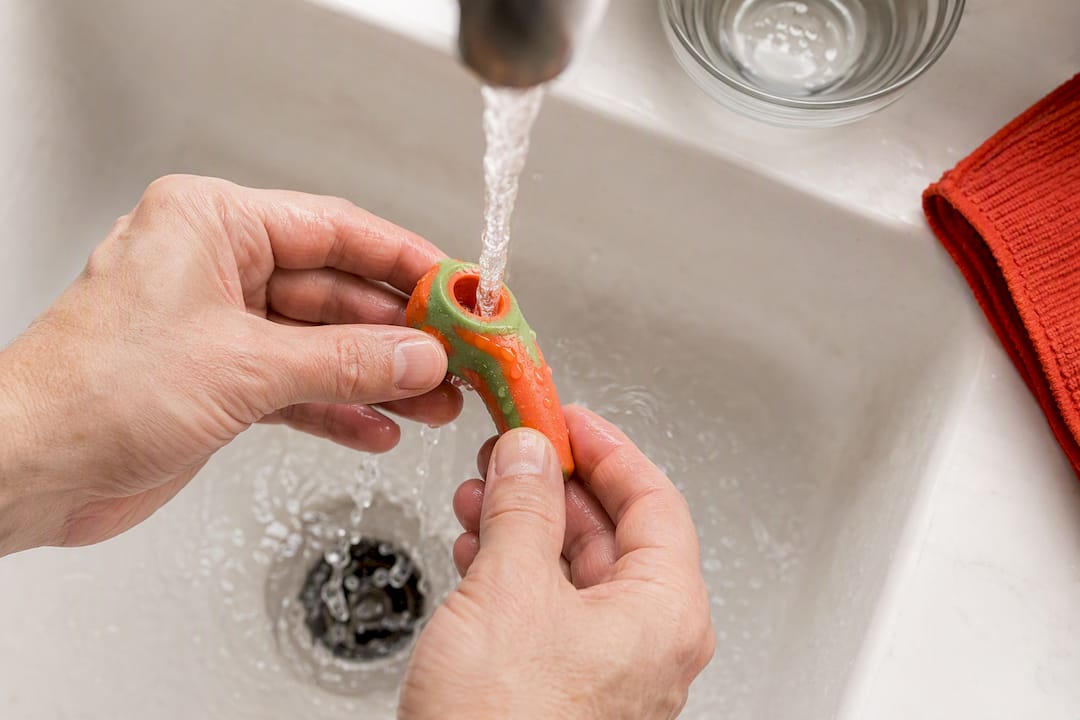
Cleaning silicone is more forgiving than cleaning glass, but a few habits still matter. A five-minute simmer in soapy water is one of the most effective deep cleans available. Boiling water at 212°F loosens resin without stressing the material, and staying under ten minutes avoids unnecessary mechanical wear from bumping against the pot.
Isopropyl alcohol works, but use it sparingly. A quick wipe with a lower-strength solution is fine for spot cleaning. Long soaks in high-strength 91% isopropyl can leave a lingering chemical smell embedded in the silicone that’s hard to fully rinse out.
- Warm soapy soak for light residue, followed by a gentle scrub with a nonabrasive brush.
- Freezer trick: chill the piece for 20 to 30 minutes so built-up resin turns brittle and flakes off easier.
- Air-dry fully before storage. Trapped moisture combined with resin residue is what causes lingering odor.
Dishwashers are technically an option, but only on the top rack with a low-heat cycle. Standard heated dry settings run around 170°F, below silicone’s failure point, but repeated cycles combined with detergent chemicals speed up polymer aging and can leave the surface feeling fuzzy or oddly tacky. If your piece develops a permanent odor, a gummy texture, or visible surface breakdown even after a proper clean, that’s your sign it’s time to retire it.
How Do You Spot Cheap or Unsafe Silicone Pipes?
Not all silicone is created equal, and the bargain listings without any grading information are usually the ones to skip. Platinum-cured silicone is more heat-stable and chemically inert than the lower-grade silicone used in cheap knockoffs, which can off-gas or degrade faster when exposed to heat or cleaning solvents.
Look for these signals before buying:
- Explicit labeling: “food-grade,” “platinum-cured,” and “BPA-free” should appear directly on the product page, not just implied.
- A stated temperature rating rather than a vague “heat resistant” claim with no number attached.
- A glass, quartz, or titanium bowl included or sold as a compatible replacement part.
- Clear cleaning instructions and a real warranty or return policy, since brands confident in their material back it up.
Unbranded listings priced far below everything else in the category are the most common source of low-grade silicone that won’t hold up to regular sessions.
Tree Lock Box’s Take on Long-Term Silicone Care
Every silicone pipe in the Tree Lock Box collection pairs a flexible, durable body with a glass bowl, giving you glass-level heat handling without the fragility. For travel, pair your pipe with a smell-proof storage solution so odor control and impact protection travel together. If resin buildup is your main headache, our scraping and cleaning guide walks through safe removal without damaging the joint.
The Overlooked Truth About Silicone Pipe Durability
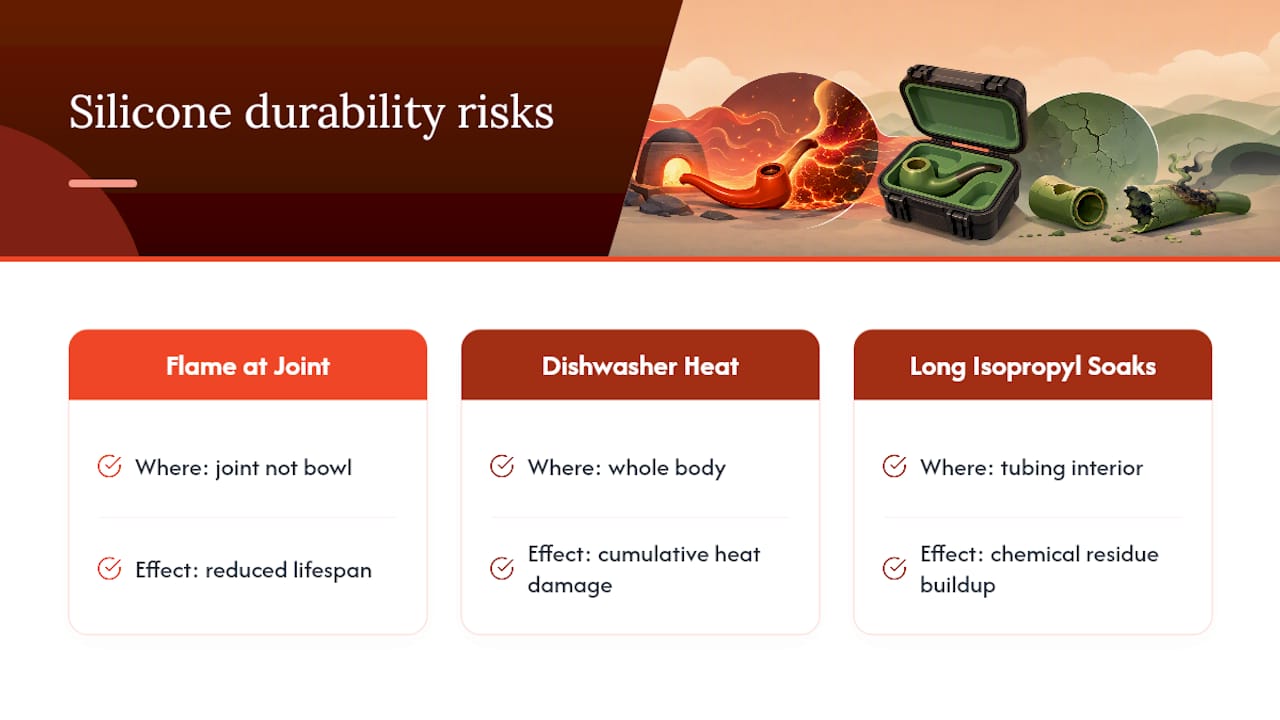
Most guidance on silicone pipes fixates on whether the material can survive a lighter flame, and technically it can survive brief contact, but that framing misses the real issue. The damage that actually shortens a pipe’s life happens slowly through repeated small abuses: flame near the joint instead of the bowl, high-heat dishwasher cycles run too often, long isopropyl soaks that seem thorough but leave chemical residue behind.
The conventional advice treats silicone like it’s indestructible because it’s flexible and unbreakable. That’s a mistake. Flexible does not mean immune to heat degradation. What matters most isn’t finding the single hottest temperature silicone can survive. It’s building habits that keep the material well below its ceiling every single session, so you never test that limit at all.
If you take one thing from this, prioritize the bowl material over the body material. A glass or quartz bowl paired with a quality silicone body solves nearly every heat problem before it starts.
— Tree Lock Box
Get a Vetted, Heat-Safe Silicone Pipe
Skip the unbranded listings with no temperature rating and no return policy. Some silicone pipes are built with platinum-cured bodies and glass bowls to provide durability and proper heat handling where flame contacts the piece. Browse the full lineup on our shop page, where fast shipping and straightforward guarantees back every order. If you want deeper cleaning and prep instructions beyond what’s covered here, our cannabis tools FAQ and cleaning guide walks through maintenance step by step. Pick a piece, check the bowl material, and order with confidence that it’s rated for real use.
Sources
Temperature ranges and safety claims in this article draw from Oil Slick’s guide to silicone bong materials and heat, ThisIsWhyImHigh’s silicone vs. glass comparison, and Oil Slick’s cleaning method guide.
- Are Silicone Bongs Safe? A 2026 Guide to Materials, Heat and Health - Oil Slick
- Silicone vs Glass vs Wood Pipes: Which Material Is Best? - ThisIsWhyImHigh
FAQ
Can a Silicone Pipe Melt From Normal Smoking Heat?
No. Smoke passing through a pipe typically runs 100 to 300°F, far below platinum-cured silicone’s 400 to 500°F rating.
Is It Safe to Put a Lighter Directly on Silicone?
No. A lighter tip burns near 1,800 to 3,500°F, well past silicone’s limit, which is why flame should only touch the glass or quartz bowl.
What’s the Best Bowl Material to Pair With a Silicone Pipe?
Glass, quartz, or titanium, since these materials are built for direct flame contact and can be swapped out easily if damaged, unlike the silicone body itself.
Can You Put a Silicone Pipe in Boiling Water?
Yes, a short simmer under 10 minutes at 212°F is a standard, safe way to loosen resin and clean the piece thoroughly.
How Do I Know My Silicone Pipe Is Wearing Out?
Watch for a permanent odor that won’t wash out, a gummy or tacky surface texture, or visible cracking, all signs the polymer has degraded and the piece needs replacing.