

How to Scrape a Smoking Pipe Safely: A Practical Guide
Yes, you can scrape a pipe safely — and the difference between a clean session and a hazard comes down to three things: the right tool for your pipe’s material, a controlled motion, and basic PPE before you start. Industrial scraping research from OTD and IPEX confirms that tool choice and technique directly affect how much residue you remove and how consistently you do it. The same principle applies to your smoking pipe.
Quick safety checklist before you touch the pipe:
- Wear nitrile gloves (solvent contact) and cut-resistant gloves if using a blade
- Work in a ventilated area or outdoors
- Keep all solvents away from open flame
- Match your tool to your pipe material (no metal blades on silicone)
- Dispose of used blades in a covered container, never loose in a trash bag
- Store the cleaned pipe immediately in a sealed, dry container
Blade cuts and solvent fires are the two real risks here. A utility blade slips fast on a curved surface. Isopropyl alcohol (IPA) ignites at 53°F, so a solvent-soaked rag near a lighter is a genuine fire hazard, not a theoretical one.
Pro Tip: Lay a paper towel flat on your work surface before you start. It catches swarf and resin flakes, and you can fold it up and discard everything in one move.
Key Takeaways
Scraping a smoking pipe safely requires matching your tool to the pipe’s material, wearing PPE before you start, and storing the cleaned pipe immediately afterward to prevent recontamination.
| Point | Details |
|---|---|
| Match tool to material | Never use metal blades on silicone; use brass brushes or wooden picks on glass and metal. |
| PPE before you start | Wear nitrile gloves for solvents and cut-resistant gloves for blades before opening anything. |
| Replace cracked glass | Hairline cracks in glass are a replacement signal, not a cleaning problem. |
| Store immediately after cleaning | A freshly cleaned pipe left open recontaminates quickly; seal it in a dry, lockable container. |
| Treelockbox tools and storage | The Treelockbox cleaning multi-tool, silicone pipe, and lockable stash box cover the full safe-cleaning workflow. |
Table of Contents
- Why scraping matters and what hazards come with it
- Choosing the right tools for each pipe material
- Step-by-step safe scraping and cleaning procedure
- Personal safety: PPE and solvent handling
- When cleaning isn’t enough: signs you should replace a pipe
- Recommended tools and products for safe scraping and upkeep
- A simple maintenance schedule prevents heavy scraping
- The Treelockbox take on pipe maintenance
- Keep your pipe clean with the right gear from Treelockbox
- Sources
- FAQ
Why scraping matters and what hazards come with it
Resin, carbon buildup, and oxidized residue accumulate inside a pipe with every use. Scraping removes that layer so airflow stays consistent and the taste stays clean. Left alone, heavy buildup can harbor bacteria, restrict draw, and make the pipe harder to clean with each session.
The hazards are real, though. A complete guide to pipe scraping from Hy-Ram Engineering stresses that the prepared surface must be protected immediately after cleaning to avoid recontamination — a principle that translates directly to cannabis pipes. Scrape, rinse, and store. Don’t leave a freshly cleaned bowl sitting open on a counter.
The specific hazards to watch for:
- Sharp blades: Curved pipe surfaces cause blades to catch and redirect unpredictably
- Aerosolized residue: Dry scraping without ventilation sends fine resin particles into the air
- Solvent flammability: IPA and similar cleaners are flammable; never use near a lighter or torch
- Material damage: Aggressive scraping cracks thin glass or gouges soft silicone permanently
- Recontamination: A cleaned pipe left uncovered picks up dust, oils, and debris quickly
The OTD multi-condition scraper study found that tool design and technique significantly affect contamination removal and consistency. That finding holds at any scale — the wrong tool on the wrong material leaves residue behind and can damage the surface.
Pro Tip: Clean your pipe immediately after a session while resin is still warm and soft. Cold, hardened resin requires more force and more risk.
Choosing the right tools for each pipe material
Not every pipe takes the same approach. Using a metal pick on a silicone pipe, or soaking a wood pipe in IPA, causes more damage than the resin you’re trying to remove.
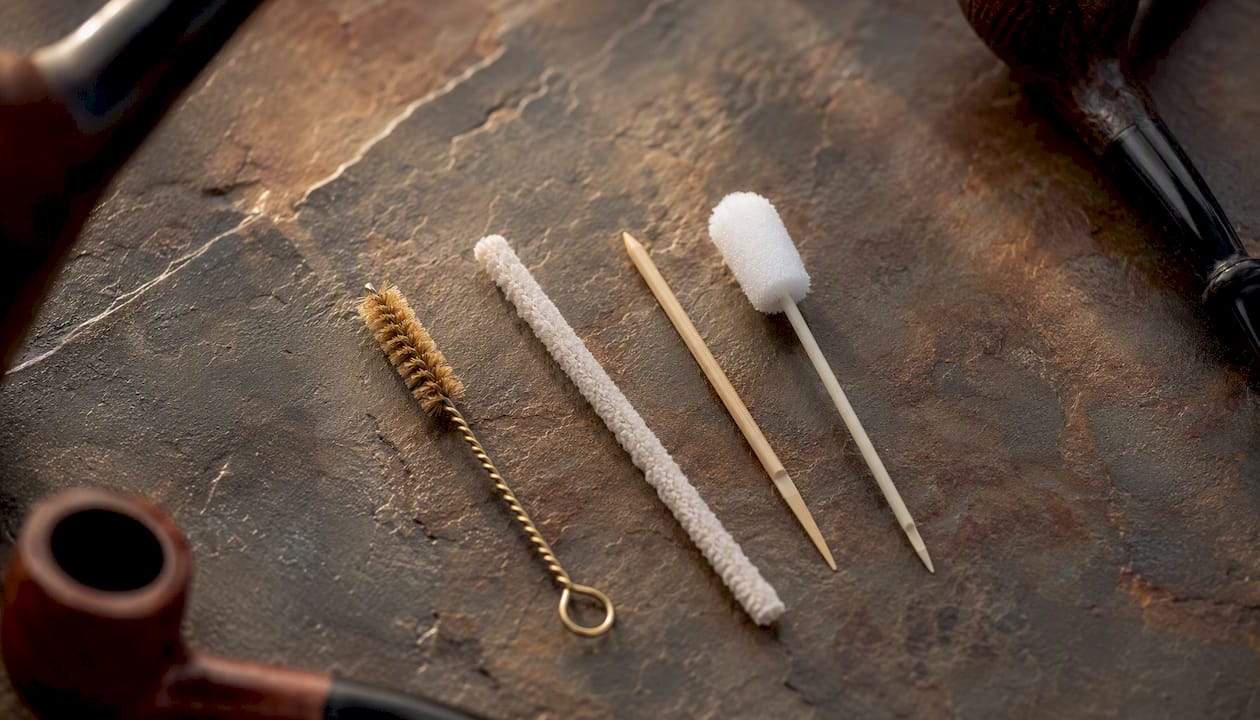
| Material | Safe tools | Avoid | Safe solvent |
|---|---|---|---|
| Glass | Brass brush, wooden pick, pipe cleaners | Metal files, hard metal scrapers | 90%+ IPA |
| Metal | Brass or nylon brush, small utility blade | Coarse abrasives, steel wool | 90% IPA |
| Silicone | Fingers, soft nylon brush, pipe cleaners | Any metal blade or scraper | Mild dish soap + water |
| Wood | Dry wooden pick, soft toothbrush | IPA soaks, metal blades | Dry only; light food-safe oil sparingly |
Rotary scraper tools from Utility Pipe Supply are engineered to remove oxidized surfaces uniformly. The consumer equivalent is a small rotary brush or powered cleaning head — consistent contact, even pressure, no gouging. For detail work inside a bowl or stem, a wooden dental pick or pipe cleaner wire stays the right call.
The CalderPrep rotary scraping tool demonstrates that replaceable cutting tips and consistent rotary motion outperform single-pass manual scraping for uniform results. For home users, that translates to: use a brush with consistent pressure rather than a blade with variable force.
Never use acetone on acrylic or painted pipes. It dissolves the finish and can release fumes that linger in the material. Stick to IPA for resin and dish soap for silicone.
One more point on solvents: IPA-soaked rags should go into a metal container or be spread flat outdoors to dry before disposal. Bunching a solvent-wet rag in a pocket or sealed bag is a fire and inhalation risk.
Step-by-step safe scraping and cleaning procedure
Start here: prep and isolate before anything else.
- Inspect the pipe. Look for cracks, chips, or thin spots. If you find any, stop — cleaning a structurally compromised pipe is not worth the risk.
- Remove loose residue dry. Tap the pipe gently over a paper towel. A soft brush clears surface debris before any tool or solvent touches the bowl.
- Choose your tool based on the material table above. Have it ready before opening any solvent.
- Test in a small area first. Run one light pass in an inconspicuous spot to confirm the tool isn’t scratching or gouging.
- Scrape with a controlled, steady motion. Short strokes, consistent pressure. The IPEX scraper tool guide recommends rotating the tool steadily and limiting repeat passes — the same logic applies here. Two controlled passes beat five aggressive ones.
- Post-scrape clean. Glass: soak in 90%+ IPA for 20–30 minutes, then rinse with warm water. Metal: wipe with an IPA-dampened cloth. Silicone: wash with dish soap and warm water. Wood: wipe dry, no soaking.
- Rinse and dry completely. Residual IPA inside a pipe bowl is a flammability hazard. Rinse thoroughly and let the pipe air-dry fully before use or storage.
- Store immediately in a clean, sealed container. Leaving a freshly cleaned pipe open invites recontamination.
Pro Tip: For glass pipes, add a tablespoon of coarse salt to the IPA soak and shake gently. The salt acts as a mild abrasive that loosens stubborn resin without scratching.
Personal safety: PPE and solvent handling
Put your PPE on before you open the solvent or pick up a blade. That sequence matters.
Recommended PPE:
- Cut-resistant gloves when using any blade or pick
- Nitrile gloves for all solvent contact (IPA absorbs through skin)
- Safety glasses or goggles when scraping — resin flakes travel
- Good ventilation: open a window, use a fan, or work outdoors; a NIOSH-rated respirator (N95 or better) for heavy solvent use
- No open flame nearby — extinguish lighters and candles before opening IPA
Blade safety follows a specific protocol. The SJP-42 safe job procedure from Strike Group specifies removing the blade before walking with the tool, storing used blades in a covered container, and never leaving loose blades on a work surface. Apply all three at home.
Pro Tip: A small metal tin with a slot cut in the lid makes a safe blade disposal container. Drop used blades in; tape the lid shut when full before discarding.
When cleaning isn’t enough: signs you should replace a pipe
Replace the pipe when structural integrity is gone or contamination persists after a proper clean.
Replace immediately if you see:
- Hairline cracks or chips in glass (pressure from cleaning widens them)
- Persistent burnt or chemical odor after two full cleaning cycles
- Deep pitting or corrosion in metal that traps residue below the surface
- Visible burn-through or thin spots in glass or metal
- Delamination in layered or painted materials
- Silicone that has torn, stretched, or lost its shape
A small resin deposit is a cleaning problem. A crack is a replacement problem. No amount of IPA fixes a structurally compromised bowl, and smoking from one risks inhaling glass particles or metal flakes.
Pro Tip: Hold a glass pipe up to a light source after cleaning. Hairline cracks that are invisible dry become obvious when the light catches them.
Recommended tools and products for safe scraping and upkeep
The right kit handles the job safely and consistently, without improvising with hardware-store files or open-flame torches.
What to have on hand:
- Treelockbox cleaning multi-tool: purpose-built for cannabis pipe maintenance, with the right tip geometry for bowls and stems without the risk of improvised tools
- Brass brushes and nylon pipe cleaners: safe on glass and metal, gentle enough for regular use
- Wooden dental picks: detail work in tight spots without scratching
- 90%+ IPA wipes or solution: the standard resin solvent for glass and metal
- Treelockbox silicone pipe: nearly indestructible, cleans with dish soap, and eliminates the cracked-glass replacement cycle entirely
- Treelockbox lockable stash box: stores cleaned pipes in a sealed, odor-controlled environment so recontamination doesn’t undo your work
Avoid improvised metal files, coarse sandpaper, and any open-flame torch used directly on resin to “burn it off.” Torching resin releases combustion byproducts you don’t want to inhale.
Pro Tip: After cleaning, wipe your multi-tool with an IPA cloth and store it with your pipe. A dirty tool recontaminates a clean pipe on the next use.
A simple maintenance schedule prevents heavy scraping
Consistent light cleaning eliminates the need for aggressive scraping sessions.
Daily (frequent users):
- Tap out ash after each session
- Run a dry pipe cleaner through the stem
Weekly:
- Wipe the bowl with an IPA-dampened cloth
- Inspect for buildup and early resin deposits
Monthly:
- Full IPA soak (glass/metal) or soap wash (silicone)
- Inspect for cracks, pitting, or wear
- Replace any dulled blades or worn brushes
Immediately if the taste changes or draw tightens — that’s buildup telling you it’s time.
A few habits that extend the time between deep cleans: store your pipe in a Treelockbox lockable stash box after every session, avoid harsh solvents on wood, and rotate between two silicone pieces if you’re a heavy user to reduce wear on each.
Pro Tip: Keep a dedicated cannabis cleaning kit separate from your general household tools. Cross-contamination from other cleaning products is a real issue.
The Treelockbox take on pipe maintenance
Safe pipe maintenance isn’t complicated, but it does require the right tools and a consistent habit. At Treelockbox, the product catalog reflects that directly: cleaning multi-tools with purpose-built geometry, silicone pipes that tolerate repeated cleaning without degrading, and lockable stash boxes that keep cleaned gear protected between sessions. The goal is a kit that removes the guesswork and the improvised-tool risk from the routine. Check the Treelockbox product and how-to pages for full specs and pairing recommendations.
Keep your pipe clean with the right gear from Treelockbox
Treelockbox offers a focused selection of cleaning tools and storage built specifically for cannabis pipe care. The cleaning multi-tool handles resin removal without the risks of improvised hardware. The silicone pipe eliminates the cracked-glass problem entirely. And the lockable stash box seals your cleaned pipe away from recontamination until the next session.
Browse the full selection at the Treelockbox shop — cleaning kits, silicone pipes, and lockable storage ship fast with guaranteed quality.
Sources
- Best practices: scraping PE pipe & fittings (OTD) — Summary Report
- FWSG 63 scraper tool operation guide (IPEX)
- CalderPrep scraping tool (Caldertech)
- A complete guide to pipe scraping (Hy‑Ram Engineering)
FAQ
Can you scrape a pipe safely at home?
Yes. Use the right tool for your pipe’s material, wear nitrile and cut-resistant gloves, work in a ventilated area, and keep all solvents away from open flame.
What is the safest solvent for cleaning a glass pipe?
Silicone pipes clean safely with mild dish soap and warm water — no IPA needed.
How often should you deep-clean a smoking pipe?
Frequent users benefit from a weekly IPA wipe and a monthly full soak. Clean immediately any time the taste changes or the draw tightens noticeably.
When should you replace a pipe instead of cleaning it?
Replace any pipe with visible cracks, persistent odor after two full cleaning cycles, deep metal pitting, or burn-through spots. Structural damage is not a cleaning problem.
What tools does Treelockbox recommend for pipe maintenance?
Treelockbox recommends its cleaning multi-tool for resin removal, its silicone pipe for low-maintenance durability, and its lockable stash box to store cleaned pipes and prevent recontamination.
Recommended
- Complete Guide to Preparing Cannabis Flower – Roll, Bowl & Vape Efficiently – Tree Lock Box
- Durable Silicone Weed Pipe | Flexible Unbreakable Cannabis Pipe – Tree Lock Box
- How to Roll a Better Joint for Even Burns and Smooth Hits – Tree Lock Box
- Silicone Weed Pipe | Unbreakable Flexible Cannabis Pipe | Tree Lock Bo – Tree Lock Box