

Stop Buying All Silicone Bowls: Tree Lock Box on Silicone Pipe Safety
Yes, silicone pipes are safe to smoke from, provided the silicone is food-grade and platinum-cured and it never touches direct flame. That second condition is the one most guides bury: a pipe with a glass, quartz, or titanium bowl or insert keeps the burning material away from the silicone entirely, as explained in the THCA Flower Blog & Strain Reviews. The FDA’s food-contact standards and manufacturer heat-resistance testing back this up, and Some manufacturers build their silicone pipes around that exact rule.
TL;DR:
- The safety of silicone pipes depends primarily on using food-grade, platinum-cured silicone that is explicitly labeled and manufactured following FDA standards.
- Silicone can withstand up to 600°F, but the bowl must always be made of glass, quartz, or titanium to avoid direct flame exposure that can cause degradation.
- Look for removable non-silicone bowls, clear labeling, smooth seams, and absence of chemical odors to ensure a safer, high-quality product.
- Regular cleaning and inspecting seals help prevent residue buildup and prolong the pipe’s safe use, with replacement needed if odors or damage persist.
- Using silicone pipes correctly—avoiding direct flame contact and verifying material quality—eliminates most long-term health and safety risks.
Table of Contents
- What Silicone Pipe Safety Actually Depends On
- Heat Limits: How Hot Can a Silicone Pipe Actually Get?
- Design Features That Separate Safe Pipes From Risky Ones
- Cleaning, Maintenance, and When to Retire Your Pipe
- Red Flags: How to Spot a Low-Quality Silicone Pipe
- Tree Lock Box Guidance for Safer Everyday Use
- The Bottom Line on Silicone Pipe Safety
- Does Long-Term Silicone Pipe Use Carry Health Risks?
- Environmental Impact and How to Dispose of Silicone Pipes
- Chemical Leaching: When Could It Actually Happen?
- What Standards and Certifications Should You Look For?
- What This Guide Gets Right That Most Advice Misses
- Find a Silicone Pipe Built Around These Safety Standards
- Sources
- FAQ
What Silicone Pipe Safety Actually Depends On
The grade of silicone in your pipe matters more than the fact that it’s silicone at all. Food-grade silicone is manufactured under the same standards used for spatulas, baby bottle nipples, and bakeware, meaning it’s tested for chemical stability at cooking temperatures and cleared for repeated contact with food. Platinum-cured silicone goes a step further: it’s cured using a platinum catalyst instead of peroxide, which leaves behind fewer residual byproducts and a purer, more chemically inert material once curing is complete.
Generic or industrial-grade silicone skips those quality controls. It’s built for gaskets, seals, or mats where nobody’s inhaling anything near it, and it can carry fillers, cheaper curing agents, or inconsistent thickness that food-grade material wouldn’t pass.
Silicone itself starts as a silica-based polymer, essentially a synthetic material derived from sand and oxygen, bonded into long, heat-stable chains. That structure is what makes high-quality silicone resistant to breaking down and leaching chemicals under normal use. The FDA governs silicone food-contact substances under 21 CFR 177.2600, which is the regulatory backbone behind every legitimate “food-grade” label you see on a pipe.
What to look for on packaging or a product page:
- “Food-grade” or “FDA-compliant” stated explicitly, not just implied
- “Platinum-cured” specifically named (peroxide-cured is lower quality and more likely to off-gas)
- A manufacturer name and lot or batch information, not a blank label
- No strong rubbery or chemical smell straight out of the packaging
Quick fact: Manufacturer technical sheets for platinum-cured silicone used in food and pharmaceutical equipment confirm it’s formulated specifically to minimize residual catalysts and filler content, which is the mechanism behind lower off-gassing risk when the material is heated.
Heat Limits: How Hot Can a Silicone Pipe Actually Get?
High-quality food-grade silicone holds up to roughly 500°F to 600°F (260°C to 315°C) before it starts to degrade. That’s well above the temperature smoke reaches by the time it travels from the bowl through the body of a pipe and into your lungs.
The catch is that combustion itself burns hotter than that range, sometimes well over 1,000°F at the point of ignition. That’s exactly why the bowl should never be silicone. A glass, quartz, or titanium bowl absorbs and contains that heat, while the silicone body only ever handles cooled, traveling smoke.
Rules that keep silicone pipe use in the safe zone:
- Never hold a lighter or torch directly against the silicone housing
- Always load and burn material in a glass, quartz, or titanium bowl or insert
- Avoid prolonged contact between any flame and the silicone body, even accidentally
- Let a bowl cool before handling if it’s been packed and burned repeatedly
Pro Tip: If you ever smell a faint rubbery or plastic odor while smoking, stop. That’s usually a sign flame reached the silicone directly, not a normal characteristic of food-grade material. Vendor safety guidance consistently flags direct flame contact as the actual failure point, not the silicone material itself under normal use.
Design Features That Separate Safe Pipes From Risky Ones
A safe silicone pipe is really a housing system with a combustion chamber built into it, not a single-material object. When you’re shopping, check for these features before anything else matters:
- A removable glass, quartz, or titanium bowl or insert. This is non-negotiable. If a pipe is silicone all the way down to where the flame touches, walk away.
- Clear grade labeling. “Food-grade” and “platinum-cured” should appear on the listing or packaging, not just implied by marketing language like “premium” or “medical-grade” with no backup.
- Clean, consistent seams with no visible gaps or rough edges. Poor molding often signals a rushed, lower-quality production run.
- No odor straight out of the box. A faint neutral smell that fades quickly is normal; a persistent rubbery or chemical smell is not.
- Snug, well-fitted bowl seating. A loose bowl can wobble or fall out mid-use, which is more of a mess-and-safety issue than a chemical one, but it still matters.
Silicone housing genuinely earns its reputation for being nearly unbreakable and easy to pack in a bag without worrying about shattering it. Just remember what it’s there for: portability and durability, not heat containment. Vendor safety guides reinforce this same buyer logic across the category.
Cleaning, Maintenance, and When to Retire Your Pipe
Silicone is genuinely low-maintenance compared to glass, but “low-maintenance” doesn’t mean “no maintenance.” Resin buildup in a silicone pipe can trap odor and residue more stubbornly than glass because the material itself is slightly porous at a microscopic level.
A cleaning routine that actually works:
- Rinse with warm water immediately after use to prevent resin from hardening.
- Wash with mild dish soap and warm water, working it into any textured grip areas.
- For stubborn buildup, soak the silicone body (bowl removed) in warm water for 15 to 20 minutes before scrubbing.
- Boiling is safe for most food-grade silicone pieces and can loosen deep residue that soap alone won’t touch.
- Check the manufacturer’s instructions before running any piece through a dishwasher; not every product is rated for it.
Signs it’s time to inspect closely or replace the pipe:
- Persistent odor that survives a full cleaning cycle
- A sticky or tacky texture that wasn’t there when new
- Visible discoloration, especially near the bowl seat
- Cracked or torn seals around the bowl insert
Pro Tip: Keep a separate small brush just for the bowl threading and insert seat. That’s where residue hides longest and where a compromised seal first shows up. Tree Lock Box’s own cleaning and maintenance guide covers this in more depth if you want a full routine.
Red Flags: How to Spot a Low-Quality Silicone Pipe
Most of what people fear about “silicone pipe risks” traces back to two things: cheap unmarked material, or flame hitting the silicone directly. Separate those two issues and the actual risk picture gets much clearer.
Watch for these warning signs before you buy:
- A strong chemical or rubbery smell right out of the packaging
- A sticky, tacky, or gummy surface texture instead of smooth and matte
- No grade labeling anywhere on the product or listing
- A price so low it can’t reasonably cover food-grade silicone costs
- A pipe with no separate bowl material, meaning the entire piece is silicone including where you’d light it
Consumer safety guides point to cheap, improperly cured silicone with unlisted fillers as the real source of most complaints, not silicone as a material category. A well-made food-grade pipe used correctly and an unmarked bargain-bin pipe used the same way are not comparable products, even though they might look similar on a shelf.
Tree Lock Box Guidance for Safer Everyday Use
Building silicone pipes means paying close attention to where quality actually breaks down, and it’s almost always at the bowl and the seal, not the silicone body itself. That’s the design philosophy behind Tree Lock Box’s approach: durable, clearly labeled silicone construction paired with a proper bowl, so you’re never relying on silicone to do a job it wasn’t built for.
A few habits worth building in:
- Always assemble your pipe with the glass, quartz, or titanium bowl seated fully before lighting anything.
- Run a full clean on your rotation, not just a rinse, at least once a week with regular use.
- Give the bowl seat and seals a quick visual check before you toss the pipe in a bag for travel.
- Keep a dedicated storage spot so resin and grit don’t build up in your bag lining.
Tree Lock Box’s silicone pipe product line is built around that exact bowl-plus-housing structure, and the pipe scraping guide walks through safe residue removal step by step.
The Bottom Line on Silicone Pipe Safety
Food-grade, platinum-cured silicone with a glass or quartz bowl is a safe, durable choice for regular use. Verify the grade label, never let flame touch the silicone body, and clean it weekly. If you care more about untouched flavor than portability, glass alone might suit you better, but under the right conditions, silicone holds up.
Does Long-Term Silicone Pipe Use Carry Health Risks?
There’s no evidence that food-grade silicone releases harmful compounds at the temperatures smoke reaches while passing through a properly designed pipe. The material is the same category used in medical devices and cookware precisely because it’s chemically stable and inert across a wide temperature range, a point manufacturers and medical-grade silicone literature both support.
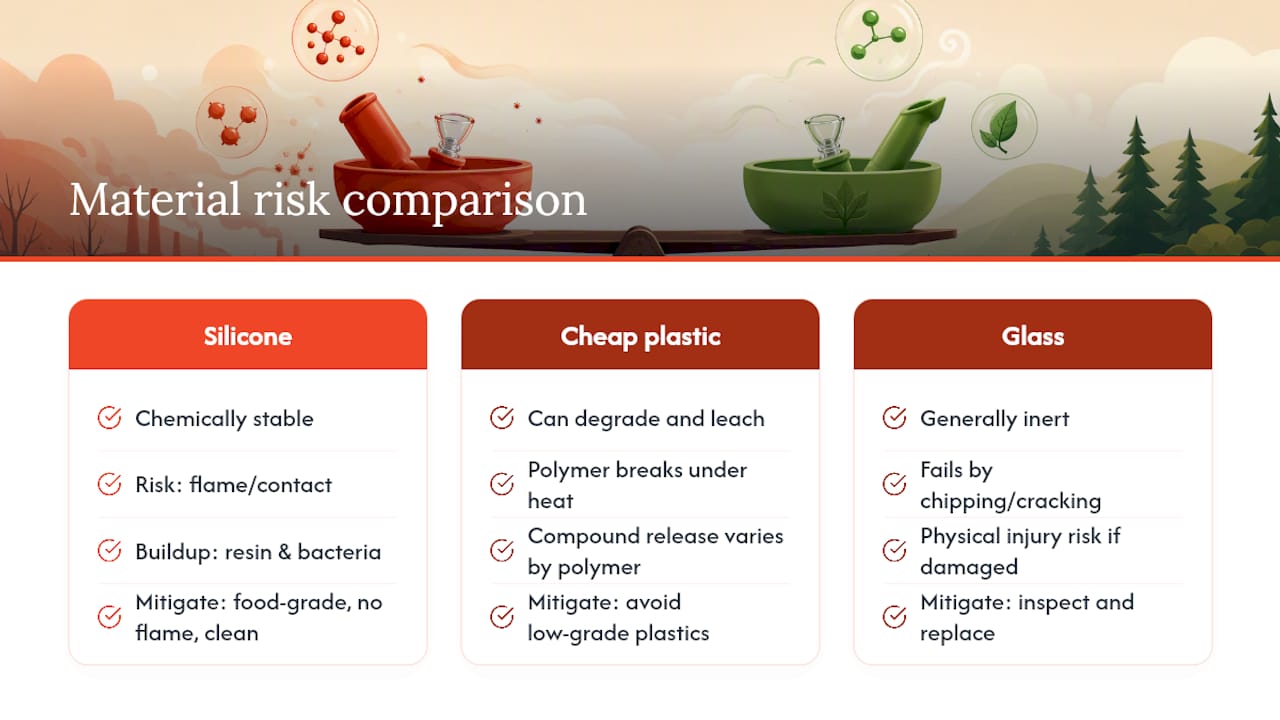
The long-term concern isn’t really about silicone breaking down molecule by molecule with normal use. It’s about what happens when a pipe is used incorrectly for months or years: repeated direct flame contact, buildup of resin and bacteria in a poorly cleaned piece, or continued use of a low-grade product that was never food-safe to begin with. Those are cumulative exposure risks tied to habits and product quality, not an inherent flaw in properly manufactured silicone.
Compare that to the alternative risks in other materials. Cheap plastics can degrade under heat and release different compounds depending on the polymer. Glass, when it chips or cracks, introduces a physical injury risk that silicone simply doesn’t have. Every material carries a different risk profile, and silicone’s profile centers almost entirely on grade quality and flame discipline rather than gradual toxic accumulation from normal use.
The practical takeaway for daily consumers is straightforward: buy a labeled food-grade product, keep flame off the housing, and clean it regularly. Those three habits address nearly every long-term concern that comes up in silicone pipe discussions.
Environmental Impact and How to Dispose of Silicone Pipes
Silicone doesn’t break down in a landfill the way organic material does, and it isn’t broadly accepted in curbside recycling programs the way glass or aluminum can be. It’s a synthetic polymer built to last, which is great for durability and terrible for a quick, guilt-free disposal.
That durability actually cuts both ways environmentally. A silicone pipe that lasts years without shattering or wearing out avoids the replacement cycle that glass pieces often go through after a drop or a crack. Fewer replacements can mean less total material consumed over time for a regular user, even if any single piece of silicone sticks around longer once discarded.
If you’re looking to responsibly retire a silicone pipe, a few options beat the trash can:
- Check with specialty recyclers that accept silicone specifically, since general recycling centers usually reject it.
- Repurpose an old, cleaned pipe for non-smoking use if the material is still structurally sound.
- Look for manufacturer take-back or mail-in programs, which some silicone accessory brands offer.
There’s no getting around the fact that silicone is a long-lived material once it’s in the waste stream. The realistic environmental argument in its favor is durability reducing turnover, not biodegradability. If you drop a piece and it survives instead of shattering into glass shards that need careful sweeping and disposal, that’s a genuine practical upside, just not an ecological free pass.
Chemical Leaching: When Could It Actually Happen?
Chemical leaching from food-grade silicone under normal smoking conditions isn’t something regulatory guidance or vendor testing has flagged as a real-world concern. The scenario where leaching risk climbs is specific: direct flame or torch contact against the silicone body itself, sustained over repeated sessions.
Heat is the variable that matters most. Smoke passing through the body of a pipe cools well below the 500°F to 600°F threshold that food-grade silicone is rated for. Direct flame, by contrast, can exceed that threshold by a wide margin at the point of contact, which is the condition under which degradation and off-gassing become plausible.
Material quality is the other variable. Platinum-cured silicone leaves behind fewer residual catalysts than peroxide-cured or industrial-grade silicone, which lowers the baseline chance of anything migrating out of the material even under stress. Cheap, unmarked silicone with unknown fillers is the product category where leaching concerns actually have some footing, because there’s no way to verify what’s in it or how it was cured.
Put plainly: the leaching risk conversation around silicone pipes is really two separate questions stacked into one. One is about material grade, which a proper food-grade, platinum-cured label answers. The other is about user behavior around flame exposure, which no label can fix for you. Address both and the leaching risk drops to something closer to background noise than an active hazard.
What Standards and Certifications Should You Look For?
The main regulatory anchor for silicone pipe safety is the FDA’s food-contact framework, specifically 21 CFR 177.2600, which governs rubber articles intended for repeated food contact, including silicone. This isn’t a smoking-specific regulation. It’s borrowed from the cookware and food-storage world, but it’s the closest thing to an official benchmark this product category has.
Beyond that baseline, look for manufacturer-level technical documentation. Established silicone producers publish technical data sheets covering curing method, operating temperature range, and compliance claims. A pipe brand that can point to underlying material specs from a named manufacturer carries more credibility than one that just prints “food-grade” on a listing with nothing behind it.
There isn’t a dedicated certification body specifically for smoking accessories the way there is for, say, medical devices. That gap is exactly why grade transparency from the brand matters so much. When a company states its silicone is food-grade and platinum-cured and backs that up with sourcing information, you’re relying on the same underlying standard that governs kitchenware, just applied to a different product.
What This Guide Gets Right That Most Advice Misses
Most silicone pipe advice online treats “is silicone safe” as a yes-or-no question about the material itself, when it’s really a question about two separate things: material grade and flame discipline. Get both right and the safety conversation is mostly settled. Get either wrong and no amount of “food-grade” labeling saves you.
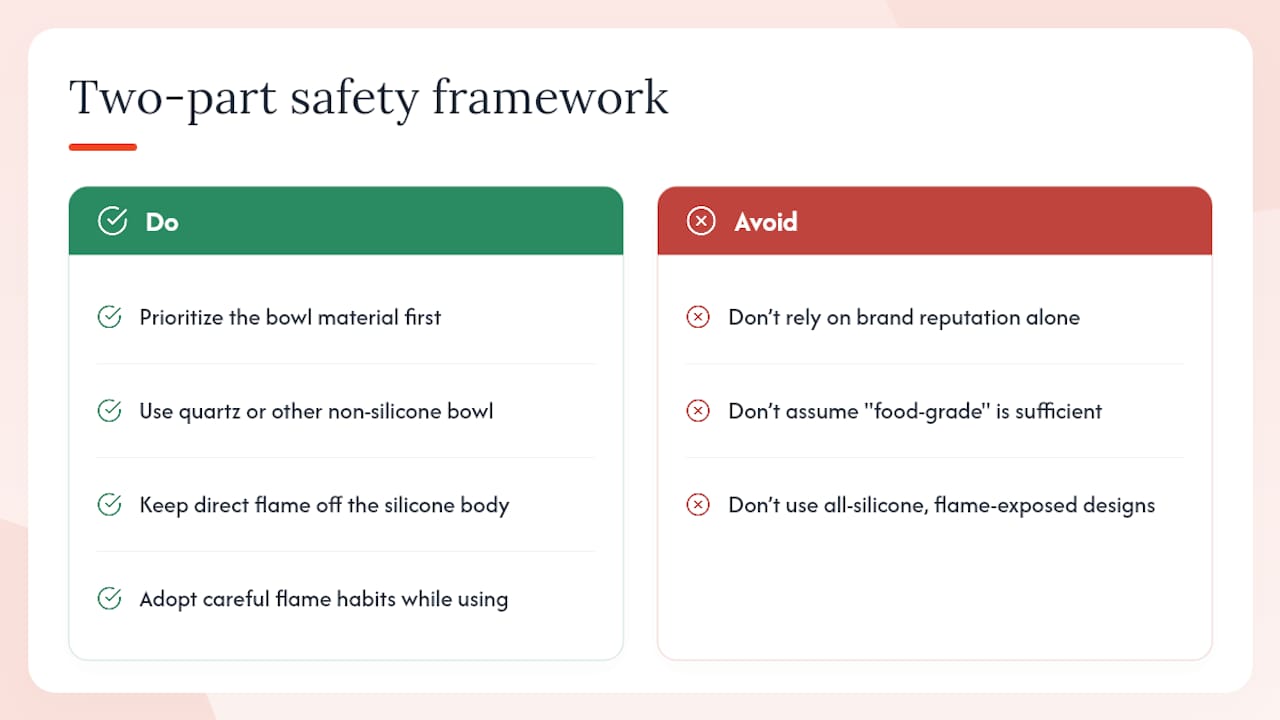
The conventional advice leans too hard on brand reputation and not hard enough on the bowl. A well-known name doesn’t fix a poor design where the entire piece, including the part that touches flame, is silicone. That single design choice matters more than almost anything else on a spec sheet.
If you take one thing from this guide, prioritize the bowl material before you even look at silicone grade. A cheap silicone body with a proper quartz bowl and careful flame habits will outperform a “premium” all-silicone piece every time. Grade matters, cleaning matters, but the bowl is the decision that actually prevents the failure mode everyone’s worried about.
Find a Silicone Pipe Built Around These Safety Standards
Reading about grade quality and bowl design is one thing; finding a pipe that’s actually built that way is another. Some companies make food-grade, platinum-cured silicone pipes designed with a proper bowl setup from the start, so you’re not stuck inspecting a product for red flags. That matters most for anyone who’s been burned, literally or otherwise, by a bargain piece with no grade labeling and a silicone-only bowl.
If you’re ready to see the options, browse the full cannabis storage and accessories shop to compare pipes alongside the storage and prep tools that round out a cleaner, more organized setup.
Sources
- Are Silicone Pipes Safe? Food-Grade Safety Guide – CloverGlass
- Are Silicone Water Pipes Safe to Smoke From? — Eyce
FAQ
Is Silicone Toxic Compared to Plastic?
Food-grade silicone is generally considered more chemically stable than many plastics at the temperatures involved in smoking, largely because it’s regulated for food contact under FDA standards and resists breakdown up to 500°F to 600°F. Plastics vary widely by polymer type, so a blanket comparison isn’t accurate. What matters more than “silicone versus plastic” is whether the specific material is food-grade and how it’s actually being used.
What Are the Disadvantages of Silicone Tubing or Pipes?
Silicone can trap odor and residue more than glass because of its slightly porous surface, which means it needs more frequent cleaning to avoid buildup. It’s also not widely recyclable, so disposal takes more effort than tossing a broken glass piece in the trash.
What Is the Healthiest Material for a Pipe?
Glass and food-grade, platinum-cured silicone are both considered safe choices when used correctly, with glass offering a completely neutral taste and silicone offering durability and portability. Neither is inherently “healthier” than the other. The real differentiator is material grade and how the piece is used, particularly whether flame ever touches silicone directly.
What Are the Main Downsides of Silicone as a Pipe Material?
Beyond odor retention and limited recyclability, silicone’s biggest downside is that it can’t handle direct flame the way a glass or quartz bowl can, which is why every safe silicone pipe design pairs the housing with a separate bowl material. Cheap, unmarked silicone also carries more uncertainty around fillers and curing quality than a labeled food-grade product.
Are Silicone Pipes Safe for Daily Use?
Yes, daily use is safe when the pipe is food-grade, platinum-cured, paired with a glass or quartz bowl, and cleaned on a regular schedule. The habits that matter most for everyday users are checking the bowl seal periodically and never letting flame make contact with the silicone body itself.