

Hiking Weed Storage: Smell-Proof Kit That Survives the Trail
The best hiking weed storage combo is an airtight, crush-resistant container paired with a Boveda 2-way humidity pack and a concealment plan you decide before you leave the trailhead. That combination solves the two problems that ruin a hiking stash: odor escaping into your pack and buds getting crushed or dried out. Skip either piece and you’re gambling with terpenes, potency, or a conversation you didn’t want to have with another hiker.
- Odor control: double containment (airtight seal + secondary barrier) beats any single pouch or baggie.
- Physical protection: crush resistance and a stable humidity level keep flower smokable instead of shredded or brittle.
- Concealment: pick your spot in the pack before you’re standing at a crowded overlook fumbling with zippers.
Pro Tip: Pack your stash the night before, not at the trailhead. You’ll notice sealing problems and smell leaks at home, where fixing them is easy, instead of ten minutes into a hike.
Key Takeaways
Effective hiking weed storage combines an airtight, crush-resistant container, a two-way humidity pack, and a concealment plan decided before you reach the trailhead.
| Point | Details |
|---|---|
| Double containment wins | Pair an airtight primary container with a secondary carbon-lined pouch for maximum odor control. |
| Humidity packs preserve potency | A Boveda 2-way pack keeps terpenes stable and prevents flower from drying out or molding. |
| Crush resistance beats soft pouches | Rigid containers protect bud structure far better than flexible baggies or thin pouches on rough terrain. |
| Know the jurisdiction | Federal land often bans cannabis regardless of state law, so check park-specific rules before you pack. |
| Tree Lock Box fits the full checklist | A lockable Tree Lock Box covers odor control, airtight sealing, crush resistance, and theft protection in one container. |
Table of Contents
- What Container Types Work Best for Hiking Weed Storage?
- How Do You Keep Weed Fresh and Smell-Proof on the Trail?
- Where Should You Pack Your Stash for Easy Access and Discretion?
- What Mistakes Ruin Weed on a Hike?
- Pre-Hike Weed Storage Checklist
- Field Test: Does a Lockable Trail Box Actually Hold Up?
- How Do You Clean and Maintain Storage Containers on the Trail?
- What Are the Legal Rules for Carrying Cannabis in Parks or Wilderness?
- A Trail Lesson in Crush Resistance and Smell Control
- Where to Find Trail-Ready Storage That Checks Every Box
- Sources
- FAQ
What Container Types Work Best for Hiking Weed Storage?
Four container styles dominate outdoor cannabis storage, and each makes a different trade-off between weight, protection, and smell control.
Smell-proof pouches with carbon lining are the lightest option and pack flat, which matters on a multi-day trip where every ounce counts. They’re weak on crush resistance, though. Toss one in a side pocket under a water bottle and you’ll open a container of shake, not bud.
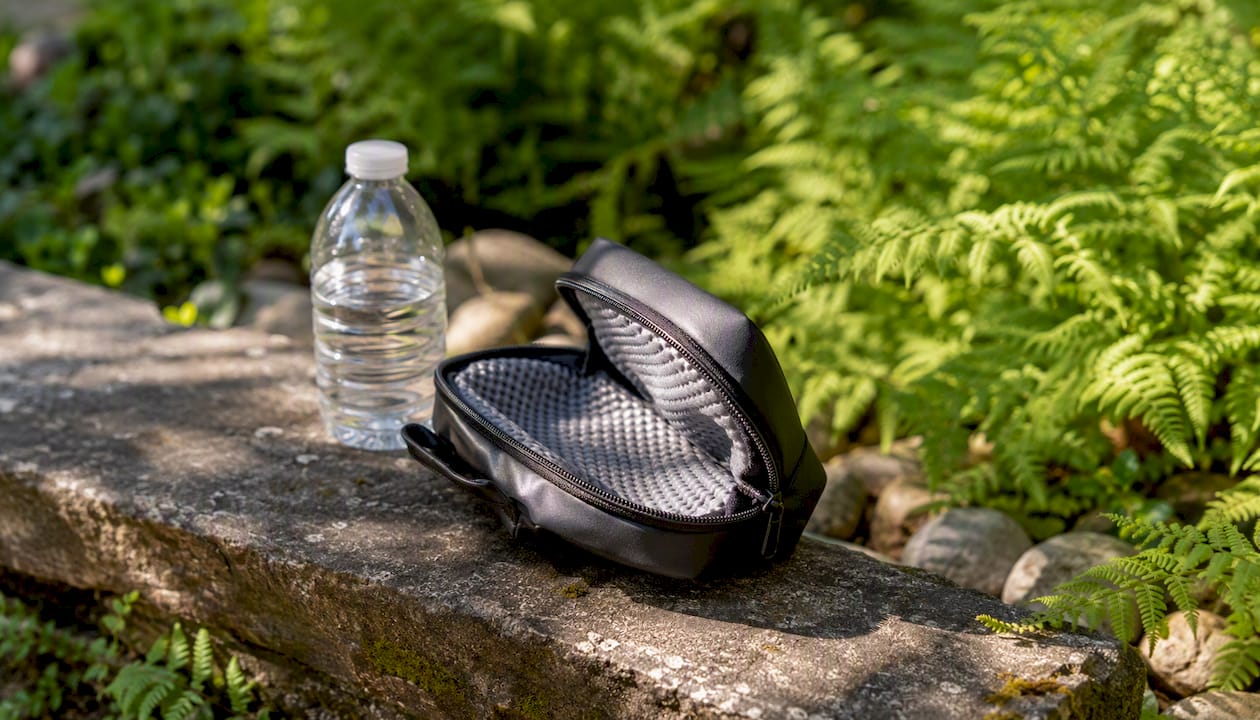
Airtight jars, whether glass or stainless steel, seal well and protect shape, but glass adds weight and risk of shattering on rocky scrambles. A 1150ml stainless steel airtight box with a silicone gasket and mechanical clasp solves the breakage problem while keeping the seal quality of glass.
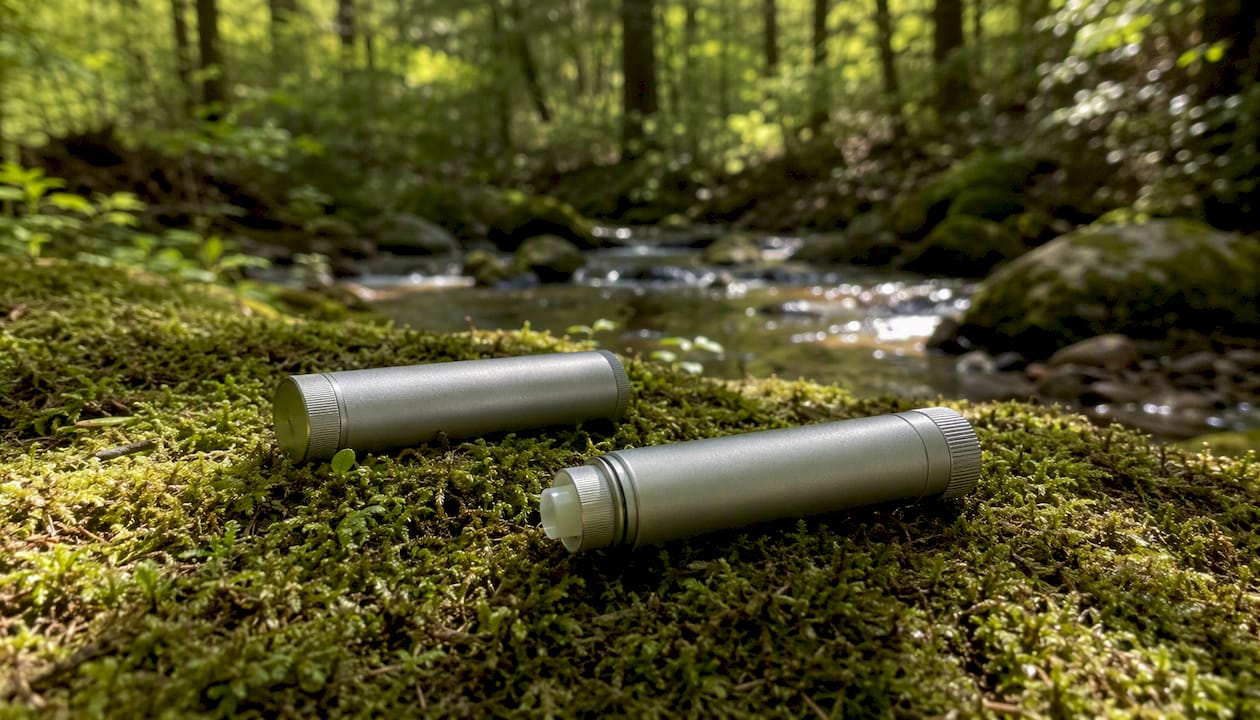
Aluminum or silicone tubes are built for pre-rolls specifically. Options like the Snooptube Doobtube use an internal silicone tip that can actually snuff a lit joint, which matters more than people think when a smoke break gets interrupted by a passing group.
Hard smell-proof cases with mechanical latches offer the best all-around crush resistance and are what most serious backpackers land on.
Run any container through this checklist before you trust it on trail:
- Does it have a genuine airtight seal (silicone gasket, not just a snap lid)?
- Is it crush resistant under pack weight and jostling?
- Does it carry a real waterproof rating, not just “water resistant”?
- Is it light enough that you won’t resent carrying it for 10 miles?
Pro Tip: Press on the lid before buying. A quality seal resists finger pressure and pops back with a slight vacuum sound. Cheap lids flex without resistance.
How Do You Keep Weed Fresh and Smell-Proof on the Trail?
Humidity control is the piece hikers skip and regret. Cannabis dries out fast at altitude and in low humidity, which strips terpenes and turns dense flower into something closer to hay. A Boveda 62% two-way pack dropped inside an airtight container pulls moisture in when it’s too dry and releases it when it’s too wet, holding a stable range that protects both flavor and potency over a multi-day trip.
For smell, double containment is the standard editorial and product advice converges on: an airtight inner container plus a secondary carbon-lined pouch or zip bag as backup. One seal failing doesn’t mean total exposure.
A few tactics worth building into your routine:
- Never rely on burying your stash as an odor fix. Soil doesn’t neutralize smell, and digging disturbs terrain, which violates Leave No Trace principles.
- Keep your container out of direct sun. Heat accelerates terpene loss even inside a sealed jar.
- If flower gets wet, dry it fully before resealing. Trapped moisture with no humidity pack breeds mold within days.
- If buds get crushed, don’t panic. It’s still smokable, just adjust your grind and pack expectations for that session.
Pro Tip: Test your container’s seal at home by rubbing scented lotion on your hands, sealing it up, and checking for smell after an hour. If you catch even a trace, add a secondary barrier before you hike.
Where Should You Pack Your Stash for Easy Access and Discretion?
Think in layers, the same way you’d layer clothing for weather. Primary container first, then a secondary odor barrier, then a humidity pack inside that primary container, then a small waterproof bag if you’re expecting rain or stream crossings.
Placement is a trade-off. Outer pockets give quick access but expose your stash to curious eyes at trailhead parking lots or crowded rest stops. The middle of your pack, wrapped in clothing, offers better concealment but means digging through gear every time you want it. Most experienced hikers split the difference: a small quick-access pouch with a single session’s worth, and the bulk stash buried mid-pack.
For multi-day trips, weight distribution matters more than people expect. A dense stainless container sitting at the bottom of your pack shifts your center of gravity lower, which actually helps stability on descents. Don’t stack it near your back panel where every step telegraphs a hard edge into your spine.
- Primary container: airtight, crush-resistant, sized to trip length.
- Secondary barrier: carbon-lined pouch or zip bag.
- Humidity pack: sized to container volume, not overpacked.
- Weatherproof outer layer: dry bag or waterproof stuff sack for wet conditions.
Pro Tip: Quick access feels convenient until someone else grabs your pack off a picnic table. Balance access against the real theft risk of shared campsites and busy trailheads.
What Mistakes Ruin Weed on a Hike?
The single most common failure is trusting a thin plastic baggie. It has no odor barrier, crushes flat under pack weight, and tears against rocks or zipper pulls. A close second: leaving a rolled joint loose in a pocket, where it gets crushed, exposed to lint, or lit accidentally against a lighter.
Heat exposure is the quiet potency killer. A container left in a hot car before the hike, or clipped to the outside of a pack in direct sun, degrades terpenes long before you notice a smell change.
Security mistakes cost more than freshness. A stash visible in a mesh side pocket at a crowded trailhead, or left unattended at a group campsite, invites theft or unwanted attention.
The trail doesn’t care how good your container is if it’s sitting in a hot trunk for three hours before you even lace up your boots. Storage habits start before the hike, not at the summit.
Quick fixes: swap baggies for an airtight container, keep joints in a rigid tube, store your kit in shade or an insulated pouch, and add a humidity pack every time. And know the terrain you’re on. Many state and national parks restrict or ban cannabis possession regardless of state law, so check land management rules before you pack anything at all.
Pre-Hike Weed Storage Checklist
Copy this before your next trip:
- Airtight, crush-resistant container
- Boveda 2-way humidity pack sized to the container
- Secondary odor barrier (carbon-lined pouch or zip bag)
- Windproof lighter
- Ash receptacle or butt-safe disposal container
- Concealment plan decided before you reach the trailhead
Leave no trace: pack out everything, including ash and any wrappers, and never bury waste to hide smell.
Field Test: Does a Lockable Trail Box Actually Hold Up?
A trail-focused lockable stash box checks every item on the hiking storage checklist: airtight seal, crush resistance, lockability, and a waterproof build that survives a pack getting tossed around on rough terrain. On a wet trail, a silicone-gasketed lid keeps moisture out even after direct rain exposure, and a mechanical lock beats a snap-lid every time your pack takes a hard bump against a rock.
Day hikes favor a compact box you can reach without unpacking everything. Multi-day trips reward the same box for a different reason: it protects flower shape and smell over several days of temperature swings between cold mornings and hot midday sun.
A container that seals well in your kitchen and one that seals well after eight miles of jostling in a pack are not always the same thing. Test yours before you need it to work.
Pro Tip: Drop a humidity pack inside your locked box every trip, and wipe the gasket clean after hikes in dust or mud. A gritty seal is a slow leak waiting to happen.
How Do You Clean and Maintain Storage Containers on the Trail?
Grime, resin buildup, and trail dust all threaten the seal quality that keeps your container smell-proof. After a hike, wipe down the exterior and gasket with a damp cloth before storing anything fresh inside. Resin residue on a rubber gasket compresses unevenly over time, which weakens the seal exactly where you need it most.
For interior cleaning, isopropyl alcohol on a cloth or cotton swab handles resin buildup on hard plastic, aluminum, or stainless steel surfaces without damaging the material. Avoid harsh abrasives on silicone gaskets since scratches create channels where odor and moisture escape.
Mid-trip, a quick shake-out and dry-cloth wipe keeps dust and pack debris from working into hinges or threading. If your container got wet, dry every component fully before resealing. Trapped moisture inside a locked box with no ventilation is a fast path to mold, especially if a humidity pack is also degrading.
Between trips, disassemble any removable gaskets or seals and check for cracking or flattening. A gasket that’s lost its shape won’t reseal properly no matter how tight the mechanical latch feels. Replace it before your next trip rather than discovering the failure on the trail.
What Are the Legal Rules for Carrying Cannabis in Parks or Wilderness?
Cannabis legality is a patchwork, and it gets more complicated on public land. State legalization doesn’t automatically extend to national parks, national forests, or other federally managed land, where cannabis remains illegal under federal law regardless of the state’s own rules. A trailhead can sit entirely inside a legal state and still fall under federal jurisdiction if it’s within park boundaries.
State and local parks vary too. Some explicitly allow possession within state legal limits; others restrict or ban it outright, particularly near trailheads shared with school groups or in areas with stricter local ordinances. The responsible move is checking the specific land manager’s rules before your trip, not assuming state law covers you everywhere you hike.
Even where cannabis is legal to carry, public consumption is often restricted or banned entirely, separate from possession rules. That distinction catches people off guard. You can legally carry a stash and still violate local ordinance by smoking at an overlook.
None of this is legal advice specific to your situation, and rules change. Confirm current regulations for your exact trail and jurisdiction before you go, and default to concealment and discretion regardless of what’s technically permitted.
A Trail Lesson in Crush Resistance and Smell Control
On a three-day backpacking trip through humid terrain, I learned the hard way that a soft pouch isn’t enough when your pack gets tossed onto rocks at every rest stop. My flower came out flattened and the smell had worked through two zippers by day two. Switching to a rigid, sealed container on the next trip solved both problems immediately. If you take one thing from that trip: never trust flexible packaging for anything longer than a day hike.
Where to Find Trail-Ready Storage That Checks Every Box
Everything covered here, odor control, an airtight seal, lockability, and durable construction, is exactly what a Tree Lock Box is built around. For a day hike, a compact locking box handles quick access without sacrificing seal quality. For multi-day backpacking or campsite storage where you’re sharing space with strangers, the lock does double duty: it stops odor leaks and keeps your stash out of anyone else’s hands.
Browse the full lineup on the Tree Lock Box shop page to compare sizes and finishes, including custom engraving if you want something that’s unmistakably yours at a crowded trailhead. Pair your box with a Boveda humidity pack and a compact grinder from the herb grinder collection to round out a pre-trip prep kit that fits in a single pack pocket. If you’re unsure which combination fits your trip length, the cannabis tools FAQ walks through storage and prep recommendations by use case. Start there, pick your box, and pack it the night before your next hike.
Sources
- Best Weed Accessories For Hiking: Must-Have Outdoor Smoking Supplies - Thrillist
FAQ
What Is the Best Way to Store Weed While Hiking?
An airtight, crush-resistant container combined with a Boveda 2-way humidity pack and a secondary odor barrier gives the best combination of freshness, smell control, and physical protection on the trail.
Do I Need a Humidity Pack for a Short Day Hike?
For trips under a day, a humidity pack is less critical, but it still helps preserve terpenes if you’re hiking in dry or high-altitude conditions.
Is It Legal to Carry Cannabis in National Parks?
No, cannabis remains illegal on federal land including national parks and forests, even in states where it’s legal, since federal law governs those areas regardless of state statute.
What’s the Biggest Mistake People Make With Trail Storage?
Relying on a thin plastic baggie, which offers no real odor barrier and crushes flower flat under pack weight and jostling.
Can a Lockable Box Like Tree Lock Box Handle Wet Trail Conditions?
Yes, a Tree Lock Box with a silicone-gasketed lid and mechanical latch is built to maintain its seal through rain exposure and rough handling inside a backpack.