

Aluminum vs. Stainless Grinder: Which Is Safer and Lasts Longer
For most cannabis users, stainless steel is the better long-term choice. It holds its teeth longer, resists corrosion without a coating, and carries no risk of anodize flaking into your herb. That said, aluminum is not a bad material — it is a different trade-off.
- Choose stainless steel if durability, health-conscious use, and long-term ownership matter most to you.
- Choose aluminum if you want a lighter, more affordable grinder with color options and you are willing to buy quality-anodized over cheap uncoated versions.
Treelockbox carries ergonomic grinder options built for daily use, so whichever direction you lean, there is a durable option that fits.
Key Takeaways
Stainless steel is the safer, longer-lasting choice for most cannabis users, while quality-anodized aluminum remains a practical option for travelers and budget-conscious buyers who inspect and maintain their grinder regularly.
| Point | Details |
|---|---|
| Stainless steel lasts longer | Harder alloys (304/316L) retain tooth sharpness and resist corrosion without a coating. |
| Aluminum risk is coating-dependent | Hard-anodized aluminum is safe; bare or cheaply coated aluminum can oxidize and shed particles. |
| Contamination risk is dose-dependent | Occupational studies show metal particles cause harm at high exposures; consumer grinder use is far below those levels. |
| Design quality matters as much as material | CNC machining, tooth geometry, and screen quality affect performance more than material alone. |
| Treelockbox ergonomic grinders | Built for daily use with CNC machining, stainless screens, and ergonomic designs for easy handling. |
Table of Contents
- How aluminum vs. stainless grinders compare at a glance
- How durability and wear differ between the two materials
- Are grinder metal shavings a real health risk?
- Cleaning and maintenance: which material is easier to care for
- How material affects grind consistency and kief collection
- Price, weight, and portability trade-offs
- Which material should you actually choose?
- A 7-point buying checklist for grinder shoppers
- What the scientific evidence actually says about metal particles and grinders
- Does your grinder material affect how your herb tastes or smells?
- Our take on the aluminum vs. stainless grinder debate
- Treelockbox grinders built for daily use
- Sources
- FAQ
How aluminum vs. stainless grinders compare at a glance
| Dimension | Aluminum | Stainless Steel |
|---|---|---|
| Durability / hardness | Softer; teeth dull faster under heavy use | Harder; retains tooth sharpness longer |
| Grind consistency | Good when new; may decline as teeth wear | Consistent long-term |
| Contamination risk | Low with quality anodize; higher if coating fails | Very low; no coating to degrade |
| Corrosion resistance | Relies on anodization; bare aluminum oxidizes | Naturally corrosion-resistant |
| Price | Budget to mid-range | Mid-range to premium |
| Weight / portability | Light (commonly a few ounces for a 2-inch model) | Heavier (commonly noticeably heavier for same size) |
| Expected longevity | A few years with regular use | Several years with proper care |
Quick takeaways:
- Stainless steel wins on longevity and contamination safety.
- Anodized aluminum is the better pick for travel, portability, and for buyers on a tighter budget.
- Users with limited hand strength often prefer aluminum’s lighter weight, though an ergonomic design matters more than material alone.
How durability and wear differ between the two materials
Stainless steel holds its teeth and alignment longer. The reason is straightforward: stainless steel is significantly harder than aluminum alloys used in consumer grinders, so the grinding teeth resist dulling and deformation under repeated use.
Most consumer aluminum grinders use 6061 aluminum, a common aerospace-grade alloy that balances machinability with decent strength. It is a good material, but its surface hardness is lower than steel. 304 or 316L stainless steel — the grades you will see marketed as food-safe or medical-grade — are harder and more resistant to mechanical wear. Grade 316L adds molybdenum for extra corrosion resistance, which matters if you grind sticky, resinous material that traps moisture.
Common failure modes differ by material:
- Aluminum: tooth dulling over time, cross-threading from over-tightening, anodize chipping on the lid rim, and occasional lid misalignment as threads wear.
- Stainless steel: less common tooth dulling, but heavier weight increases stress on magnets and threads if dropped; rare warping under extreme conditions.
CNC machining quality matters as much as the alloy itself. A precisely machined 6061 aluminum grinder will outperform a poorly machined stainless one. Look for tight tolerances, smooth threading, and no visible burrs or rough edges on the teeth.
Pro Tip: Run your finger lightly along the teeth before buying. Rough edges or uneven spacing are signs of poor machining — regardless of whether the material is aluminum or stainless.
Are grinder metal shavings a real health risk?
The short answer: a well-made, properly anodized aluminum grinder or a stainless steel grinder poses minimal contamination risk under normal use. The risk rises sharply with damaged coatings, poor machining, or a grinder that is visibly worn.
Metal swarf — the technical term for chips and shavings produced during machining — is a known byproduct of manufacturing. Aluminum chips in particular tend to be long and stringy rather than fine powder, which means they are more likely to be visible if they end up in your herb than to pass unnoticed. That is actually useful: visible contamination is easier to catch.
What causes metal particles to appear in a grinder after purchase:
- Poor machining that leaves burrs or loose fragments inside the chamber
- Anodize coating failure from impact, over-tightening, or low-quality finishing
- Misaligned teeth grinding against each other rather than against herb
- Resin buildup hiding wear until a piece breaks loose
Occupational inhalation research documents respiratory and systemic effects from chronic exposure to airborne metal particulates in workplace settings. Consumer exposure from occasional grinder use is orders of magnitude lower than those industrial levels, but the studies confirm that inhaled metal particles can cause harm at sufficient doses. A related toxicology study reinforces that the risk is dose-dependent — meaning the gap between industrial exposure and grinding a few grams of herb is enormous, but the principle of minimizing metal particle contact still applies.
Safety checklist before each use:
- Inspect the chamber and teeth for visible flakes, discoloration, or metallic residue.
- Check the anodize on aluminum grinders for chips, scratches, or dull patches.
- Look for loose threads or teeth that feel different from when the grinder was new.
- After grinding, check your herb for any metallic glint before use.
Pro Tip: Run a “break-in” grind with a small amount of herb you discard before using a new grinder for the first time. This clears any loose machining debris from the chamber.
Cleaning and maintenance: which material is easier to care for
Stainless steel resists corrosion on its own. Aluminum depends on its anodized coating to do the same job, so maintenance priorities differ slightly between the two.
Weekly cleaning routine (both materials):
- Disassemble all pieces completely.
- Tap out loose herb and kief over a clean surface.
- Use a dry, stiff brush (a toothbrush works well) to clear teeth and screen.
- Wipe all surfaces with a cotton swab dipped in isopropyl alcohol (91% or higher).
- Rinse with warm water if the grinder is stainless; for aluminum, minimize prolonged water contact on any area where the anodize is chipped.
- Dry completely before reassembling — trapped moisture accelerates oxidation in aluminum and can cause staining in stainless.
Monthly deep clean:
- Soak stainless steel pieces in isopropyl alcohol for 20–30 minutes, then scrub and rinse.
- For aluminum, a shorter soak (5–10 minutes) is safer; prolonged alcohol exposure can degrade low-quality anodize.
- Replace the kief screen if it shows clogging, tears, or deformation.
When to retire your grinder:
- Visible pitting, flaking, or metallic residue in the chamber
- Threads that slip, cross-thread, or no longer seat firmly
- Persistent metallic odor after cleaning
- Magnet that no longer holds the lid securely
- Any loose or broken teeth
For more on keeping your tools in good shape, Treelockbox’s cannabis tools FAQ covers cleaning schedules and storage guidance in detail.
How material affects grind consistency and kief collection
Stainless steel tends to deliver more consistent results over a longer period simply because the teeth stay sharper. A sharp tooth cuts herb cleanly; a dull one tears it, producing uneven particle sizes that burn unevenly in a joint or bowl.
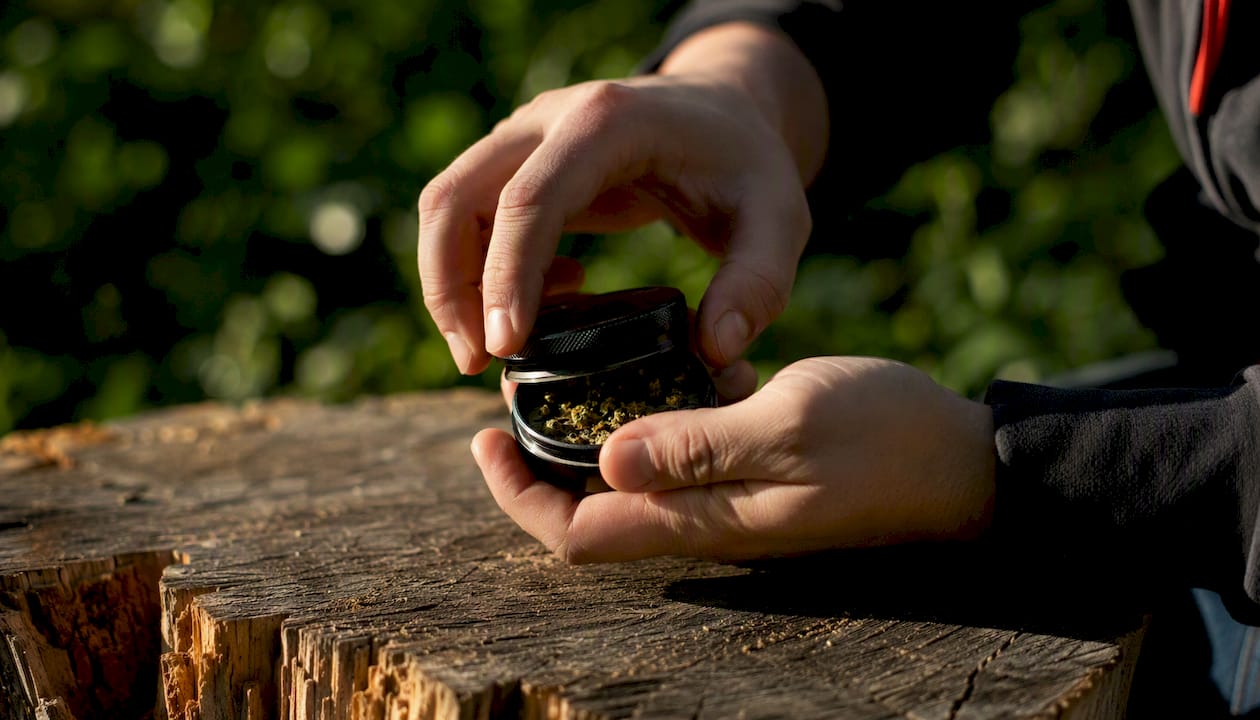
Anodized aluminum can match stainless performance when the machining is precise and the grinder is relatively new. The gap widens after six to twelve months of regular use, particularly for heavy users who grind daily.
Design features that affect grind quality more than raw material:
- Tooth shape: diamond-cut or shark-fin teeth produce finer, more uniform grinds than blunt pegs.
- Screen quality: a fine stainless mesh (typically 100–150 micron) collects kief efficiently; cheap plastic or thin screens clog quickly.
- Lid tolerances: a tight-fitting lid prevents herb from escaping the grinding chamber before it reaches the right consistency.
- Thread design: multi-start threads open and close smoothly and reduce cross-threading risk.
- Magnet strength: a strong magnet keeps the lid from popping open mid-grind, which matters more for travel use.
How to evaluate grind quality before buying:
- Check product photos for tooth geometry — evenly spaced, sharp-looking teeth are a good sign.
- Look for a stated screen mesh size; vague descriptions like “fine mesh” without a micron rating are a red flag.
- Read reviews specifically for mentions of consistency after 6+ months of use, not just first impressions.
For a deeper look at technique and consistency, Treelockbox’s guide on how to grind weed properly covers particle size, burn quality, and prep for different consumption methods.
Price, weight, and portability trade-offs
Aluminum is lighter and cheaper. Stainless steel costs more and weighs more. Those two facts drive most of the practical trade-offs.
Typical price ranges for a quality 4-piece grinder:
- Budget aluminum (uncoated or basic anodize): $10–$20
- Premium anodized aluminum (CNC-machined, tight tolerances): $30–$60
- Entry-level stainless steel: $40–$70
- Premium stainless steel (304/316L, tight tolerances, warranty): $70–$120+
Weight matters more than most buyers expect. A 2-inch aluminum grinder typically weighs around 2–3 oz; the same size in stainless runs closer to 4–5 oz. That difference is noticeable in a pocket or a small bag. It also affects the stress on magnets and threads — a heavier grinder dropped on a hard surface puts more force on the lid mechanism than a lighter one.
For home use on a desk or shelf, the weight difference is irrelevant. For daily pocket carry or travel, aluminum’s lighter build is a genuine advantage. Stainless steel’s heft, on the other hand, gives it a premium feel that many users associate with quality — and in this case, the association is accurate.

Which material should you actually choose?
The right material depends on how and where you use your grinder. Here are the most common buyer profiles:
- Home enthusiast: Stainless steel. You are not carrying it around, so weight is not a factor. The longer tooth life and zero coating risk make it the obvious pick for daily home use.
- Traveler or on-the-go user: Anodized aluminum. Lighter, often more compact, and the color options make it easier to spot in a bag. Buy quality-anodized and inspect it regularly.
- Medical user or arthritis patient: Look at ergonomic design first, material second. The Treelockbox Ergonomic Herb Grinder is built specifically for users with limited grip strength — the wide drum and easy-turn design reduce the torque needed to grind.
- Budget buyer: A quality-anodized aluminum grinder in the $30–$50 range gives you solid performance without the stainless price tag. Avoid anything under $15 — the anodize quality at that price point is rarely reliable.
- Collector or aesthetic buyer: Aluminum wins here. Anodizing supports a wide range of colors and finishes that stainless cannot match. Just prioritize machining quality over looks.
One caution for aluminum buyers: always confirm the grinder is anodized, not just painted or powder-coated. Bare aluminum oxidizes and can leave a faint metallic taste. A proper anodize is hard, bonded to the surface, and will not peel under normal use.
Treelockbox’s herb grinder collection covers multiple options across these use cases if you want to browse what fits your situation.
A 7-point buying checklist for grinder shoppers
Before you buy, run through these seven points:
- Material and alloy: Confirm the specific alloy (6061 aluminum or 304/316 stainless). Vague “metal” or “zinc alloy” descriptions are a red flag.
- Machining quality: Look for CNC-machined in the product description. Check photos for clean, evenly spaced teeth with no visible burrs.
- Anodization (aluminum only): Confirm hard anodize, not paint or basic coating. Hard anodize is significantly more durable.
- Magnet and lid fit: A strong magnet and tight lid tolerance prevent accidental opening and herb loss.
- Screen quality: Stainless mesh with a stated micron rating. Avoid plastic screens.
- Warranty or return policy: A brand confident in its product offers at least a 30-day return window; premium grinders often carry longer coverage.
- Weight and ergonomics: Check the listed weight. If you have grip limitations, prioritize a wide-body or drum-style design.
Red flags to avoid:
- Anodize that looks uneven, thin, or chips at the rim in product photos
- Rough machining marks visible on the teeth or chamber walls
- No stated alloy or material grade
- Tiny, thin kief screens with no mesh specification
- No return policy or warranty information
When buying online, ask the seller: “What alloy is this, and is the aluminum hard-anodized?” A seller who cannot answer that question is selling you a product they do not know well enough to stand behind.
What the scientific evidence actually says about metal particles and grinders
Consumer-grade evidence on grinder-specific metal particle exposure is limited. The honest answer is that no published study has measured metal particle concentrations from herb grinder use specifically. What the literature does provide is a framework for thinking about risk.
Chronic occupational exposure to airborne metal particulates is associated with respiratory and systemic health effects. Those findings come from workers exposed to high concentrations over years — welders, machinists, foundry workers. The exposure levels in those settings are not comparable to someone grinding a few grams of herb a few times a week.
A foundational toxicology study on metal dust inhalation similarly documents harm at high doses in occupational contexts. The key word is “dose.” Consumer grinder use, even daily, produces a fraction of the particulate load those studies measured.
Metal swarf — the machining byproduct that ends up as chips and fragments — is well-documented in manufacturing literature. Aluminum swarf in particular tends to form long, stringy chips rather than fine dust, as industrial chip-processing systems confirm. That physical characteristic means aluminum fragments from a worn grinder are more likely to be visible and catchable than to become fine airborne particulate.
The occupational health literature establishes that inhaled metal particles can cause harm at sufficient doses — but consumer grinder use operates at exposure levels far below the thresholds studied in workplace settings. The practical risk from a well-maintained, quality-made grinder is low; the risk from a damaged or poorly machined one is meaningfully higher.
Practical risk-reduction steps:
- Inspect your grinder before every use for visible flakes or metallic residue.
- Retire any grinder showing visible wear, loose teeth, or coating failure.
- Prefer stainless steel or hard-anodized aluminum over bare or cheaply coated aluminum.
- Keep your grinder clean — resin buildup can mask wear and hide early signs of damage.
Does your grinder material affect how your herb tastes or smells?
Stainless steel is essentially taste-neutral. A clean, well-maintained stainless grinder adds nothing to the flavor or aroma of your herb. This is one reason 304 and 316L grades are used in food and medical equipment — they do not react with organic material under normal conditions.
Aluminum is more variable. A properly hard-anodized aluminum grinder is also largely taste-neutral in normal use. The anodized layer seals the aluminum surface, preventing direct contact between the metal and your herb. Where taste transfer becomes a real issue is with bare aluminum, damaged anodize, or a grinder that has not been cleaned in a long time. Oxidized aluminum has a faint metallic taste that can carry over, particularly with lighter, more delicate strains where the flavor profile is subtle.
Resin buildup affects both materials equally. Old, oxidized resin has a harsh, stale flavor that overwhelms the herb’s natural terpenes. Regular cleaning matters more for taste than material choice in most cases.
One practical note: a brand-new aluminum grinder sometimes has a faint metallic smell from the manufacturing process. Running a break-in grind with discarded herb and cleaning the chamber before first use eliminates this in most cases.
Our take on the aluminum vs. stainless grinder debate
The safety-versus-convenience framing that dominates most grinder comparisons misses the real point. Both materials are safe when the product is well-made. The question is not “which material is dangerous” but “which material stays safe longer with real-world use.”
Stainless steel wins that question because it does not rely on a coating to stay inert. Anodized aluminum is excellent when new and well-maintained, but the anodize is a surface treatment, not the material itself. Every surface treatment has a failure mode. For most users who clean their grinder regularly and replace it when it shows wear, that failure mode never arrives. For users who grind daily, carry their grinder in a pocket, and clean it every few months, stainless is the more forgiving choice.
The other thing worth saying plainly: cheap grinders are the real risk, regardless of material. A $12 aluminum grinder with thin anodize and rough machining is a worse choice than a $45 stainless grinder with tight tolerances and a warranty. Price is not a perfect proxy for quality, but it is a reasonable filter at the low end of the market.
Treelockbox designs its grinders with durability and ergonomics as the starting point — not just material selection. That means CNC machining, proper finishing, and designs that hold up to daily use. See the durable storage and accessory options on the blog for more context on what that looks like in practice.
Treelockbox grinders built for daily use
If the article’s verdict points you toward a durable, well-made grinder, Treelockbox has two options worth a close look.
The Tree Lock Box Ergonomic Herb Grinder is designed for users who want a comfortable, easy-turn grind without sacrificing performance. The wide drum body reduces the torque needed to grind, making it a strong pick for users with arthritis or limited grip strength. It features a stainless kief screen, strong magnet lid retention, and a finish built to handle daily use.
The Tree Lock Box Herb Grinder is the everyday workhorse option — CNC-machined, with sharp teeth, a reliable kief catch, and a design that stays consistent session after session.
Both are backed by Treelockbox’s quality guarantee and fast US shipping. Browse the full grinder collection or go straight to the shop to find the option that fits your use case.
Sources
FAQ
What is the best material for a herb grinder?
Stainless steel (304 or 316L grade) is the best material for most users because it is harder, corrosion-resistant without a coating, and stays safe longer with regular use. Hard-anodized aluminum is a solid second choice for users who prioritize lighter weight and lower cost.
Is aluminum safe to use in a grinder?
Yes, quality hard-anodized aluminum is generally safe for normal grinder use. The risk increases with bare aluminum, damaged anodize, or poor machining — all of which can introduce metal particles into your herb.
Which is better for durability: stainless steel or aluminum?
Stainless steel is more durable. Its higher hardness means teeth hold their edge longer and the material resists corrosion without relying on a surface coating. Aluminum wears faster under heavy use, particularly if the anodize is thin or damaged.
Are aluminum grinder shavings dangerous?
Visible metal shavings in your herb are a sign the grinder should be retired immediately. Occupational research confirms that inhaled metal particles can cause harm at high doses, though consumer grinder use is far below industrial exposure levels. A well-maintained, quality-anodized grinder should not produce visible shavings.
Does grinder material affect the taste of your herb?
Stainless steel is taste-neutral. Hard-anodized aluminum is also largely neutral when the coating is intact. Bare or oxidized aluminum can transfer a faint metallic taste, particularly with lighter, more delicate strains. Regular cleaning eliminates most taste transfer from either material.